The 7 Red Flags in a Commercial Cleaning Proposal (That Look “Normal”)
Evaluating commercial cleaning proposals can feel overwhelming—especially when every document looks polished and most companies make similar promises. However, looking beneath the surface is critical. Even the most “normal” proposal can hide costly risks, service gaps, or quality issues that only show up once you’re locked into a contract. In this comprehensive guide from CHICAGOLAND Cleaning Services, you’ll learn to identify the seven common red flags hidden in plain sight, plus exactly what questions to ask, what best practices look like, and how to demand the quality, safety, and value your business deserves. Our focus keyphrase, The 7 Red Flags in a Commercial Cleaning Proposal (That Look “Normal”), will serve as your framework for making confident cleaning contract decisions.
The Hidden Trap of Vague Cleaning Scope Statements
An impressive cleaning proposal doesn’t ensure the actual work meets your standards. A major red flag, often overlooked, is a vague or generic cleaning scope. Many proposals promise “thorough cleaning” or “all common areas”—but what does that truly include? Unclear scope definitions invite disputes, missed areas, and inconsistent results.
Exactly What To Watch For
- General phrases like “includes all standard cleaning tasks” without listing rooms, spaces, or surfaces
- Lack of mention of high-touch points (e.g., door handles, light switches, elevator buttons)
- Absence of frequency details (is dusting daily, weekly, or as needed?)
How to Vet Scope Statements
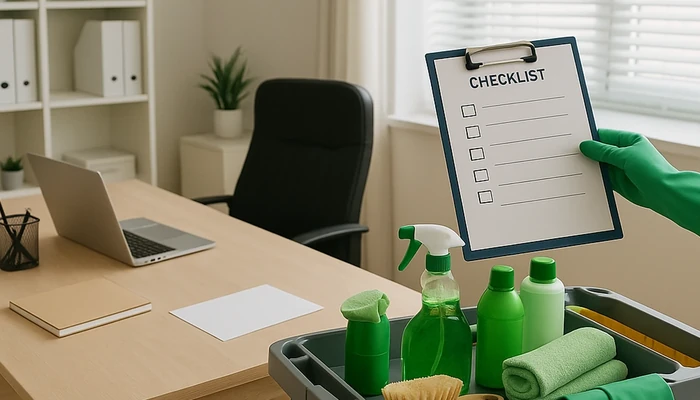
- Request an itemized checklist, such as those used by quality teams (see High-Demand Area Cleaning Checklists for reference)
- Insist on specifics for each space (e.g., pantries, restrooms, elevators, reception)
- Ask for cleaning frequencies per task—daily, weekly, monthly, deep clean, etc.
Low Pricing That Ignores Experience, Safety, or Adequate Labor
While competitive pricing is important, abnormally low bids almost always cut corners in labor hours, staff training, or equipment quality. This “normal” red flag can lead to missed cleanings, unsafe practices, or frequent staff turnover—all of which affect your facility quality and even security.
- Bids that are 10–20% below the next lowest competitor often signal labor cost shortcuts.
- Proposals omitting details about staff experience, background checks, or ongoing training.
- No mention of insurance, local labor law compliance, or worker safety protocols.
If you see this, ask for an explanation on cost allocation. Find out what’s not included, and check if corners are being cut in staff vetting or safety. Learn more about what sets high-quality cleaning services apart.
Ambiguous Quality Control or Accountability Measures
Most cleaning companies claim to deliver high standards, but do they describe exactly how quality is monitored and enforced? Proposals filled with words like “guaranteed satisfaction” without a clear system for inspections, reporting, or corrective action are prone to recurring issues.
Essentials in Transparent Proposals
- Description of supervisor inspections and their frequency
- Details on issue reporting (by staff and clients)
- Outline of corrective action steps and communication process
- Examples of documented cleaning checklists and reporting protocols (see a framework here)
Material Safety and Environmental Practices Glossed Over
In today’s workplace, ignoring eco-friendly cleaning and material safety is a liability. Yet, some proposals make broad claims about “green products” without specifying brands, EPA approval, or staff training for safe use. This omission can put your occupants and reputation at risk.
| Term In Proposal | What To Ask |
|---|---|
| “Green cleaning” | Is there a list of EPA- or Green Seal-approved products? Are Safety Data Sheets provided? |
| “Safe for all surfaces” | What’s the protocol for sensitive equipment, finishes, or medical spaces? |
For safety standards and environmental best practices, reference the EPA’s guidelines for greener cleaning and CDC’s prevention resources.
Unclear Staff Consistency, Training, or Oversight
Switching cleaning staff every week leads to missed routines and erodes security. A proposal should clarify whether you’ll have a dedicated, trained crew—or a revolving door of temps. Red flags in this area can surface as vague promises about “our cleaners” without specifics about team assignment, supervision, or ongoing education.
- Is the same team (or lead) assigned for each visit?
- Are staff background checked and trained in your facility’s protocols?
- How is knowledge transferred if someone is absent?
- Is there a supervisor present or on call?
Learn what an efficient cleaning team approach looks like in quality-driven operations.
Contract Details That Limit Transparency or Flexibility
Many proposals default to restrictive contract terms, such as long minimum commitments or steep cancellation penalties—without highlighting these terms. “Normal” on the surface, these red flags limit your ability to adjust services as needs change, or to exit if standards are not met.
- Mandatory 12–24 month terms with rare exceptions
- Advance notice or renewal clauses “hidden” in fine print
- Undefined procedures for handling service complaints or disputes
Insist on terms that allow reasonable notice periods, flexible scope adjustments, and transparent dispute resolution processes. Smart facilities periodically review their cleaning contracts and procedures to ensure ongoing fit.
References, Proof of Insurance, and Certifications Not Provided
The absence of verifiable references or proof of insurance is a serious red flag—even if the provider seems professional. Trustworthy cleaning companies provide up-to-date insurance certificates (liability and workers’ comp), proper licenses, and recent references matching your facility type.
- If the proposal references “available on request” but the provider drags their feet once you ask, be wary.
- Are relevant certifications listed for specialty work (medical, childcare, food service)?
Need guidance on what documents to request? Check out what to evaluate when hiring commercial cleaners.
Red Flags Comparison List: What Normal Looks Like vs. What To Demand
- Generic scope vs. detailed checklists and frequencies
- Lowest price focus vs. clear labor allocation and training plan
- Vague “quality guarantee” vs. described inspection and feedback process
- “Green cleaning” marketing vs. cited EPA-approved products/assets
- Changing crews vs. a consistent, background-checked staff
- Rigid contracts vs. fair cancellation and review options
- No proof of insurance/references vs. transparent documentation
Critical Questions to Ask Before Signing Any Proposal
- What specific rooms, equipment, and fixtures are included—and at what frequency?
- Can you provide a copy of your daily/weekly cleaning checklist for my type of facility?
- How are your staff trained? Will I have consistent team members on-site?
- How do you handle complaints or missed tasks? Can you show reports or logs from past contracts?
- Do you use EPA-approved cleaning products? Can you provide labels or Safety Data Sheets?
- What are your insurance limits and can I see a current certificate?
- Are there early exit or cancellation fees, and how can service be adjusted if my needs change?
Side-by-Side: Commercial Cleaning Proposal Walkthrough Example
- Scope: Look for room-by-room, surface-by-surface breakdown
- Labor hours: Estimate time needed vs. price to spot low-ball tactics
- Staffing: Check if team assignments are guaranteed
- Quality control: Request sample reports and metrics
- Products: Demand product Safety Data Sheets for transparency
- References: Validate direct contacts from similar clients
- Insurance: Certificate should match your facility risk level
Soft Signals: How “Normal” Language Covers Risk
Watch for overuse of words like “state-of-the-art,” “proprietary process,” or “customizable plans” without further detail. Anything that sounds impressive but lacks clear definition should prompt follow-up questions. If a provider is transparent, their responses should be detailed, not defensive.
Risk Mitigation: Steps to Take Before and After You Select a Provider
- Obtain and review complete checklists and proof of training in advance
- Walk through facilities with bidders to level-set expectations
- Build periodic review checkpoints into your contract
- Demand up-to-date proof of insurance, every renewal period
- Continue spot-checks and feedback sessions quarterly
For more structured facility safety practices, consult recognized public resources like the CDC’s cleaning guidelines.
Frequently Asked Questions About Red Flags in Commercial Cleaning Proposals
- What’s the most common red flag that gets overlooked?
- Vague scope descriptions—without explicit cleaning tasks or frequencies—often result in disappointing outcomes and surprise extra charges.
- How can I compare cleaning proposals if the scopes differ?
- Request side-by-side breakdowns of included services by area/frequency; use a checklist reference for leveling the comparison.
- Why is insurance proof so important in commercial cleaning?
- Insurance protects both property owners and cleaning staff in the event of accidents or property damage. Never accept verbal assurance alone.
- Can I negotiate terms if a proposal has red flags?
- Yes. Reputable companies often adjust scope details, labor hours, or contract flexibility when asked. If not, consider another provider.
- What certifications are valuable for specialty facility cleaning?
- Look for certifications specific to your environment—like OSHA training, ISSA CIMS for cleaning management, or industry-specific credentials.
- Are green cleaning claims easy to verify?
- Ask for proof using approved product lists and review EPA’s safer product registry.
- How is staff consistency achieved and maintained?
- Dedicated teams, background checks, and clear accountability processes signal a reliable operation.
- What should I do if a provider refuses to give references?
- Treat this as an immediate disqualifier—reference checks are essential for trust and validation.
- Do all red flags mean I should walk away?
- Not always; some can be resolved through clear communication and negotiation. However, transparency and accountability are non-negotiable.
- How often should I reevaluate my cleaning contract?
- Most experts suggest a formal review at least annually—or any time your site usage, hours, or service needs change significantly.
Summary: Building Confidence In Your Cleaning Provider
The seven red flags in commercial cleaning proposals—vague scopes, suspiciously low pricing, ambiguous quality assurance, questionable safety practices, staff inconsistencies, contract inflexibility, and lack of references—can all appear “normal” to the untrained eye, but each holds the potential for profit loss, operational risks, and daily frustrations. By staying vigilant and insisting on specificity, transparency, and accountability, you’ll ensure your Chicago facility runs at peak cleanliness and hygiene—every time.
Ready to partner with a team that understands meticulous standards? Explore office cleaning service or see our special event cleaning options to match your business needs.
About CHICAGOLAND Cleaning Services
CHICAGOLAND Cleaning Services helps households and businesses in Chicago, Illinois and nearby areas keep their spaces clean and healthy. Our team specializes in recurring house cleaning, deep cleaning, move out cleaning, office cleaning, and special facility cleaning. We combine professional-grade products with detailed checklists, consistent teams, transparent communication, and a strong focus on safety and quality—so you can trust your property is in expert hands.
commercial chicago cleaning company, office trash removal chicago, desk office disinfection chicago, Palatine office cleaning, conference room cleaning Wheeling IL, office cleaning in Morton Grove, office cleaning Lake Forest IL, office cleaning Bucktown, office breakroom cleaning Des Plaines IL, office restroom cleaning Countryside