
The Importance of Instrument Sterilization in Dental Offices: Protecting Patients and Practice
Instrument sterilization forms the backbone of safe, modern dentistry. Whether you’re a practice owner, office manager, hygienist, or a patient seeking a reliable dental provider, understanding The Importance of Instrument Sterilization in Dental Offices is essential for health, trust, and compliance. This comprehensive guide from Chicagoland Cleaning Services outlines why thorough sterilization cannot be compromised, how professional and in-house protocols work in tandem, what regulations apply, and how you can implement or verify best practices within your dental office.
The Hidden Risks: How Dental Instruments Can Transmit Harm
Dental offices are uniquely vulnerable to infection transmission. Instruments routinely contact saliva, blood, and tissue, which may harbor bacteria, viruses, or fungi. Inadequate sterilization can result in direct transmission of serious diseases such as hepatitis B, hepatitis C, HIV, or opportunistic infections like oral candidiasis. Even minor lapses risk cross-contamination among patients or staff. Understanding these risks is the first step toward decisive prevention.
- Reusable instruments (mirrors, scalers, forceps) come into contact with multiple patients daily
- Biofilm buildup can resist standard disinfection if not fully cleaned and sterilized
- Infection outbreaks linked to poor dental office sterilization have garnered national scrutiny
Core Principles of Dental Instrument Sterilization
Not all cleaning and sterilization are created equal. Instrument sterilization reaches a microbial kill rate unattainable by routine cleaning or disinfection alone. There are three levels to distinguish:
- Cleaning: Removes debris and organic material. Must always precede sterilization.
- Disinfection: Destroys many, but not all, pathogenic microorganisms. Typically insufficient for invasive tools.
- Sterilization: Complete elimination of all forms of microbial life—including bacterial spores—using robust physical or chemical methods.
Dental instruments designated as ‘critical’ (penetrating tissue or bone) must always be sterilized between uses.
Step-by-Step: Typical Instrument Sterilization Workflow in Dental Offices
Modern dental clinics use a dedicated sterilization room or area. Here’s an essential workflow breakdown:
- Pre-cleaning: Immediate removal of gross debris, either chairside or before processing
- Instrument sorting: Separation by type and exposure risk
- Ultrasonic cleaning or manual scrub: Dislodging remaining debris prior to sterilization
- Rinsing and drying: Preparing for packaging
- Pouch or wrap packaging: Labeled for identification and traceability
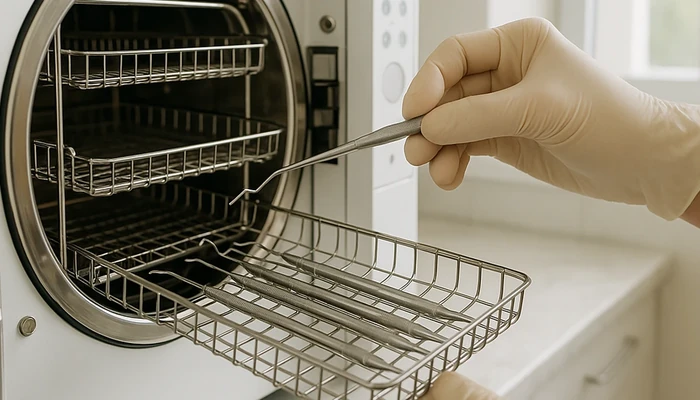
- Sterilization: Placing in an approved device (autoclave, dry heat, or chemical vapor sterilizer)
- Cooling, storage, and documentation: Ensuring items remain sealed and records are logged
Each step is essential. Skipping one stage compromises every subsequent effort, putting both patients and staff at risk.
Comparing Sterilization Methods Used in Dental Practice
Treatment rooms benefit from multiple approved sterilization options, each with strengths and limitations. Below is a structured comparison:
| Method | Typical Use | Pros | Cons |
|---|---|---|---|
| Steam Autoclave | Most reusable dental tools | Highly effective, rapid cycles, widely accepted | Unsuitable for heat-sensitive items |
| Dry Heat Sterilizer | Heat-stable metal and glass | No moisture; avoids corrosion | Longer cycles, uneven heat risk |
| Chemical Vapor Sterilizer | Rust-prone or delicate instruments | Shorter cycle, no corrosion | Odors, chemical handling precautions |
| Cold Chemical Sterilants | Heat-sensitive plastics | Can sterilize items autoclaves can’t | Long soak, rigorous rinsing required; toxic exposure risk |
Checklists: What Every Dental Office Sterilization Area Should Include
- Clearly labeled dirty and clean instrument zones
- Approved containment for sharps and biohazard waste
- Readily accessible hand hygiene and PPE (gloves, eye protection)
- Automated ultrasonic or washer-disinfectors
- Routine maintenance schedule for all sterilizers
- Temperature and pressure monitoring logs
- Sterilization integrators or indicator strips for every cycle
- Written protocols posted and available for staff reference
Instrument Sterilization Compliance: Regulations and Best Practice Standards
Dentists must comply with local, state, and federal infection control laws. Core guidelines come from the CDC, OSHA, ADA, and FDA. Key requirements include:
- Written infection control plan, including sterilization policies
- Regular staff training and documentation
- Use of FDA-approved sterilization equipment and processes
- Routine biological spore testing (at least weekly)
- Immediate action protocols for failed test cycles
For deeper regulatory background, consult the OSHA laboratory guidelines and NCBI’s educational resources.
Monitoring and Validating Sterilization Processes
No sterilization system is complete without robust validation. Offices should record and review:
- Chemical indicators: Integrators inside every package demonstrate sterilant exposure
- Biological indicators: Spore tests run weekly provide gold-standard verification
- Mechanical indicators: Digital logs of time, temperature, and pressure cycles
- Incident response logs: Documentation of cycle failures and remediation steps
Retention of these records is vital for audits, patient assurance, and continuous quality improvement.
Instrument Categories: What Must Always Be Sterilized?
Not all dental tools require the same processing. Classifications guide the required protocols:
- Critical items: Penetrate bone or soft tissue; must always be sterilized (forceps, surgical burs, scalers)
- Semi-critical: Contact mucous membranes; sterilize if possible, otherwise high-level disinfect (mirrors, impression trays)
- Non-critical: Contact only intact skin; require surface disinfection, not full sterilization (blood pressure cuffs)
Maintain a clear log mapping each instrument’s required decontamination level for error-free compliance.
Key Differences: In-Office vs. Outsourced Instrument Sterilization
Some dental practices process all sterilization in-house, while others contract, partially or fully, with specialized external providers. Considerations for each approach:
- In-House:
- Direct control over cycles and record keeping
- Quicker turnaround during busy days
- Requires dedicated space, regular maintenance, and skilled staff
- Outsourced:
- Reduces staff time and equipment investment
- Ideal for high-volume practices or specialized tool sets
- Requires airtight chain-of-custody and independence verification
Staff Training and Ongoing Competency in Sterilization
Instrument sterilization is only as reliable as the staff following the protocols. Dental teams should have:
- Documented onboarding and annual refresher training on infection control and sterilization
- Supervision and sign-off for any process changes
- Regular competency checks, including observed practice and random cycle reviews
Staff training logs and continuous education directly contribute to lowering error rates and improving safety outcomes.
Common Pitfalls and Red Flags in Dental Office Sterilization
- Visual debris left on “sterilized” instruments
- No routine spore testing or indicator logs
- Incomplete labeling of processed packages
- Improper storage (e.g., in unsealed cabinets or supply closets)
- Skipping PPE when processing used tools
- Failure to separate sterile from dirty workflow areas
If any of these are observed, corrective action should be taken immediately and system processes reviewed.
Integrating Professional Cleaning Services: Supporting Total Dental Office Hygiene
While dental teams focus on instrument sterilization, trusted cleaning partners play a key supporting role by:
- Disinfecting high-touch surfaces throughout sterilization and treatment areas
- Maintaining air quality and safe disposal of hazardous waste
- Providing deep cleaning after hours to minimize bioburden
- Ensuring patient waiting and common areas meet healthcare cleaning standards
For practices needing consistent support, Dental office cleaning service options are available—giving peace of mind that environmental hygiene matches instrument safety.
Instrument Sterilization Checklists for Chicago Dental Offices
- Confirm autoclave cycle parameters before every load
- Verify packaging is dry and intact before storage
- Log spore tests weekly and review all indicators
- Keep equipment maintenance records up-to-date
- Audit physical storage areas monthly for compliance
- Consult with professional cleaners for annual deep-clean support
Chicago dental offices, like those elsewhere, are held to local Department of Public Health inspections. Chicagoland Cleaning Services helps offices build audit-proof protocols.
Patient Education: Communicating Your Sterilization Practices
Patients and families increasingly want proof of safety. Consider:
- Displaying sterilization protocols and latest spore test results in common areas
- Walking new patients through your sterilization workflow
- Listing your infection control commitment on your website and in new patient packets
These practices foster trust and help distinguish your clinic as a safe choice among Chicago-area offices.
Recent Advances and Innovations in Instrument Sterilization
- Integrated tracking software for batch traceability
- Automated washer-disinfectors reducing manual error
- Single-use instrument protocols for critical procedures
- Continuous staff education through online CDC modules
Modern practices leverage these tools to stay ahead of regulatory changes and uphold patient trust.
Supporting Excellence: Choosing Reliable Dental Office Cleaning Partners
The best dental infection control programs incorporate both meticulous in-house sterilization and expert environmental cleaning. Consider using a medical office cleaning team for compliance with healthcare-specific needs, or partner with a professional office cleaning service to maintain all clinical and administrative spaces. Consistent collaboration ensures practices meet or exceed all Illinois and national standards for safety, cleanliness, and quality.
Instrument Sterilization in Dental Offices: Quick-Reference FAQ
- What’s the difference between disinfection and sterilization?
- Disinfection reduces but does not eliminate all microorganisms. Sterilization destroys all life forms, including spores, making it essential for items contacting tissue.
- How often should biological spore testing be performed?
- At least once per week, as recommended by CDC and ADA guidelines. Immediate action is required if a failure is detected.
- Which instruments require full sterilization every time?
- Critical items such as surgical forceps, scalers, and burs must always be sterilized between uses.
- Is it acceptable to manually scrub all dental instruments?
- Manual scrubbing is sometimes necessary; however, automated ultrasonic cleaning is more effective and safer for staff handling sharps.
- How should instruments be stored after sterilization?
- Store in sealed, intact packaging in a designated clean area until needed. Packages should be reprocessed if compromised.
- Can chemical sterilization be used for all instruments?
- No, it is only for specific heat-sensitive items and requires strict handling protocols to avoid chemical exposure.
- What documentation is required for dental instrument sterilization?
- Offices must retain sterilizer maintenance logs, cycle records, and indicator results for regulatory review.
- How can patients be sure a dental office follows safe sterilization?
- Look for displayed protocols, visible indicator strips, or ask staff to describe their processes during your visit.
- Is professional cleaning necessary if staff sterilize instruments daily?
- Yes—environmental cleaning addresses surfaces, air, and waste, which supports total infection control in all office areas.
- Where can I learn more about dental sterilization standards?
- Refer to NCBI’s educational pages and OSHA compliance guidelines.
Final Thoughts: Prioritizing Instrument Sterilization for Safer Dental Care
Instrument sterilization is an anchor for every trustworthy dental practice—protecting patients, staff, and reputations. By following robust protocols, monitoring outcomes, engaging professional cleaning partners, and educating your team and patients, your practice can deliver exceptional care that exceeds expectations. For ongoing support maintaining the highest standards, trusted local teams like Chicagoland Cleaning Services are ready to help coordinate comprehensive cleaning and compliance across your clinic or healthcare facility.
About Chicagoland Cleaning Services
Chicagoland Cleaning Services delivers professional cleaning for homes, offices, and all types of specialized facilities in Chicago, Illinois, and nearby areas. Our experienced staff follows strict checklists and industry protocols, with specialties in recurring house cleaning, deep cleaning, move-out cleaning, office and facility cleaning. We use safe, professional products and equipment, focus on high-touch risk areas, and offer flexible scheduling for practices of all sizes. Chicagoland Cleaning Services helps households and businesses in Chicago keep their spaces clean, healthy, and welcoming year-round.
cleaning commercial services chicago il, dental chair area cleaning chicago, dental office cleaning chicago, dental office restrooms cleaning Libertyville IL, dental office restrooms cleaning Algonquin IL, dental office sanitation La Grange, dental office cleaning Elgin, dental operatory cleaning Bolingbrook IL, dental operatory cleaning Palatine, dental operatory cleaning Franklin Park