How Quality Control Should Work: Checklists, Inspections, and Escalation Paths
Quality cleaning is the difference between spotless spaces and missed details that impact your health, reputation, and comfort. If you’ve ever wondered how cleaning companies deliver reliability—or what processes ensure that nothing gets overlooked—this guide is for you. Today, you’ll discover how quality control should work: checklists, inspections, and escalation paths, whether you’re booking recurring house cleaning or managing a large commercial facility. You’ll gain detailed insights, framework examples, and expert-level steps for reviewing, building, or evaluating a quality-focused cleaning program. With CHICAGOLAND Cleaning Services, you’ll see how each element drives consistent results for homes, offices, and specialized spaces alike.
Defining Quality Control in Cleaning: The Framework for Consistent Results
At its core, quality control in cleaning is a system of processes designed to ensure that cleaning work consistently meets defined standards and client expectations. It’s more than a one-time inspection: it’s an ongoing cycle of planning, performing, checking, and correcting. Here’s what quality control looks like in residential and commercial cleaning services:
- Clear, measurable cleaning standards for every service
- Customized checklists guiding each job
- Routine inspections for verification and accountability
- Escalation paths to resolve problems or address unmet standards
- Continuous improvement through feedback and analysis
High-performing cleaning companies formalize these elements, making them transparent to both staff and clients. This approach yields safer, healthier, and more welcoming environments.
The Role of Checklists: Blueprint for Thorough and Consistent Cleaning
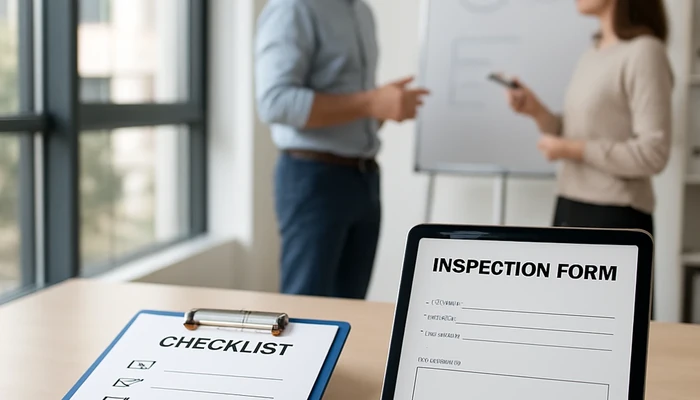
A cleaning checklist is more than a to-do list—it’s the anchor of every quality control system. Checklists guarantee consistency, reduce human error, and make accountability trackable in ways that verbal instructions cannot. Let’s dissect what a truly effective cleaning checklist includes:
- Task specificity: Every action—like “wipe light switches” or “sanitize sink handles”—is clearly described.
- Frequency guidance: Daily, weekly, monthly, or by-clean schedule for each item.
- Area-by-area breakdown: Separate sections for bathrooms, kitchens, high-touch surfaces, and more.
- Responsibility assignment: Who is responsible for completing and verifying each item.
- Room for feedback: Notes section for unusual findings, challenges, or client requests.
Professional checklists are frequently reviewed and updated based on lessons learned in the field. At CHICAGOLAND Cleaning Services, each service type—standard, deep, move out, or facility-specific cleaning—relies on its own tailored checklist aligned to Chicago-area building types and client needs.
Designing Effective Room-by-Room Checklists: Structure and Examples
Checklists must reflect the diversity of spaces and client expectations. Below is a table contrasting two levels of checklist detail in kitchen cleaning—the kind of difference that separates amateur efforts from professional quality control:
| Checklist Task (Basic) | Checklist Task (Professional Quality) |
|---|---|
| Wipe counters | Wipe and disinfect all kitchen counters, including behind appliances and under items |
| Clean sink | Clean and sanitize sink basin, faucet, and handles; dry and polish for shine |
| Mop floor | Mop floor with floor-type-appropriate cleaner; edge and corner detail included |
| Remove trash | Remove, reline, and sanitize trash receptacles; check recycling protocol |
Well-structured checklists also cover less-visible but high-risk zones, such as cabinet pulls, light switches, and appliance controls. For comparison across other areas, see the structured lists in our internal hub on Crucial Areas to Clean in Various Locations.
Building Measurable Cleaning Standards: What “Clean” Really Means
Ambiguous language (“looks clean to me”) undermines any quality control effort. Instead, standards must be:
- Observable: Can a supervisor or client visually verify the result?
- Measurable: Are there defined criteria (e.g., no visible soil, no streaks, specific disinfectant dwell times)?
- Aligned to protocols: Requirements for specialized spaces—like medical offices or childcare centers—directly reference standards from authorities like the CDC (CDC Home Cleaning and Disinfection Guidelines).
Setting these standards in writing, and teaching teams why they matter, empowers both inspection and improvement.
Inspection Protocols: Who Checks, What Gets Checked, and How Often?
Inspections validate that work aligns with the checklist and the established standards. They can be:
- Self-inspections: By the cleaning staff themselves (with integrity checks, not only as a formality)
- Supervisor inspections: Supervisor walks each area, verifying both tasks and outcomes
- Random audits: Unscheduled or third-party spot-checks for unbiased assessment
For recurring services (home or office), inspections are scheduled at regular intervals. After move-outs, events, or deep cleans, inspections occur immediately after cleaning. Detailed scoring sheets with pass/fail or point-based systems help standardize results.
- Homes and apartments: Every cleaning (self-check), supervisor spot-checks weekly
- Offices: Self-check daily, supervisor inspection weekly to monthly
- Special facilities (medical, childcare): Supervisor checks with higher frequency and documentation
Escalation Paths: When Things Don’t Meet Standards
No matter how rigorous the system, missed details can occur. The critical value of a quality control process is in its escalation path—the path to resolution. Every cleaning provider should have a transparent escalation sequence such as:
- Staff correction on the spot (by supervisor or self, if possible)
- Work order for callback to fix the issue within 24–48 hours
- Manager review, retraining, or reassignment
- Formalized client feedback loop for resolution and documentation
Prompt escalation not only resolves the immediate issue but signals the provider’s commitment to accountability. For comparison on handling quality issues, see our post on Solving Common Problems With Cleaning Services.
Accountability in Action: How Roles and Responsibilities Support Quality Control
Top-tier cleaning results depend on everyone knowing their role in the quality system:
- Cleaners: Follow checklist, document completion, conduct self-checks
- Team leads/supervisors: Perform inspections, coach staff, handle minor escalations
- Managers: Review inspection data, conduct trend analysis, address major quality failures
- Clients: Provide transparent feedback via reports or digital apps
A well-run provider will document each of these roles and offer clear communication channels. Internal hub content on Evaluating and Improving Cleaning Protocols speaks directly to this ongoing cycle.
Adapting Quality Control: Residential vs. Commercial and Facility-Specific Nuances
Quality control evolves based on the environment:
- Residences: Focus on attention to personal details, customization, and flexibility.
- Offices: Emphasis on hygiene in high-traffic, shared spaces; privacy concerns.
- Facilities (daycare, medical, gym, retail): Stringent disinfection, documentation, and regulatory compliance. For example, gyms or daycare centers in Chicago may require special protocol checklists and frequent supervisor checks (see Practices for Disinfecting Toys and Surfaces for more specific applications).
Your cleaning provider should offer evidence of adapting their quality systems to each unique setting, not just a “one size fits all” approach.
Digital Tools and Technology for Tracking Quality Control
Technology increases transparency and efficiency in cleaning quality control. Digital apps can track checklist completion, timestamp inspections, collect client feedback instantly, and even generate trend reports. Features include:
- Digital checklists with real-time progress tracking
- Automated inspection reminders and reporting tools
- Photo documentation for before/after validation
- Client portals for submitting feedback and escalation requests
While not mandatory for smaller operations, adoption of these tools is a hallmark of advanced providers. Analytical software also helps drive continuous improvement over time.
Continuous Improvement: Using Inspection Results for Training and Upgrades
True quality control loops never stop at corrections—they use data to spot patterns, retrain staff, tweak checklists, or introduce new equipment. Best practices include:
- Quarterly or annual reviews of inspection data
- Regular retraining on underperforming tasks
- Updating your cleaning program when facilities, standards (such as CDC or APIC), or client needs change
To learn how improvement fits into a company’s broader cleaning philosophy, explore Optimization and Review of Cleaning Procedures.
How to Evaluate a Cleaning Company’s Quality Control Before Hiring
Not all providers boast robust quality systems. Here’s what to request or observe when comparing companies:
- Ask for sample checklists (are they detailed, tailored?)
- Request a documented inspection protocol
- Discuss escalation procedures for unsatisfactory results
- Seek proof of staff training, supervisor qualifications, or certifications such as those noted by APIC’s infection prevention guidance
- Read reviews for real-world client feedback on complaint resolution
A company unwilling to share this information, or that relies on a “trust us” approach, may lack the rigorous backbone needed for reliable results.
Real-World Scenarios: Quality Control in Action
Scenario 1: A Missed High-Touch Surface in an Office
A supervisor’s weekly inspection finds an uncleaned door handle—missed in a rush. The escalation path triggers: the cleaner returns within 24 hours, the event is logged, and the team retrains with a checklist update emphasizing high-touch points.
Scenario 2: Recurring Issue With Shower Tiles in a Rental Unit
Client feedback reveals periodic soap scum on bathroom tiles. The checklist is updated for deep tile scrubbing bi-weekly, and digital check-off with photo documentation is introduced. Client satisfaction improves—and the checklist becomes a new standard for similar units.
Pitfalls and Red Flags: Warning Signs of Poor Quality Control
- Vague or missing checklists
- No documented inspection or escalation process
- Responses like “the team knows what to do”—with no evidence
- Poor follow-up or unresolved complaints
- Inconsistent results between visits
Whether you’re a homeowner or a facilities manager, recognizing these signs empowers you to select a company that stands behind its promises.
Integrating Quality Control With Hygiene and Safety Standards
Modern professional cleaning must do more than remove visible dirt. It must actively prevent illness and cross-contamination, especially in high-risk environments. This is where quality control overlaps with safety protocols from organizations like the CDC. Checklist items should specify when to disinfect versus simply clean, include proper dwell times, and ensure correct product usage as explained in our internal hub Embrace Eco-Friendly Cleaning.
Linking Quality Control to Client Relationships and Transparency
Transparent quality control builds trust over time. Open access to checklists, timely inspection reports, and rapid escalation responses all foster long-term partnerships. At CHICAGOLAND Cleaning Services, these systems have led to lasting client relationships across Chicago by demonstrating that reliability and safety are always front and center.
Bringing It All Together: Your Next Steps for Quality-Focused Cleaning
Understanding how quality control should work—through thorough checklists, routine inspections, and clear escalation paths—empowers you to demand higher standards in every cleaning partnership. Before booking services for your home, office, or facility, review the provider’s protocols, ask the right questions, and never settle for vague answers.
If you’re seeking a cleaning company that prioritizes transparent quality systems in Chicago, explore your Office cleaning service or Retail space cleaning options. To ensure health and hygiene for specialized spaces, you may also review Daycare cleaning services.
Frequently Asked Questions About Cleaning Quality Control
What makes a cleaning checklist effective?
Specificity, frequency guidance, clear responsibility, and sections for notes make a checklist reliable. A strong checklist ensures every surface and detail is addressed each visit.
How often should inspections occur in professional cleaning?
Self-inspections should happen every time. Supervisor inspections can be weekly for homes or more frequent for sensitive facilities. The goal is to validate consistent results.
What is an escalation path in cleaning quality control?
An escalation path defines steps to resolve unmet standards: on-the-spot correction, callback, manager review, and client feedback. It keeps accountability front and center.
How can clients evaluate a cleaning company’s quality control?
Ask for sample protocols, checklists, and clarity on inspection and escalation. Companies who provide this transparently prove their reliability.
Do different environments require different quality control systems?
Yes. Homes, offices, childcare, hospitality, and medical spaces all need tailored standards, checklists, and inspection frequencies based on their risk and usage.
Is digital tracking necessary for quality control?
Not required, but highly beneficial for large operations. Apps improve transparency, automation, and reporting, which leads to better service over time.
Where do cleaning providers get credible standards?
Reputable companies reference government and health authority guidance, such as CDC and APIC. These standards inform both processes and escalation protocols.
How should feedback be integrated into the quality system?
All client and inspection feedback should cycle into retraining, checklist improvements, and ongoing process reviews.
What are the signs of poor quality control?
Irregular results, vague protocols, unresolved complaints, and lack of transparency are major red flags.
How does CHICAGOLAND Cleaning Services approach quality control?
Through detailed, service-specific checklists, regular supervisor inspections, prompt escalation, and a continuous improvement loop aligned to both client expectations and health standards.
About CHICAGOLAND Cleaning Services
CHICAGOLAND Cleaning Services helps households and businesses in Chicago, Illinois and nearby areas keep their spaces clean and healthy. Our team excels in recurring house cleaning, deep cleaning, move out cleaning, office cleaning, and special facility cleaning services. With trained staff, flexible scheduling, professional products, and rigorous quality control systems, CHICAGOLAND Cleaning Services is dedicated to transparency, consistent results, and long-term client relationships in every cleaning project.
chicago commercial cleaning services, office trash removal Cleaning Chicago, desk office disinfection Cleaning Chicago, office trash removal Westmont IL, Vernon Hills office cleaning, office breakroom cleaning Bartlett IL, office cleaning South Holland, office cleaning Logan Square, office cleaning in Crest Hill IL, desk office disinfection Joliet