
Cleaning Around Worship Schedules Without Disrupting Services or Volunteers: A Complete Framework
Faith-based spaces are sacred environments where cleanliness and reverence go hand-in-hand. But maintaining order in chapels, mosques, synagogues, and churches comes with a unique challenge: orchestrating cleaning routines that honor worship schedules and volunteer time. In this guide, you’ll learn exactly how to structure cleaning around worship schedules without disrupting services or volunteers. We’ll cover specific decision frameworks, hygiene checklists, collaboration techniques, and communication tips so that your congregation’s routines are respected—and your space remains pristine. CHICAGOLAND Cleaning Services specializes in professional facility cleaning in Chicago, helping faith communities keep their spaces inviting, safe, and harmonious.
Understanding the Rhythms of Worship: Mapping Cleaning to Faith Schedules
Every faith community has its own rhythm—weekly masses, nightly prayers, community events, and seasonal gatherings. A critical first step is developing a clear map of when the building is in use and by whom. This understanding enables precision when planning disruption-free cleaning routines.
- Obtain an up-to-date worship and event calendar (recurring and special events)
- Identify volunteer arrival, preparation, and departure windows
- Map high-traffic versus low-traffic time slots
In multi-faith or shared-use spaces, collaborating with community leaders ensures all religious observances are considered. Transparent planning avoids accidental interruptions and supports respect for different traditions.
Key Considerations for Cleaning in Religious Settings
Religious spaces differ from typical commercial environments. There are sacred objects, unpredictable visitor flows, sensitive materials (old wood, textiles), and varying levels of permissible noise. Cleaning practices must be tailored with the following in mind:
- Restricted access areas or sacred zones
- Preferred cleaning products (non-toxic, hypoallergenic)
- Time restrictions (no vacuuming during meditative hours)
- Scent sensitivities or incense use
- Storage and security of valuable objects
Establishing a “cleaning protocol profile” for each space prevents misunderstandings between facility managers and cleaners.
Framework for Scheduling Cleaning Without Disruption
A disruption-free approach requires blending operational efficiency with respect. These steps help facility managers align needs with professional cleaners:
- Consult the master schedule: Identify all periods requiring absolute quiet or restricted entry.
- Create an access matrix: List rooms/zones alongside their acceptable cleaning time slots.
- Build blackout periods: Mark times when all cleaning must cease (service start and end, prayer times, key events).
- Optimize for overlaps: Plan light cleaning or touch-ups during brief breaks (e.g., between classes or after Sunday School).
- Save intensive cleaning for off-hours: Deep floor care or restoration after evening closures or before early arrival.
Consistent communication with staff and cleaning teams maintains this balance long-term. See the comparison table below for practical scheduling templates.
Comparison: Cleaning Schedule Models for Worship Facilities
| Model | Best For | Advantages | Limitations |
|---|---|---|---|
| Nighttime Professional Cleaning | Large congregations with off-hour access | No service disruption, thorough deep cleaning possible | Staff must ensure security, higher after-hours costs |
| Staggered Cleaning during Quiet Periods | Busy facilities with unpredictable use | Flexibility, addresses high-traffic areas on demand | Limited to lighter tasks, requires real-time coordination |
| Weekend-Only Cleaning | Smaller congregations with one primary gathering per week | Minimal intrusion, predictable routines | Build-up of debris between events, may not suit all needs |
| Collaborative Volunteer & Professional Model | Community-driven spaces valuing engagement | Volunteers address light duties; pros handle technical cleaning | Requires clear role boundaries, risk of missed details |
Volunteer Considerations: Working Alongside Faith Community Teams
Volunteers are often the heartbeat of religious facilities. Cleaning routines must respect their contributions and avoid undermining their involvement:
- Hold pre-cleaning briefings to clarify duties and boundaries
- Schedule professional cleaning outside of core volunteer windows
- Use signage or rosters to indicate when cleaning is in progress vs. volunteer activities
- Create a feedback mechanism for volunteers to note persistent trouble spots
Collaborative frameworks foster goodwill and avoid duplication of effort, maximizing efficacy and respect for all contributors.
Special Areas and Objects: Guiding Principles for Careful Cleaning
Worship spaces house items of profound spiritual and historical value. Cleaning crews must be trained to identify and handle:
- Altars, prayer mats, Torah scrolls, baptismal fonts, statues, musical instruments
- Textiles and tapestries that cannot be machine washed
- Antique wood, stone or delicate glasswork
When in doubt, professionals should confirm protocols with facility leadership and follow any additional spiritual or cultural guidelines provided.
Health and Safety in Congregational Spaces
Maintaining hygiene in high-traffic worship environments goes beyond aesthetics—it’s vital for public health. Adhering to recognized standards, including OSHA guidelines for infection control, is essential.
- Ensure regular disinfection of high-touch surfaces (pews, doorknobs, light switches)
- Use EPA-registered disinfectants suitable for religious settings
- Train cleaning personnel on bloodborne pathogen controls and safe waste disposal
- Address unique health needs (allergies, sensitivities to fragrances)
- Document cleaning frequencies and completed tasks for accountability
More information on effective methods can be adapted from best practices in event space cleaning.
Developing a Customized Cleaning Checklist for Religious Spaces
Each facility requires a tailored checklist for both routine and deep cleaning. Consider the following structure:
- Entryways and gathering halls: Sweep, mop, disinfect, polish metals/wood
- Seating areas: Spot-clean, vacuum, disinfect armrests/backs
- Restrooms: Deep clean fixtures, refill stocks, sanitize all surfaces
- Kitchens/communal spaces: Clean appliances, counters; address food prep guidelines
- Clergy offices/meeting rooms: Dust, declutter, disinfect electronics
- Classrooms/Nurseries: Toys sanitized, surfaces wiped, floors mopped
- Storage/closets: Organize, check for moisture or pests
For an expanded framework, consider insights from multi-location cleaning checklists.
Communication Frameworks: Ensuring Alignment Between Staff, Volunteers, and Cleaners
Effective communication ensures the cleaning process supports, rather than interrupts, crucial faith activities. Adopt these steps:
- Set up a shared operations calendar with locked-in cleaning windows
- Assign a central point of contact for updates or last-minute changes
- Use walk-throughs and visual checklists pre- and post-clean
- Encourage open feedback after every session to fine-tune procedures
This approach minimizes overlap and demonstrates respect for every team’s contribution. It’s also the best way to keep processes improving, drawing on lessons from efficient team collaboration models.
Selecting Professional Cleaners for Faith-Based Facilities
When choosing a cleaning partner, look for:
- Experience with sacred and historic properties
- Flexible scheduling to adapt to special worship events
- Insurance and background-checked staff
- References from other religious organizations
- Willingness to receive onsite training and feedback
It’s important to distinguish between general cleaning services and those with tailored expertise for faith settings. Facility managers can request religious facility cleaning for specialized needs.
Training and Standards for Cleaning in Worship Facilities
Cleaners working in sacred spaces require additional preparation beyond general janitorial training. Essential components include:
- Orientation on religious customs and space rules
- Protocols for personal conduct and attire
- Product and waste disposal safety
- Respectful signage placement during cleaning activities
- Confidentiality agreements for spaces with sensitive materials
These standards, drawn in part from OSHA guidance on facility safety protocols, help maintain trust and reliability.
Case Example: Adapting Cleaning to Multi-Faith Facilities
Many modern buildings host multiple congregations (e.g., both church and mosque groups) or events throughout the week. In these cases, a robust “zoned approach” is critical:
- Segment cleaning into clear areas based on calendar and type of activity
- Customize products to avoid allergen or scent issues specific to faith practice
- Plan for additional cleaning after shared public events
This ensures respect for all groups and maintains harmony in joint-use spaces, as illustrated in results-driven event cleaning studies.
Minimizing Environmental Impact in Religious Facility Cleaning
Congregations are increasingly focused on sustainability. Cleaning protocols can align by:
- Using green-certified products appropriate for sacred spaces
- Establishing recycling and waste minimization routines
- Scheduling deep cleaning to minimize water and energy usage
Eco-friendly practices protect facility integrity while serving congregational values.
Troubleshooting: Common Challenges and Proactive Solutions
Unforeseen scheduling changes, lingering odors, and missed spots can occur. Employ proactive troubleshooting by:
- Maintaining an emergency response protocol for unscheduled cleaning
- Regular air quality checks, especially after large events
- Clear documentation for persistent cleaning challenges
- Routine feedback sessions with both volunteers and cleaning staff
Refer to problem-solving resources for cleaning to adapt best practices to your facility.
FAQ: Cleaning Around Worship Schedules Without Disrupting Services or Volunteers
- How can we prevent cleaning from overlapping with important services?
Build schedules using blackout periods around key ceremonies—no cleaning should happen during these times. Lock cleaning windows into the community calendar and confirm weekly with staff. - What is the safest cleaning product for religious spaces?
Hypoallergenic, non-toxic, fragrance-free EPA-registered disinfectants are usually best. Confirm with congregation leaders if any substances are prohibited due to rituals or allergies. - How can volunteers and cleaning staff work together?
Set clear boundaries during planning, assign distinct roles, and use a central feedback log for both groups to communicate issues or suggestions. - What’s unique about cleaning multi-faith facilities?
Listen to each congregation’s needs, use zone-specific products, and double-check calendars for overlapping or last-minute changes. Communication and flexibility are essential. - How do you handle unscheduled cleaning needs?
Maintain a protocol for urgent spill or biohazard response. Train staff on rapid containment and post-event cleaning without disrupting concurrent activities. - Should cleaning protocols change during special events or holidays?
Yes. Increase frequency, deploy extra staff if needed, and prepare a task list based on expected foot traffic and food/beverage use. - How often should deep cleaning occur in worship spaces?
At least quarterly for most congregations, though some areas (like restrooms and kitchens) may need deeper care more often, especially after high-attendance events. - Is green cleaning practical in religious buildings?
Absolutely. Many eco-friendly cleaners are compatible with religious needs. Confirm any requirements regarding chemicals or scents, and train cleaners appropriately. - How can we track cleaning quality and adherence to faith protocols?
Use digital or physical checklists verified at each session, and conduct routine walk-throughs with a congregational representative.
Summary and Next Steps
Effective cleaning around worship schedules without disrupting services or volunteers requires advance planning, communication, and respect for the spiritual significance of the space. By mapping out facility rhythms, adopting tailored cleaning checklists, clearly dividing duties, and choosing experienced professionals, faith communities can ensure a clean, healthy environment while preserving the sanctity of every gathering. Consider partnering with qualified cleaning specialists for optimal support—always prioritizing the needs of your congregation and volunteers above all.
About CHICAGOLAND Cleaning Services
CHICAGOLAND Cleaning Services helps households and businesses in Chicago, Illinois and nearby areas keep their spaces clean and healthy. Our trained team specializes in recurring house cleaning, deep cleaning, move out cleaning, office cleaning, and specialized facility cleaning—including religious environments. We focus on consistent checklists, flexible scheduling, transparent communication, and lasting relationships to deliver professional results you can trust in your congregational setting.
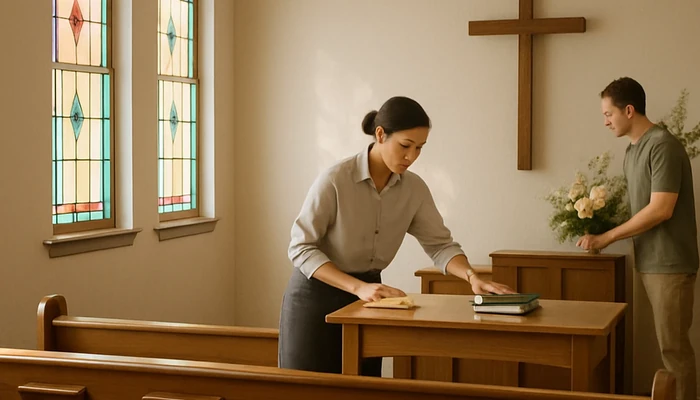
cleaning commercial services in chicago, pews and seating church cleaning Facility Cleaning Chicago, worship space cleaning Facility Cleaning Chicago, religious facility cleaning Park Ridge IL, church cleaning Riverside IL, mosque cleaning Western Springs, pews and seating church cleaning Naperville IL, worship space cleaning Ukrainian Village IL, sanctuary cleaning Lake Forest, worship hall cleaning Elgin IL