
Why Salon Cleaning Has to Account for Hair Dust, Color Residue, and Client Comfort: A Complete Guide
Salons are more than places for a haircut or color—they are high-traffic, high-touch environments where hygiene, aesthetics, and client experience come together. Salon operators and clients alike want assurance that the space is truly clean, odor-free, and comfortable. But what makes cleaning a salon uniquely challenging? The answer lies in managing fine hair dust, persistent color residue, and the need for client comfort at every step. In this guide from CHICAGOLAND Cleaning Services, you’ll discover exactly why salon cleaning has to account for hair dust, color residue, and client comfort, and how to implement effective cleaning practices for beauty spaces in Chicago and beyond.
Understanding the Unique Contaminants in Salons
Unlike general retail or office spaces, salons contend with:
- Hair dust from cutting and styling: light, airborne, allergenic.
- Color residue from dyes, bleaches, and styling chemicals: can stain surfaces and emit odors.
- Product spills and overspray (e.g., sprays, oils, powders).
- Skin flakes and biological debris from waxing, facials, or shaving.
Each of these contaminants requires specialized cleaning approaches to fully address hygiene and the expectations of clients and staff.
Why Hair Dust Is a Major Issue in Beauty Environments
How Hair Dust Spreads
Once cut, hair fragments quickly become airborne. Unlike household dust, salon hair dust is fine and can settle on every surface, from mirrors to waiting room chairs. This increases allergy risks and can detract from a salon’s pristine appearance.
Health and Hygiene Implications
- Undetected hair dust can harbor bacteria and skin pathogens.
- Build-up in HVAC and air filters can trigger allergies or respiratory discomfort for clients and staff.
- Hair fragments on tools, stations, or floors create an unprofessional impression.
Color Residue: Stains, Chemical Risks & Cleaning Challenges
The Nature of Salon Coloring Agents
Hair dyes and bleaches are formulated to adhere and penetrate—making them especially tough to remove from surfaces if not cleaned promptly and thoroughly.
Risks with Color Residue
- Staining of counters, sinks, chairs, and floors.
- Lingering chemical odors, potentially irritating to sensitive clients.
- Contact risks for following clients or children in waiting areas.
Deep-cleaning is critical to remove these residues for both hygiene and comfort.
Client Comfort: Beyond Cleanliness to Experience
First Impressions & Sensory Factors
- Odors from chemicals or lingering hair can instantly set the wrong mood.
- Surface cleanliness—mirrors, armrests, shampoo bowls—signals attention to client wellness.
- Temperature, noise, air quality, and ventilation all influence comfort.
The Psychological Side of a Clean Salon
Clients choose salons for self-care. A visibly clean, fresh-smelling, and orderly environment reassures them they are valued and safe—a crucial differentiator for beauty businesses in Chicago’s competitive market.
Critical Cleaning Zones in Salons: A Room-by-Room Strategy
| Area | Main Contaminants | Key Cleaning Focus |
|---|---|---|
| Styling Stations | Hair dust, color splatter | Surface disinfection, tool cleaning |
| Reception/Waiting Area | Hair fragments, allergen dust | Upholstery vacuuming, hard floor mopping |
| Shampoo Bowls | Color stains, product buildup | Non-abrasive scrubbing, frequent sanitizing |
| Restrooms | Bacteria, chemical splashes | Frequent touchpoint disinfection, air quality |
| Backbar/Laundry | Product residues, lint | Deep cleaning, odor control |
| Air Vents | Hair dust accumulation | Filter cleaning/replacement |
Step-by-Step: How Professionals Remove Hair Dust and Color Residue
- Dry Removal First: Use microfiber cloths, HEPA-filter vacuums, and electrostatic dusters to capture loose hair dust from all surfaces before any wet methods.
- Wet Cleaning: Mop floors and wipe surfaces with salon-safe disinfectants. Focus on crevices, corners, and under chairs where dust settles.
- Targeted Stain Removal: Treat color stains with approved cleaners. Rinse and check surfaces, especially around shampoo bowls and coloring stations.
- Tool and Equipment Disinfection: Clean shears, clippers, capes, and brushes using methods recommended by manufacturers and public health standards (CDC hygiene guidance).
- Ventilation Maintenance: Clean air filters and vents regularly to prevent redistribution of dust and chemical odors.
Choosing Cleaning Products: Salon-Safe and Surface-Specific
Salon cleaning products must be effective, safe for delicate surfaces, and compatible with beauty regulations. Select:
- pH-neutral cleaners for painted, plastic, or polished surfaces.
- Stain-specific agents for color residue—not household bleach unless supported by manufacturer advice.
- Fragrance-free or low-odor disinfectants to minimize sensory irritation.
- EPA-registered or hospital-grade products approved for beauty settings (see commercial cleaning solutions for more).
Essential Tools and Equipment for Salon Cleaning
- HEPA or multi-stage vacuums (capture smallest hair particles).
- Color-resistant microfiber cloths (absorb without staining).
- Disposable gloves and aprons for high-chemical areas.
- Small detailing brushes for delicate tools and tight spaces.
- Mops with replaceable heads (avoid cross-contamination between stations and restrooms).
- UV light wands or foggers (optional, only for enhanced sanitation needs).
Creating a Frequency Schedule: Daily, Weekly, and Deep Cleaning
Recommended Routine
- After Each Client: Sweep hair, wipe stations, sanitize tools.
- Daily: Vacuum and mop all floors, wipe all surfaces, clean restrooms, check and replace liners, remove trash.
- Weekly: Wash chair covers, deep-clean shampoo bowls, scrub grout, treat color stains, clean vents.
- Monthly: Deep clean behind furniture, test fire alarms, review safety data sheets for cleaning agents.
Salon Cleaning Checklists: Ensuring Hygiene and Comfort
Styling Station Checklist
- Remove and dispose of visible hair dust.
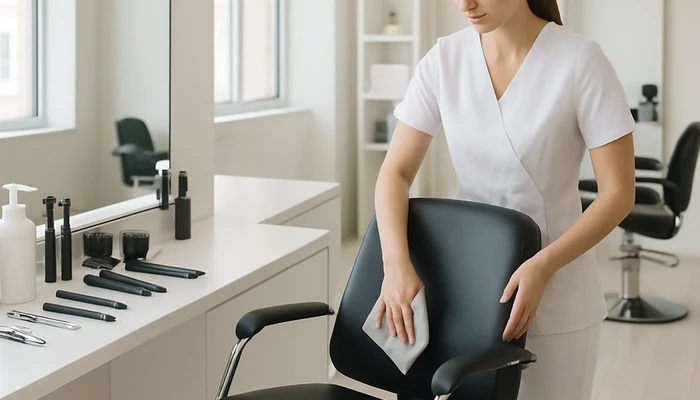
- Disinfect all tools, mirrors, and arms after each use.
- Clean under and behind chairs daily.
- Check for product or color residue on all surfaces.
Waiting Area Checklist
- Vacuum upholstery and rugs daily.
- Wipe magazines, tables, and fixtures with sanitizers.
- Check air fragrance and ventilation for comfort.
Restroom Checklist
- Disinfect all touchpoints (handles, faucets, switches) multiple times daily.
- Refill soap, paper, and monitor air flow.
- Check for and remove chemical or hair residue.
Managing Odors and Air Quality in Salons
Poor air can turn away sensitive clients or cause repeat issues with complaints. For salons, this means:
- Running ventilation or air purifiers during and after chemical services.
- Emptying trash bins frequently and sealing color product waste before disposal.
- Using scent-free cleaning for a neutral, welcoming space.
- Changing HVAC filters and cleaning vents at least monthly.
Client Comfort in Action: Examples and Strategies
Case 1: Allergy Sensitive Guest
Salon books a client who is highly allergic to dust and scents. Staff schedules a vacuum and wet mop before their arrival, uses fragrance-free cleaning, and seats the client by an open vent for comfort.
Case 2: After-Hours Deep Clean
To avoid interrupting business, a full deep clean (color stain removal, upholstery cleaning, air vent dusting) is scheduled after hours every week, eliminating hair dust build-up and ensuring no chemical odors the next morning.
Staff Training and Quality Control in Salon Cleaning
- All staff should be trained in cross-contamination prevention (no using restroom mops in waiting area).
- Checklists are posted at every station and must be signed after each shift.
- Supervisors conduct weekly spot checks for color residue and dust.
- Anonymous client comfort surveys to identify overlooked areas.
Best Practices for Eco-Friendly and Sustainable Salon Cleaning
Salons can reduce environmental impact without sacrificing performance:
- Select biodegradable or refillable products where possible.
- Use washable, color-fast cloths instead of single-use wipes.
- Avoid overuse of harsh chemicals; prioritize targeted cleaning.
- Partner with cleaning providers experienced in green practices (explore sustainability in cleaning).
Legal and Safety Considerations for Salon Cleaning
- Follow public health and cosmetology board guidance for disinfecting equipment and client areas.
- Ensure all cleaning products meet safety/label standards for use around humans and pets.
- Maintain SDS files for all chemicals and provide PPE to staff handling products.
- Post-cleaning allow adequate drying/airing before admitting new clients.
How to Choose the Right Cleaning Partner for Your Salon
When hiring a cleaning company, evaluate:
- Experience with salons or similar high-risk environments.
- Staff training, equipment, and checklists focused on hair dust and color residue.
- References and reviews from other Chicago-area salons or spas.
- Transparent communication and flexible scheduling for recurring, deep, or emergency cleaning needs.
For specialized beauty environments, a company like CHICAGOLAND Cleaning Services offers rigor in protocol and attention to client comfort.
Integrating Cleaning With Salon Workflow: Scheduling and Staff Roles
- Assign rotating cleaning roles, so each staff member is invested in hygiene outcomes.
- Sync deep cleans outside peak hours to minimize disruption.
- Digitally track checklists for transparency and accountability.
Frequently Asked Questions: Salon Cleaning for Hair Dust, Color, and Comfort
- How often should hair dust be removed from a salon?
- Hair dust should be removed after every client service and throughout the day, especially in cutting and styling areas.
- What is the safest way to clean up color residue on shampoo bowls?
- Use pH-balanced, non-abrasive cleaners immediately after each coloring session, then rinse thoroughly.
- How can salons reduce chemical odors for client comfort?
- Run ventilation systems during services, use low-odor products, and deep clean surfaces regularly to prevent residue build-up.
- Can regular household vacuums handle salon hair dust?
- No. Only HEPA or salon-grade vacuums effectively capture fine hair dust particles scattered throughout the salon.
- What role does air quality play in client comfort?
- Clean, odor-free air is essential; routine vent and filter maintenance prevents redistribution of contaminants and enhances client experience.
- Are there cleaning products designed for salons?
- Yes, seek out cleaners formulated for color and chemical residues, as well as those approved by public health and cosmetology boards.
- How should salons train staff to handle cleaning duties?
- Implement standardized training in hygiene, checklists, and safety for all workers—not just cleaning crew.
- Is it possible to maintain a sustainable cleaning routine?
- Yes, by choosing eco-friendly products and reducing single-use items you can maintain high standards and reduce waste.
- How do I know if my salon cleaning is effective?
- Clients will notice: look for absence of hair dust, spotless surfaces, neutral scents, and consistent client comfort feedback.
- Should restrooms receive special attention in salons?
- Absolutely. Restrooms must be cleaned and disinfected several times daily, as they often reflect a salon’s overall hygiene standards.
Final Thoughts: Elevate Your Salon with Targeted Cleaning
Successful salons go beyond basic cleaning—they systematically tackle invisible hair dust, persistent color residue, and prioritize every aspect of client comfort. With the right frequency, checklists, products, and staff training, you offer an environment where clients can relax and return often. For those needing support, Beauty Salon cleaning experts can help maintain a flawless space tailored to your services and reputation. Ready to elevate your salon cleaning? Explore Spa cleaning services or Office cleaning service solutions to fit any schedule.
About CHICAGOLAND Cleaning Services
CHICAGOLAND Cleaning Services is dedicated to providing professional cleaning for homes, salons, offices, and specialized facilities throughout Chicago, Illinois, and the surrounding areas. Our team of trained cleaning specialists uses tailored protocols for recurring, deep, move-out, beauty salon, and commercial facility cleaning—always with a focus on consistency, attention to detail, and long-term client satisfaction. For reliable cleaning you can trust, count on CHICAGOLAND Cleaning Services to keep your business pristine and comfortable every day.
chicago commercial cleaning, barbershop cleaning Cleaning Services Chicago, salon restroom cleaning Cleaning Services Chicago, salon chair cleaning Hinsdale, salon restroom cleaning Rogers Park, salon towel handling Riverwoods, nail salon cleaning South Holland IL, beauty salon cleaning Niles IL, hair salon cleaning Logan Square IL, beauty salon sanitation Wicker Park IL