
Comprehensive Practices for Disinfecting Toys and Surfaces: What Every Home and Workplace Should Know
From homes with young children to bustling offices and specialized facilities, the need to maintain clean and disinfected toys and surfaces is essential for health and peace of mind. Choosing the right practices for disinfecting toys and surfaces can prevent the spread of illness, maintain hygiene, and create a safer environment for everyone. In this in-depth guide, you’ll uncover the science, process, and real-world checklists for disinfecting toys and surfaces, including when to use which method, product comparison, and professional tips from the team at CHICAGOLAND Cleaning Services. Whether you’re managing a household, a classroom, an Airbnb, or an office setting in Chicago, you’ll find actionable, research-backed answers here.
Understanding Risks Associated with Toys and Frequently-Touched Surfaces
Toys and high-touch areas—such as doorknobs, remote controls, desks, and play tables—are common hotspots for germs and viruses. Children are especially vulnerable since they frequently place toys and hands in their mouths. In shared environments, the risk multiplies, making systematic cleaning and disinfection routines critical. Studies have shown that common pathogens like norovirus and influenza can survive on surfaces for up to 48 hours, while bacteria such as Staphylococcus aureus can linger longer on porous and non-porous materials.
- Bacteria and viruses can persist on hard surfaces for hours or days.
- Toys used in group settings (playgroups, daycare, classrooms, waiting rooms) are at higher risk.
- High-touch areas in offices and homes require distinct disinfecting attention.
Key Differences: Cleaning, Sanitizing, and Disinfecting
Before establishing protocols, it’s important to distinguish between cleaning, sanitizing, and disinfecting:
| Process | Definition | Purpose | When to Use |
|---|---|---|---|
| Cleaning | Removes dirt and impurities (but may not kill germs) | Reduces risk of spreading infection by removing debris | Before sanitizing/disinfecting; daily for visible soil |
| Sanitizing | Lowers number of germs to safe levels (public health standard) | Reduces some germs; not all pathogens | Food-contact surfaces, toys mouthed by children |
| Disinfecting | Kills most germs on surfaces using specific agents | Destroys bacteria/viruses on nonporous surfaces | High-touch points; following illness outbreak |
Understanding these definitions helps select the right approach for each situation.
Common Materials: Impact on Disinfecting Methods
Different toys and surfaces require customized disinfecting practices depending on material:
- Plastic/Vinyl: Nonporous and generally safe for most EPA-registered disinfectants. Rinse well after treatment.
- Wood: Porous, best cleaned with mild soap and water. Avoid soaking; disinfectant sprays may damage finish.
- Fabric/Plush: Machine washable is preferred; else, spot clean and use fabric-safe disinfecting sprays.
- Electronics: Use pre-moistened disinfectant wipes designed for electronics; avoid excess liquid, following manufacturer protocols (see APIC microlearning for in-depth technique).
Material matters—mismatching products increases risk of damage or incomplete disinfection.
Product Comparison: Disinfectants, Wipes, and Green Alternatives
Knowing what’s in your cleaning caddy matters. Here’s a structured comparison of common choices for disinfecting toys and surfaces:
- Quaternary Ammonium Compounds (Quats): Highly effective for nonporous surfaces; not recommended for items mouthed by children unless thoroughly rinsed.
- Hydrogen Peroxide: Broad-spectrum; less residue, good for fabric and toys that tolerate moisture. Rinse required for direct child contact.
- Bleach Solutions: Inexpensive, rapid action, but strong odor and requires proper dilution (always check label and safety guidelines).
- Alcohol-Based Sprays (≥70% isopropyl): Quick-drying for electronics, handles, light switches.
- Green/Eco-Friendly Solutions: Plant-based cleaners (e.g., thymol-based), suitable for daily wiping; check for evidence-based efficacy against germs (see WHO updates).
When choosing, always confirm products are on the EPA List N for effectiveness against viruses like SARS-CoV-2 (COVID-19), especially in communal areas.
Essential Supplies for Safe Disinfection
A well-stocked cleaning cart streamlines the disinfecting routine. For homes, offices, daycares, or Airbnb properties, prepare:
- Disposable gloves and masks (especially after illness or for larger jobs).
- Designated color-coded cloths/sponges to prevent cross-contamination.
- Bristle brushes and scrubbers for textured surfaces.
- Measuring cups for accurate dilution.
- Clearly labeled spray bottles for different solutions.
- Safe storage bins for toys awaiting cleaning.
- Accessible product safety data sheets.
For professional cleaning teams like CHICAGOLAND Cleaning Services, staff are trained in correct PPE and product handling to ensure maximum safety.
Daily and Weekly Disinfection Schedules for Toys and Surfaces
To ensure ongoing hygiene, follow a structured schedule based on usage, traffic, and context:
- Toys used by multiple people: Disinfect after each use or at day’s end.
- Kitchen and bathroom surfaces: Disinfect daily; spot clean spills immediately.
- High-touch office points (keyboards, phones, door handles): Wipe down at the start/end of each shift.
- Shared community toys (waiting rooms, playgroups): Clean between users and deep clean weekly.
Adjust frequency upward during illness outbreaks, flu season, or as required by health regulations (see compliance steps).
Step-by-Step Checklists: Disinfecting Toys at Home, Airbnb, and Commercial Spaces
Follow these checklists to match your setting and needs:
- For Homes:
- Sort toys by material. Check for manufacturer cleaning instructions.
- Pre-clean with soap and warm water; rinse.
- Disinfect—immerse plastic toys in solution, spray and wipe hard toys.
- Rinse thoroughly; dry completely before returning to play.
- For Airbnbs:
- Remove all toys and inspect for damage.
- Focus on sanitizing toys and surface cleaning between every guest.
- Double-check high-touch decor items and electronics.
- For Offices/Classrooms:
- Establish a log for frequency and time of disinfection.
- Assign zone-specific supplies to reduce spread.
- Label all chemicals and use EPA-registered solutions.
Consistency and thorough logs distinguish professional protocols from ad hoc routines. Explore infection-reduction essentials.
An Evidence-Based Approach: Professional Techniques That Outperform DIY
Professional cleaning teams bring several unique assets to the process, including:
- Strict checklists to ensure no area or object is missed.
- Trained identification of high-contamination zones, e.g., office desks, shared toys, kitchen appliances.
- Application of dwell times per disinfectant label for proven germ removal.
- Use of separate tools for bathroom, kitchen, and play spaces to avoid cross-contamination.
This approach provides consistent, auditable results—essential for busy families and organizations. For more, see sanitizing high-traffic zones.
Health & Safety Precautions When Disinfecting Toys
Even the safest cleaning routine must follow strict safety measures:
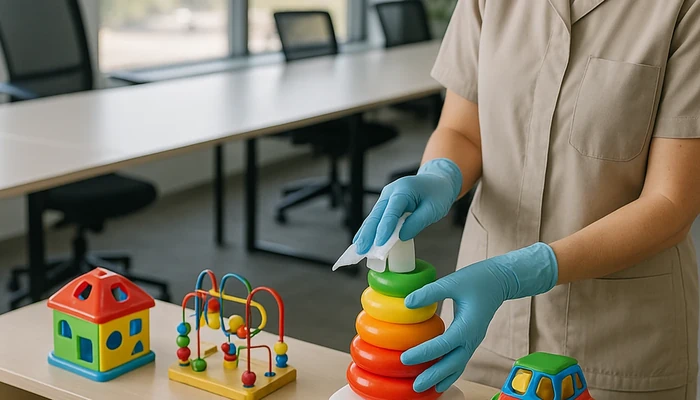
- Wear gloves and wash hands before and after each cleaning session.
- Ensure all toy and surface disinfectants are thoroughly rinsed before returning to child use.
- Only use fragrance-free and residue-free options for mouthed toys and infant supplies.
- Follow storage and label guidance to prevent chemical accidents.
Always ventilate rooms and keep cleaning agents away from food prep areas and children’s reach.
Deciding When to Disinfect Versus Replace Toys
Some toys are best removed from circulation instead of repeatedly disinfected:
- Cracked or damaged toys: Difficult to sanitize, risk of injury.
- Heavily soiled or stained items: Persistent contaminants may remain.
- Outdated electronics/toys with unreachable crevices: Germ harbors, best to replace.
Establish a rotation schedule—retire, clean, or replace—based on material integrity and exposure risk.
Disinfecting in Specialized Facilities: Medical, Childcare, and Beyond
Special settings require enhanced protocols. For example:
- Childcare facilities and schools: Follow state/local standards; increase frequency during outbreaks.
- Medical waiting rooms/dental offices: Use healthcare-grade disinfectants, focus on nonporous toys and books, never allow soft plush toys (see dental cleaning protocols).
- Restaurants or food prep locations: Prioritize sanitizers safe for contact, rinse all surfaces after disinfection.
Document all procedures and update as health agency guidance evolves.
How to Assess Cleaning Effectiveness: Visual, Log-Based, and Scientific Checks
Effective disinfection hinges on clear, measurable assessment:
- Visual Inspection: No visible dirt or residue on toys or surfaces post-cleaning.
- Routine Logs: Maintain a documented cleaning schedule and dwell times for disinfectants used.
- Scientific Verification: In large settings, ATP (adenosine triphosphate) testing can validate cleanliness.
Consistent record-keeping is a hallmark of leading professional cleaners.
Special Scenarios: After Illness, Outbreak, or High-Exposure Events
Protocols change after sickness or an identified infectious outbreak:
- Remove all shared toys and nonessential items immediately.
- Deep clean with disinfectants proven effective against the relevant pathogen.
- Ventilate and, where possible, sun-dry items to enhance disinfection.
- Replace, not clean, any item that cannot be thoroughly disinfected.
Coordinate with health authorities as needed for reopening schedules and additional requirements (follow official health news here).
Involving Staff, Families, and Children in Cleaner Habits
Building a culture of cleanliness goes beyond staff routines. Encourage:
- Age-appropriate participation in cleanup (with safe products).
- Clear signage for handwashing and toy storage stations.
- Training for team members and refresher courses each season.
Transparency and routine engagement foster shared responsibility and longer-term hygiene.
Choosing the Right Professional Cleaning Partner
If managing everything in-house feels overwhelming or unreliable, consider a cleaning company with a track record of quality:
- Look for teams using documented protocols, color-coded systems, and staff training.
- Ask for customizable schedules—daily, deep, move out, or periodic specialized service.
- Prioritize transparency in pricing, communication, and responsibility handling.
Learn how CHICAGOLAND Cleaning Services maintains professional standards or explore solutions like office cleaning services.
Frequently Asked Questions: Disinfecting Toys and Surfaces
- Can I use household bleach on all toy types?
- Only use bleach (diluted to 1:10 ratio) on colorfast plastic and nonporous toys. Rinse thoroughly and avoid on wood or electronics to prevent damage.
- How often should communal toys in an office waiting area be cleaned?
- Toys in high-traffic or shared spaces should be cleaned and disinfected daily, or between each user during illness outbreaks for best results.
- Which is safer—store-bought disinfectant wipes or homemade solutions?
- Both can be effective if properly prepared and used as directed. Look for EPA-registered products or validated recipes from trusted sources like APIC or WHO.
- Are green cleaning products as effective?
- Some eco-friendly disinfectants are effective, but always check for EPA registration and independent testing. Effectiveness can vary by product and pathogen.
- Do I need to clean toys even if they look clean?
- Yes—germs can persist on seemingly clean surfaces. Cleaning removes debris, and disinfection eliminates invisible pathogens.
- How do professionals track which toys and surfaces need frequent disinfection?
- Professional teams rely on checklists, logs, and zone-mapping to track and rotate cleaning throughout facilities.
- Should soft plush toys be machine-washed or disinfected?
- Machine washing in hot water is preferred. Use fabric-safe disinfectants if washing is not possible, and ensure complete drying before reuse.
- What’s the best way to inform parents or clients about disinfecting protocols?
- Share written protocols, signage, or digital updates about the cleaning schedule and products used for transparency and trust.
Final Thoughts and Next Steps for Cleaner Environments
Disinfecting toys and surfaces isn’t just a chore—it’s a critical part of maintaining a healthy home or workspace. Use the checklists, frequency guidelines, and product advice provided to set up a routine that matches your space and risk level. If you’re looking for consistency and professional-grade safety, turn to experienced teams like CHICAGOLAND Cleaning Services or arrange an office cleaning service tailored to your needs.
About CHICAGOLAND Cleaning Services
CHICAGOLAND Cleaning Services helps households and businesses in Chicago, Illinois and nearby areas keep their spaces clean and healthy. Our trained staff provides consistent, checklist-driven cleaning for homes, offices, Airbnbs, and specialized facilities. We offer recurring house cleaning, deep cleans, move out cleanups, and facility disinfection, always using professional-grade products and clear communication. Trust our expertise for your next cleaning project.
commercial chicago cleaning company, office restroom cleaning chicago, office cleaning in chicago, desk office disinfection Glencoe, desk office disinfection Oak Park IL, office trash removal Great Lakes IL, desk office disinfection Riverside, conference room cleaning Lake Villa, office workstations cleaning Burbank, office cleaning South Holland IL