 Skip to content
Cleaning At Airports And Transportation Terminals: Ensuring Safety, Hygiene, and Efficiency
Airports and transportation terminals are dynamic environments where thousands of travelers converge daily. The standard of cleaning at these high-traffic hubs significantly impacts health, safety, operational flow, and public trust. In this comprehensive guide, you’ll learn exactly how professional cleaning at airports and transportation terminals is designed, the critical differences from other cleaning types, protocols for every area, and how to evaluate service providers. Whether you manage facility operations or are concerned about the travel experience, understanding these cleaning standards is crucial. CHICAGOLAND Cleaning Services brings clarity and actionable strategies for comprehensive care in Chicago and beyond.
Understanding Airport & Transportation Terminal Facility Challenges
Unlike residential or standard commercial spaces, airports and transportation terminals confront unique cleanliness concerns:
- 24/7 high occupancy with fluctuating passenger volumes
- International travelers introducing diverse pathogens
- Large, mixed-use spaces: arrival/departure areas, restrooms, food courts, lounges, security check points, staff zones, and more
- Stringent regulatory compliance (local, federal, international health standards)
- Critical impact on public perception and operational continuity
Cleaning in these facilities requires a customized approach emphasizing prevention, adaptation, and efficiency.
Key Areas Requiring Targeted Cleaning Protocols
Every surface and touchpoint is not created equal. Cleaning at airports and transportation terminals demands a focus on:
- Security checkpoints – Bins, conveyor belts, countertops constantly touched by staff and travelers
- Public restrooms – Frequent use, high potential for germ spread
- Seating areas/gates – Armrests, seats, charging stations
- Food service zones – Counters, tables, payment points
- Elevators and escalators – Handrails, buttons, doors
- Luggage areas – Carts, baggage claim belts, handles
- Staff-only zones – Breakrooms, administrative offices, locker rooms
Every area above requires a tailored cleaning schedule and checklists, often more frequent during high-traffic hours or health alerts.
Core Differences: Cleaning at Airports vs. Other Commercial Spaces
- Intensity and Frequency: Cleaning cycles are more rapid and detailed, especially on high-touch surfaces.
- Regulatory Scrutiny: Alignment with TSA, CDC, and local health guidelines is non-negotiable (CDC environmental cleaning protocols).
- Disinfection Methods: Greater use of advanced disinfectants, often hospital-grade or approved against emerging viruses.
- Security Integration: Cleaning staff require background checks, extra training, and clearance in certain zones.
- Operational Coordination: Activities occur in tandem with terminal flow—often overnight, between flights, or in rolling cycles so passenger routines are not disrupted.
Developing a Strategic Cleaning Plan for Terminals
Effective airport and terminal cleaning isn’t just about frequency; it’s a strategy integrating prevention, response, and communication. Components include:
- Risk assessment – Evaluating high-exposure points and schedules
- Layered cleaning – Daily touch-ups, plus periodic deep cleans
- Integrated communication – Clear signage and procedures for staff and public reassurance
- Incident-response protocols – For sickness, spills, or infectious disease threats
- Documentation – Detailed checklists and cleaning logs for audits
Disinfection, Air Quality, and Infection Control in Busy Terminals
High-density public transportation areas are especially vulnerable to infection transmission. Successful programs blend:
- Enhanced surface disinfection: EPA and CDC-recommended agents, especially in high-touch and food service areas
- Routine air filtration upgrades: Use of HEPA, UV-C, or other advanced methods to reduce airborne contaminants (ASHRAE air cleaning recommendations)
- Flexible response: Quick escalation protocols during outbreaks or pandemics (e.g., COVID-19 guidelines)
This approach both limits risks and visibly demonstrates care for public wellbeing.
Comprehensive Cleaning Checklist for Airports and Terminals
The following structured checklist helps ensure every critical zone is addressed:
| Area | Key Tasks | Recommended Frequency |
|---|---|---|
| Security Checkpoints | Disinfect bins, belts, counters, screening trays | Every shift/after heavy use |
| Restrooms | Sanitize toilets, handles, sinks, touchpoints | Hourly (minimum) |
| Food Courts/Cafes | Disinfect tables, counters, trays, payment stations | After each use/shift |
| Lobbies/Waiting Areas | Wipe seating, armrests, charge points, kiosks | Multiple times daily |
| Elevators/Escalators | Clean handrails, buttons, touchscreens | Several times daily |
| Luggage Handling | Disinfect carts, belt rails, handles | Every use/shift |
| Staff Zones | Clean desks, phones, lockers, appliances | Daily/shift change |
Adapting frequency and methods during events or emergencies is crucial for risk management.
Cleaning Staff: Training, Clearance, and Professional Standards
- Specialized Training: On products, protocols, safe chemical handling, and sensitive scenarios (biohazards, emergency events)
- Security Compliance: Strict background checks and identification procedures
- Uniforms & PPE: Clearly marked uniforms, gloves, masks, and other equipment aligned with national regulations
- Ongoing Reviews: Regular updates to training in alignment with regulatory changes and new threats
Having a well-prepared team ensures both safety and confidence among travelers and stakeholders.
Advanced Tools and Technologies for Modern Terminal Cleaning
Managing large hubs efficiently relies on more than mops and cloths. Professional cleaning services increasingly employ:
- Electrostatic sprayers for even, rapid disinfection over broad surfaces
- HEPA-filter commercial vacuums for fine particle capture
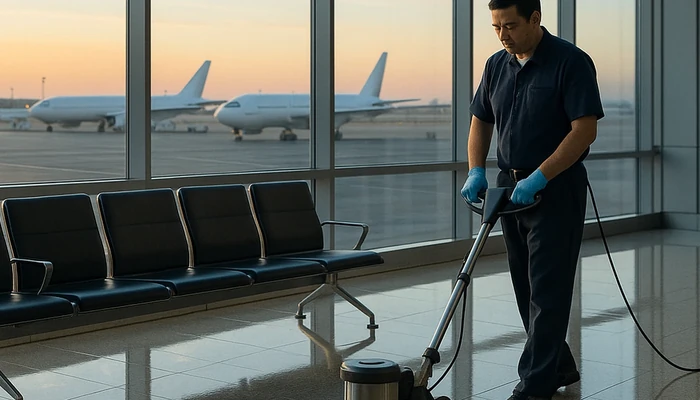
- Automated floor scrubbers for expansive tile, vinyl, or terminal concourses
- Antimicrobial surface coatings for extended protection
- Digital audit trails to track completed cleaning tasks in real time
Not every provider offers advanced solutions—important to understand when selecting a cleaning partner.
Health and Safety Regulations: Staying Compliant
Airports and transportation businesses must comply with health standards from multiple authorities:
- Centers for Disease Control and Prevention (CDC)
- Transportation Security Administration (TSA)
- Local and state health departments
- Industry associations
Staying up to date with CDC prevention protocols or recommendations for public facility disinfection is non-negotiable. Meticulous records and quality audits help prove compliance.
Addressing Specialized Concerns: Biohazards, Spills, and Large-Scale Events
Transportation terminals encounter unique scenarios:
- Managing biohazardous waste incidents swiftly and in alignment with federal law
- Responding to chemical or bodily fluid spills with proper containment and disposal
- Scaling cleaning efforts during mass events, weather delays, or emergencies
Teams must be trained for both standard routines and rapid incident response.
Decision Framework: Choosing a Cleaning Partner for Transportation Facilities
- Experience in high-traffic and secure facilities: Ask for relevant project references
- Security credentials: Verification and ongoing background checks for all staff
- Customized protocols and checklists: Demonstrated ability to create and adapt processes
- Transparent reporting: Real-time cleaning logs, audits, and open communication
- Local understanding: Familiarity with regional health codes, Chicago weather impacts, and major transportation schedules
Requesting a detailed proposal and walking through a sample cleaning schedule ensures fit for your facility’s unique demands.
Comparison: In-House vs. Outsourced Cleaning at Airports and Terminals
- In-House Advantages: Control, immediate response, tailored staff knowledge
- In-House Drawbacks: Higher HR/admin burdens, gaps in specialized disinfection, training complexity
- Outsourced Advantages: Access to latest methods, compliance oversight, scalable workforce, less burden on internal admin
- Outsourced Drawbacks: Upfront contract negotiation, integration with facility workflows
For large or flexibly-staffed airports and terminals, outsourced professional cleaning often increases reliability and compliance—especially during events or outbreaks.
Key Benefits of Professional Cleaning for Transportation Hubs
- Reduces infection and illness transmission risk
- Supports regulatory compliance and audit readiness
- Enhances traveler, staff, and partner confidence
- Protects facility assets and longevity
- Supports sustainability with greener practices (when prioritized)
For specialized zones like childcare, dental clinics, or food venues inside terminals, see steps to comply with health standards.
Hygiene Innovations: Touchless Technology and Traveler Perception
Modern airports are integrating touch-free systems—automatic doors, sensor taps, self-cleaning surfaces—to reduce daily cleaning requirements and increase traveler confidence. Cleaning schedules still must adapt for thoroughness and rapid response to visible messes. Communication (e.g., posted logs, visible cleaning) is vital for public reassurance.
Sample Case: Rapid Response to an Infectious Disease Alert
When notified of a potential infectious traveler or outbreak, a professional cleaning company will:
- Restrict and mark the affected area
- Deploy trained staff with enhanced PPE and disinfectants
- Use CDC and ASHRAE-approved products and air quality enhancements
- Document actions step by step for compliance reporting
Following best practices prevents spread and reassures regulatory bodies, staff, and the public.
Checklist: Preparing Your Facility for Professional Cleaning
- Identify high-traffic and sensitive zones with your cleaning partner
- Communicate cleaning schedules to tenants, staff, and partners
- Designate contact for incident escalation
- Review cleaning logs and audit schedules for gaps
- Solicit ongoing feedback from facility users for continuous improvement
For high-traffic zones such as medical or childcare suites inside terminals, see the medical office cleaning protocols and methods for reducing infections.
Maintaining Cleaning Standards: Monitoring, Feedback, and Continuous Improvement
- Regular quality audits and real-time digital checklists
- Solicit traveler and staff feedback on facility cleanliness
- Update protocols with new technology, products, or standards
- Benchmark against industry leaders and local competitors
Transparent communication—including posted cleaning logs and visible cleaning teams—promotes trust and accountability.
Professional Cleaning: Enhancing Operational Continuity and Brand Reputation
Top-performing airports invest in cleaning both for safety and as a core element of their brand. Consistent excellence minimizes health risks, limits disruptions, and positively influences passenger reviews, partnerships, and regulatory relationships.
For event venues or retail tenants within transportation hubs, consider linking your cleaning schedule with Event cleaning or Retail Store cleaning for maximum synergy.
Frequently Asked Questions: Cleaning at Airports and Transportation Terminals
- What makes airport cleaning different from other commercial locations?
Airport cleaning involves higher traffic, increased regulatory scrutiny, faster response cycles, and advanced disinfection—especially at critical points like security and restrooms. - How are high-touch areas prioritized for cleaning?
Facility-specific risk assessments identify the highest-contact surfaces. These are scheduled for frequent cleaning, tracked via digital logs. - What protocols are used for infectious diseases?
CDC and TSA protocols guide isolation, PPE use, specialized disinfectants, and post-event documentation. Escalation plans are in place for rapid response. - Who oversees compliance at airports and transit terminals?
Compliance is jointly overseen by federal regulators, health departments, airport authorities, and cleaning contractors, using regular audits and surveillance. - How do cleaning services minimize operational disruptions?
Cleaning is scheduled during off-peak hours where possible, and rolling protocols focus on short, efficient area closures and rapid, documented cleaning. - Are green cleaning products used in airports?
Many airports are moving toward greener, lower-VOC products. Ask your provider for their sustainability credentials. - What are the risks of inadequate cleaning in terminals?
Poor cleaning can lead to outbreaks, fines, reputational damage, and asset deterioration. - How is staff safety managed during cleaning?
Strict protocols on PPE, hazardous waste handling, chemical use, and access routes protect staff. - How can I verify cleaning compliance for my facility?
Request to see documentation, digital logs, and evidence of regulatory training from your provider. - Where can I learn about advanced air quality protocols for terminals?
Visit the ASHRAE filtration and disinfection resources for detailed recommendations.
Conclusion: Next Steps for Transportation Facility Cleanliness
Every airport or transportation terminal presents a unique set of challenges—requiring a specialist approach, advanced tools, and deeply integrated protocols. By partnering with experienced providers and staying current with regulatory expectations, facilities can deliver safer, cleaner environments that travelers notice and appreciate.
For seamless coordination of cleaning across office, retail, or event spaces within your terminal, you can explore Office cleaning service or connect with CHICAGOLAND Cleaning Services for more solutions.
About CHICAGOLAND Cleaning Services
CHICAGOLAND Cleaning Services is a leading specialist in both residential and commercial cleaning, trusted by households and businesses across Chicago, Illinois and nearby areas. We are known for rigorous staff training, flexible and recurring scheduling, meticulous attention to high-touch areas, and transparent client communication. With proven experience cleaning diverse spaces—including homes, offices, and specialized facilities—our checklists, protocols and attention to detail set the bar for professionalism and long-term partnerships. For event, office, retail, and advanced cleaning solutions, choose CHICAGOLAND Cleaning Services.
cleaning commercial service chicago, office workstations cleaning chicago, office restroom cleaning chicago, desk office disinfection Naperville IL, Rosemont office cleaning, open office cleaning Crest Hill IL, desk office disinfection Glen Ellyn IL, office cleaning Riverwoods, office workstations cleaning Westmont, conference room cleaning Highland Park IL
