
The Unsung Heroes of Office Hygiene: Inside Janitorial Services
Behind every productive and healthy office lies a team dedicated to something vital: hygiene. “Janitorial Services: Office Hygiene Heroes” are the professionals who create a safer, more sanitary work environment through expert methods and meticulous routines. If you manage or work in an office in Chicago, you’ve probably wondered what truly sets expert janitorial services apart—how do they elevate hygiene, what frameworks guide their cleaning, and what should you look for when choosing a partner? In this comprehensive guide, you’ll learn all of that and more, including detailed checklists, protocols, and the secrets to consistent office cleanliness. Brought to you by CHICAGOLAND Cleaning Services, this resource will empower you to make informed decisions about workplace hygiene and health.
Office Hygiene Challenges: Why Every Space Needs Its Heroes
Modern offices are more than workspaces—they’re dynamic environments that blend communal areas, shared equipment, and bustling foot traffic. These factors create unique hygiene challenges:
- High-touch zones: Door handles, elevator buttons, shared desks, and break rooms harbor germs.
- Open-plan layouts: Increase exposure to airborne contaminants.
- Shared amenities: Kitchens and bathrooms with frequent use elevate sanitation risks.
- Seasonal illnesses: Cold and flu outbreaks threaten productivity and attendance.
Janitorial teams are on the front lines, equipped with routines and knowledge to address these challenges methodically and safely.
Comparing Janitorial Services and Office Cleaning: What’s the Difference?
Many people use “office cleaning” and “janitorial services” interchangeably, but there are important distinctions. Clarity helps you find the right service for your needs.
- Janitorial services focus on ongoing upkeep: daily/twice-weekly cleaning, trash removal, sweeping, restroom resupply, and high-touch disinfection.
- Commercial office cleaning typically means deep, periodic tasks: carpet steam cleaning, window washing, or floor waxing.
- Combined services (the best model) deliver routine janitorial plus scheduled deep cleans for sustained hygiene.
Choose a provider who understands the importance of integrated services for continuous hygiene.
The Core Framework: How Office Hygiene Heroes Deliver Consistent Results
Professional janitorial services rely on structured protocols and checklists. Here’s a framework that underpins expert results:
- Assessment: Evaluate foot traffic and risk zones.
- Customized checklist: Tailor scope to each office layout and use pattern.
- Routine cleans: Nightly or scheduled daily maintenance for visible and invisible hygiene.
- High-frequency disinfection: Focus on door handles, switches, elevators, kitchen appliances.
- Restroom protocols: Replenish, sanitize, and check all fixtures and dispensers.
- Quality assurance: Inspections and supervisor sign-off.
This evidence-based approach ensures accountability and thoroughness, protecting workers and visitors alike.
Essential Tools and Products: What Do Top Janitorial Teams Use?
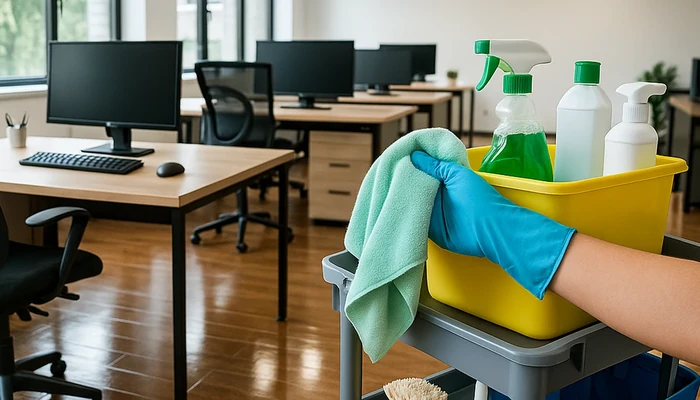
The right tools don’t just enhance results—they keep your office safe. “Office Hygiene Heroes” are selective about their equipment and supplies:
- Hospital-grade and EPA-registered disinfectants for high-risk areas
- Microfiber cloths and mop heads to capture dust and microbes
- HEPA-filter vacuums for allergen and particle control
- Color-coded cleaning systems to prevent cross-contamination
- Protective equipment for staff: gloves, masks, aprons
In facilities requiring special consideration (e.g., medical suites), janitorial teams may also use specialized disinfectants as recommended by commercial industry standards.
Sample Janitorial Checklist: Routine Office Hygiene in Action
| Area | Daily Tasks | Weekly Tasks |
|---|---|---|
| Reception & Lobbies | Disinfect counters, door handles, sweep/mop floors | Spot clean glass, deep dusting |
| Desks & Workstations | Wipe surfaces, empty trash, sanitize keyboards/mice | Vacuum under desks, disinfect telephones |
| Restrooms | Sanitize fixtures, refill supplies, mop floors | Descale sinks, deep clean partitions |
| Kitchens | Disinfect counters/appliances, sweep, mop | Clean fridge exteriors, wipe light fixtures |
| Common Areas | Spot clean, empty bins, disinfect handrails | Wash walls, deep carpet clean |
Pro-tip: The most effective providers adjust their checklists by season, office capacity, and special events.
High-Touch Points: Where Germs Lurk and What to Target
Research and public health experts highlight high-contact spots as the main vectors for cross-infection. Every office hygiene hero focuses on:
- Light switches, elevator buttons, and handrails
- Shared printers and copy machines
- Break room appliance handles
- Restroom faucets and flush levers
- Desk phone handsets and conference tables
These surfaces receive more frequent disinfection—sometimes multiple times daily—especially during peak illness seasons.
Safe Practices: Protecting Employees, Visitors, and Cleaning Staff
Safety goes hand in hand with hygiene. Expert janitorial teams are trained in:
- Proper dilution and labeling of cleaning chemicals
- Ventilating areas during and after cleaning for indoor air quality
- Wearing and properly disposing of personal protective equipment
- Secure storage of supplies to avoid unauthorized access
Protocols are regularly updated in line with occupational safety and local regulations. Partnering with a knowledgeable company ensures up-to-date compliance.
Green Office Hygiene: Eco-Conscious Janitorial Solutions
With sustainability a growing concern, environmentally certified products are increasingly used in office settings. Top janitorial services employ:
- Low-VOC cleaning agents
- Reusable microfiber instead of disposables
- Water-saving and energy-efficient equipment
- Recycling programs for cleaning supply waste
Ask your janitorial provider for proof of sustainable supply chains and green certifications that match your organization’s priorities.
Frequency and Scheduling: How Often Should Your Office Be Cleaned?
The right cadence depends on office size, headcount, and business type. Consider these general guidelines:
- Daily: Restrooms, break rooms, high-touch and high-traffic areas
- 2–3x/wk: Workstations and private offices
- Weekly: Deep dusting, drapes, less-used conference rooms
- Monthly/Quarterly: Window washing, carpet extraction, floor maintenance
Flexible scheduling—including evening and weekend cleans—ensures minimal disruption.
Quality Assurance: How Top Janitorial Services Measure Results
How do you know your hygiene standards are truly being met?
- Regular supervisory inspections and scoring
- Client checklists and service logs for transparency
- Incident reporting channels for immediate feedback
- Periodic reviews and updates based on new health data
Some companies even track metrics such as complaints and supply usage trends as an extra accountability layer.
Customizing Your Plan: Special Facility and Office Needs
The rules change for:
- Medical suites or dental offices (where special protocols protect patient safety)
- Daycares or childcare centers (where infection reduction is paramount)
- Restaurants and hospitality venues (where compliance with health regulations matters)
- Dental labs (where strict workplace cleanliness is nonnegotiable)
Confirm your janitorial company’s experience with your facility type and ensure protocols are customized to your compliance and hygiene goals.
The People Behind the Hygiene: Training and Standards
Janitorial services are only as strong as their staff. Look for:
- Ongoing staff training in safety, chemical handling, and security
- Standardized checklists and documented workflows
- Clear policies for uniforms, badges, and building access
- Background checks and insurance for peace of mind
Professional organizations invest in their people—consistent results depend on it.
Decision Guide: How to Choose Your Office Hygiene Heroes
- Assess Experience: Do they have clients in your sector? Are references available?
- Check Certifications: EPA or green certifications? Regular staff safety training?
- Review Checklists: Are they customized for your space?
- Transparency: Clear, itemized proposals and no hidden fees.
- Communication: Fast, clear issue resolution paths.
- Scalable Scheduling: Can they adapt as your team grows or needs change?
Choosing wisely up front saves stress and ensures a hygienic workplace long-term.
Addressing Common Concerns: Allergies, Security, and Sensitive Equipment
- Allergies: Ask for fragrance-free and hypoallergenic products.
- Security: Confirm key control procedures and staff screening.
- Delicate Equipment: Ensure cleaning staff are briefed on special areas—e.g., sensitive electronics or secure zones.
Partner with your janitorial company for written guidelines covering your unique concerns.
Proactive Communication: Building a Partnership With Your Janitorial Team
Great office hygiene is a team effort:
- Hold onboarding meetings so cleaning staff understand office policies and schedules.
- Designate a point of contact (POC) for quick queries or updates.
- Share feedback promptly to improve service quality.
- Encourage positive recognition—motivation drives excellence!
Ask for periodic service reviews to adapt to pod changes, office expansions, or new requirements.
FAQ: Janitorial Services and Office Hygiene Heroes
What defines a great janitorial service for offices?
Reliability, clear checklists, strong supervision, adaptable scheduling, and consistent use of safe, effective products.
How often should office bathrooms be cleaned?
Daily at minimum; high-traffic buildings may need multiple cleanings per day.
Can janitorial services work outside standard office hours?
Yes, most reputable teams offer after-hours and weekend routines for minimal disruption.
What disinfection protocols are recommended for high-traffic offices?
Daily or more frequent touchpoint disinfection with EPA-registered products and regular staff training on best practices.
Do janitors handle recycling and waste separation?
Yes—comprehensive services include proper recycling and compliant waste handling protocols.
Are green cleaning products as effective as traditional ones?
Modern eco-friendly products, when applied correctly, meet high standards for disinfection and safety.
How are cleaning crews supervised?
Through onsite managers, service logs, and scheduled audits to ensure quality control.
Is it possible to request custom protocols for sensitive spaces (labs, data rooms)?
Absolutely. Leading janitorial providers collaborate to develop unique, documented protocols per need.
How can I verify office hygiene standards are maintained over time?
Ask for periodic inspection reports, access to service logs, and customer-initiated feedback channels.
Summary: Empowering Your Workplace With Effective Hygiene
Office hygiene is a shared responsibility, but dedicated janitorial professionals are your critical partners in this effort. By understanding the difference between janitorial and periodic commercial cleaning, using proven checklists, and building a partnership with evidence-based providers, you’ll keep sickness rates low and productivity high.
When you’re ready to take your office hygiene to the next level, trust experts who bring structured systems and genuine care to your business every day.
About CHICAGOLAND Cleaning Services
CHICAGOLAND Cleaning Services specializes in recurring house cleaning, deep cleaning, move out cleaning, office cleaning, and facility-specific solutions in Chicago, Illinois and nearby areas. With trained staff, proper equipment, and detailed checklists, we help homes and businesses maintain safer, healthier environments—always with attention to transparency and client relationships.
chicago commercial cleaning services, office restroom cleaning chicago, office cleaning chicago, open office cleaning South Holland, conference room cleaning Lake Villa, office restroom cleaning Hanover Park IL, office cleaning Westmont IL, office cleaning Palatine IL, office restroom cleaning Markham, office cleaning Park Ridge IL