
Designing Effective Training for Gym Cleaning Staff: A Complete Guide
Maintaining gym cleanliness goes beyond wiping down equipment—it’s about creating a safe, inviting environment where members feel cared for and protected from health risks. Yet, even state-of-the-art facilities fall short without a well-trained cleaning staff. In this in-depth guide, you’ll discover how the effective training of gym cleaning staff elevates hygiene, builds trust, reduces liability, and supports member satisfaction. Whether you manage a fitness center, yoga studio, or sports complex in the Chicago area, this framework will help you understand what distinguishes top-performing cleaning teams and how to assess a cleaning company’s practices before hiring. Read on for actionable training elements, proven protocols, compliance essentials, and quality assurance insights—all designed to keep your gym spotless, compliant, and welcoming.
Structuring a Training Framework for Gym Cleaning Teams
Proper staff preparation is key to consistent, high-quality results. Effective training of gym cleaning staff should be structured, practical, and tailored to the unique demands of fitness environments.
- Onboarding Modules: Orientation with gym layout, types of equipment, and introduction to cleaning standards.
- Hands-On Demonstrations: Live practice with equipment, cleaning products, and typical task scenarios.
- Shadowing: New hires observing experienced staff to develop correct habits.
- Periodic Refreshers: Regular updates to reinforce and upgrade skills, including new protocols or technologies.
Trainer Responsibilities
- Provide job-specific instructions and answer questions.
- Model proper techniques and set expectations for conduct and results.
- Monitor performance, provide constructive feedback, and adapt training as needed.
Essential Protocols Unique to Gym Environments
Cleaning gyms is fundamentally different from office or residential cleaning. Effective training of gym cleaning staff addresses:
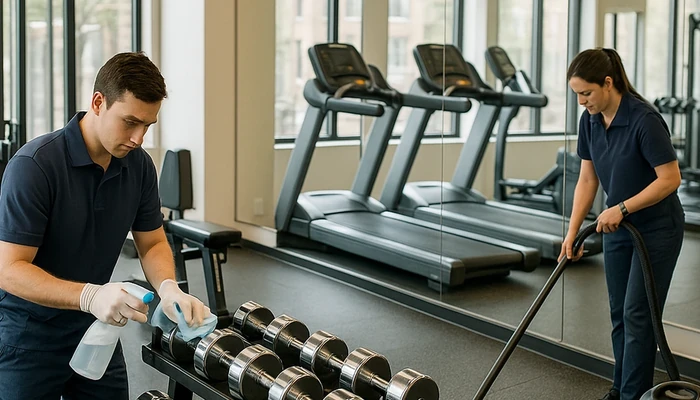
- High-Touch Hotspots: Including dumbbells, cardio machine handles, door push bars, locker locks, touchscreens, and water fountains.
- Perspiration and Biohazards: Training on safe removal and disposal strategies for bodily fluids.
- Cross-Contamination Prevention: Staff must understand color-coded cloths, single-use wipes, and changing gloves between zones.
Practical Example
During a busy evening, a member reports a spill in the free weights area. Trained staff know to use gloves, the correct disinfectant, and promptly block the area for cleaning. This mitigates risk and demonstrates professionalism.
Mastering Product and Equipment Handling
Gyms require both basic and advanced cleaning tools. Training must cover safe and efficient product use:
- Identifying the Right Chemicals: Select EPA-approved disinfectants suitable for gym surfaces; avoid damage to equipment padding or flooring.
- Understanding Dwell Time: Teams must follow required contact times for effective germ kill, as advised by CDC guidelines on sanitation.
- Equipment Maintenance: Staff must clean and maintain vacuums, mop heads, and foggers, ensuring no tool becomes a contamination source.
Advanced Tools in Practice
Electrostatic sprayers and HEPA filters can boost efficiency. Teams must receive supervised practice before deploying specialized tools, as highlighted in our innovative gym cleaning tools guide.
Regulatory Compliance and Industry Standards
All training programs should teach local Chicago health codes, OSHA safety standards, and best practices for gym cleaning. This is not just good practice—it’s a legal necessity.
- Bloodborne Pathogen Protocols: Following OSHA’s standards on bloodborne pathogens to protect staff and members.
- Record Keeping: Staff must document completed tasks and safety incidents to demonstrate compliance.
- PPE Requirements: When and how to wear gloves, masks, and safety goggles.
Compliance Checklist
- Are all relevant staff up to date on OSHA and CDC procedures?
- Does the company provide ongoing compliance training?
- Are cleaning logs, SDS sheets, and PPE available at all times?
Developing Cleaning Checklists for Every Zone
Well-crafted checklists standardize cleaning quality and help teams prioritize by risk.
| Zone | Tasks | Frequency |
|---|---|---|
| Free Weights | Disinfect grips, racks; mop floor | After use + nightly |
| Cardio Area | Clean consoles, handles | Hourly + nightly |
| Locker Rooms | Sanitize benches, lockers, showers | Multiple times daily |
| Reception Area | Wipe counters, sanitize touchpoints | Every 2 hours |
For a deeper dive on how to create comprehensive zone-by-zone checklists, see our cleaning protocols resource.
Teaching Infection Control and High-Risk Situations
Effective training of gym cleaning staff covers infection control—reducing spread of germs and responding to illness outbreaks.
- Spot Cleaning: How to respond to vomit, blood, or bodily fluid events using recommended disinfectants and PPE.
- Outbreak Response: Enhanced protocols during flu season or in case of public health alerts.
- Member Communication: How trained staff communicate closed areas or protocols to gym-goers in a reassuring manner.
Promoting Eco-Friendly and Safe Cleaning Practices
Top cleaning companies, like Chicagoland Cleaning Services, train staff to minimize environmental impact while prioritizing safety.
- Choose biodegradable products where appropriate.
- Ensure ventilation during chemical use to avoid exposure.
- Dispose of waste safely according to local ordinances.
Practices like swapping paper towels for washable microfiber support both sustainability and superior cleaning outcomes. For ideas on green solutions, read about eco-friendly cleaning in gyms.
Hands-On Scenarios and Real-World Drills
Book learning is not enough—staff must practice real tasks in their work setting. Role-play exercises include:
- Responding to a slip hazard spill in peak hours.
- Dealing with unreported blood on a treadmill.
- Managing cleaning in crowded spaces—navigating around members without interrupting activities.
Drills build confidence, streamline response, and uncover knowledge gaps for further coaching.
Quality Control and Feedback Loops
Effective training of gym cleaning staff incorporates ongoing oversight and a feedback culture.
- Supervisors perform periodic walkthroughs, using standardized scoring forms.
- Staff receive immediate, actionable feedback on their work.
- Regular team reviews encourage peer learning and problem-solving.
Managing Reporting and Follow-Up
If issues arise—such as a missed spot or incomplete restocking—lead staff document incidents, correct them swiftly, and record improvements for future prevention. This loop is central to maintaining high standards.
Soft Skills for Effective Gym Cleaning Teams
Training isn’t just about tasks—it also covers:
- Member Interaction: Being courteous and professional; clear communication when spaces are temporarily closed.
- Discretion: Avoiding member disruption and respecting privacy, especially in locker rooms or studios with personal items.
- Adaptability: Handling urgent requests or last-minute layout changes efficiently.
Evaluating Cleaning Companies: What to Look For
When selecting a gym cleaning provider, use these training-centric benchmarks:
- Transparent onboarding and frequent staff training updates.
- Demonstrated understanding of regulatory requirements for fitness spaces.
- Availability of detailed checklists and cleaning logs.
- Staff trained in both equipment and soft skills.
- Proven experience in high-traffic gyms or specialized facilities.
For more tips, consult our resource on maintaining a spotless and safe gym space for members and staff.
Integrating Technology and Advanced Methods
Modern gyms benefit from tools like electrostatic sprayers and scheduling software. Training must keep pace, ensuring staff can:
- Safely operate and maintain new equipment.
- Document cleaning activities using digital systems.
- Stay updated on advances through ongoing internal training.
See more on emerging technology at gym cleaning innovations.
Adapting Training to Different Facility Types
Training needs vary based on the gym’s focus:
- Yoga Studios: Gentle cleaning for mats and wood floors; essential oil-safe practices.
- 24/7 Fitness Centers: Shift-based cleaning staff require extended training on solo overnight protocols and emergency response.
- Sports Complexes: Additional training for court care and large-venue disinfection.
Staff adaptability is crucial as each setting presents unique cleaning and safety challenges.
Ongoing Education and Keeping Up With Best Practices
Top cleaning companies invest in continuing education to address new health hazards and evolving industry standards. This may include:
- Monthly workshops covering updated CDC or local health advisories.
- Reviewing lessons learned from real incidents.
- Staff certification renewal when required.
Involving Staff in Continuous Improvement
Effective training embraces feedback from the field. Teams should be encouraged to share:
- Suggestions for improved methods or tools.
- Observations about challenging areas or member habits that impact cleaning.
- Ideas for member education or signage.
Building a team-oriented culture improves safety and results for everyone.
Recommended Decision Checklist for Gym Managers
- Does your cleaning provider present comprehensive, ongoing staff training?
- Is there clear evidence of CDC/OSHA compliance training?
- Are checklists and cleaning logs visible and regularly reviewed?
- Do cleaning teams understand high-risk gym scenarios?
- Is there proof of adaptability for different facility types?
- How is feedback handled both from staff and members?
FAQs About Training and Managing Gym Cleaning Staff
- 1. What specific topics should be included in gym cleaning staff training?
- Essential topics include proper use of disinfectants, identifying high-touch areas, PPE protocols, handling biohazards, preventing cross-contamination, and understanding emergency response procedures.
- 2. How often should gym cleaning staff receive refresher training?
- Refresher training is recommended quarterly or whenever new products, policies, or equipment are introduced, and after incidents or public health updates.
- 3. What certifications are important for gym cleaning staff?
- Depending on the facility, look for staff training in OSHA safety standards, bloodborne pathogen protocols, and possibly ISSA cleaning certifications.
- 4. How are high-risk situations (like blood or vomit) addressed?
- Special protocols are used: trained staff isolate the area, use PPE, apply EPA-approved disinfectants, and dispose of materials as hazardous waste, in line with OSHA guidelines.
- 5. Why is dwell time important when disinfecting gym equipment?
- The “dwell time” is the period disinfectant must stay wet on the surface to kill germs, as defined by product instructions and health authorities like the CDC.
- 6. Can eco-friendly cleaning be as effective as traditional methods?
- Yes, if the products used are certified for disinfection and applied correctly per manufacturer and health codes—see our eco-conscious cleaning practices for more.
- 7. What should a manager look for in a trained gym cleaning staff member?
- Key signs include consistent use of checklists, correct PPE, polite communication, and swift response to emerging cleaning needs.
- 8. How is performance of gym cleaning teams measured?
- Through routine inspections, member feedback, completed checklists, and incident logs. These are part of a robust quality assurance program.
- 9. How are cleaning procedures updated when new pathogens emerge?
- Reputable companies quickly review CDC/local guidance, adapt protocols, retrain staff, and update records and signage as needed.
- 10. How does staff involvement improve cleaning results?
- Teams that share frontline observations and suggest improvements foster accountability and lead to safer, cleaner gyms overall.
Wrap-Up: Next Steps Toward Superior Gym Hygiene
Investing in the effective training of gym cleaning staff is an essential step for every gym manager or owner who wants to maintain a spotless, safe, and welcoming facility. From hands-on practice to regulatory compliance and a culture of feedback, each component in this guide offers a blueprint for exceptional cleaning standards and peace of mind for your members.
If you’re searching for professional cleaning support, schedule gym cleaning service or book office cleaning service with a team that prioritizes staff training and safety at every step. For additional needs, explore restaurant cleaning options. For committed, quality-driven results, consider connecting with Chicagoland Cleaning Services.
About Chicagoland Cleaning Services
Chicagoland Cleaning Services helps households and businesses in Chicago, Illinois and nearby areas keep their spaces clean and healthy. Our specialty is providing recurring house cleaning, deep cleaning, move out cleaning, office cleaning, and customized facility cleaning—including gyms and fitness centers. Our trained professionals follow robust quality checklists, prioritize client satisfaction, and stay current with eco-friendly products and the latest health and safety standards. We’re committed to transparent communication and long-term client partnerships for homes, workplaces, and specialized facilities.
cleaning commercial service chicago, gym restroom cleaning chicago, gym floor cleaning chicago, gym cleaning Algonquin IL, gym cleaning Morton Grove, workout gym cleaning Lake Bluff, gym cleaning Burbank IL, gym locker room cleaning Itasca, gym disinfection Round Lake, fitness center cleaning Barrington