Upholding Cleaning Standards in Chicago Educational Institutions: A Comprehensive Guide
Maintaining high cleaning standards in Chicago educational institutions is critical for safeguarding the health and well-being of students and staff. From daily classroom routines to rigorous hygiene protocols in cafeterias and science labs, every space demands unique considerations. In this comprehensive guide, you’ll discover how industry best practices, local requirements, and custom checklists work together to create safe learning environments in Chicago’s schools and educational facilities. We’ll explore the key pillars of cleaning standards, highlight the importance of detailed protocols, and equip you to evaluate, implement, and oversee effective cleaning in any educational context.
Understanding Cleaning Standards: Definitions and Essential Pillars
Before diving into specific procedures, it’s important to define what cleaning standards mean within the context of Chicago educational institutions. Standards typically refer to established benchmarks that govern cleaning frequency, methods, products, and documentation. The pillars supporting these standards include:
- Regulatory compliance: Adhering to CDC, EPA, and local health department guidelines.
- Site-specific protocols: Customizing cleaning routines for classrooms, labs, restrooms, cafeterias, gyms, and shared facilities.
- Use of approved disinfectants and supplies: Ensuring that only products registered by authoritative bodies are used—see the EPA’s disinfectant list for reference.
- Record-keeping and accountability: Maintaining logs, checklists, and periodic inspections.
- Professional training and safety: Staff must receive training on cross-contamination prevention, chemical handling, and proper techniques.
Chicago’s Regulatory Framework for School and Campus Cleanliness
In Chicago, public and private educational institutions must comply with guidelines from the Illinois Department of Public Health and the Chicago Department of Public Health. Some highlights include:
- Routine and periodic sanitation of high-touch surfaces (door handles, desks, light switches, restrooms)
- Regular disinfection schedules for shared equipment and furniture
- Use of green-certified products where feasible to ensure student safety and sustainability
- Documentation of cleaning routines and incident responses
Strict protocols must be observed during health emergencies, including outbreaks of flu or norovirus.
Disinfection Protocols for Classrooms and Learning Spaces
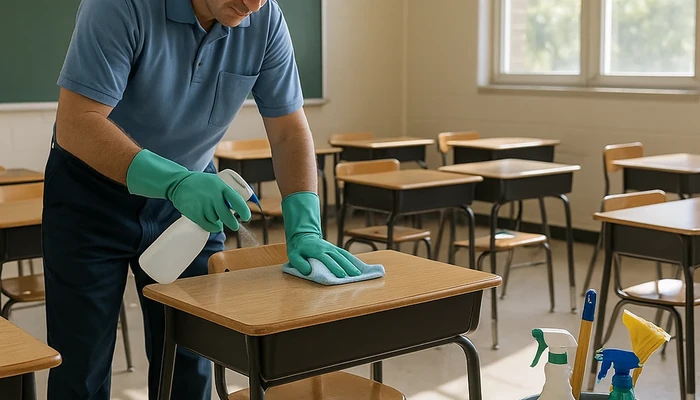
- Daily cleaning of desks, chairs, and tables with EPA-registered solutions
- Spot cleaning of spills and bodily fluids using targeted disinfectants
- Weekly deep cleaning schedules for shared equipment and shelving
- Special attention to computer labs, art rooms, and music practice spaces
For a more focused look at the routines and techniques used in classrooms, see the related resource: Classroom Sanitation: A Necessary Routine.
Restroom Sanitation: Protocols and Quality Assurance
Restrooms pose a unique risk for germ transmission. Leading cleaning standards require:
- Twice-daily cleaning and disinfection during school hours
- Supply checks for soap, towels, and hand dryers
- Routine drain and fixture cleaning
- Spot treatment for high-contact surfaces
- Daily recording of completed procedures
Checklist: Restroom Inspections
| Task | Frequency | Responsible |
|---|---|---|
| Toilets sanitized | Twice daily | Cleaning team |
| Soap/dispensers refilled | Daily | Support staff |
| Floor mopping | Daily | Cleaning team |
| Door handles wiped | After high-use periods | All staff |
Cafeteria and Food Service Area Cleaning Procedures
Food service areas must comply with stringent regulations for both food safety and allergen management:
- Multiple daily cleanings of tables, trays, and seating
- Sinks and preparation surfaces sanitized after each meal period
- Floor swept and mopped after breakfast, lunch, and snack service
- Disposal of waste in sealed bins
These steps reduce the risk of cross-contamination and foodborne illnesses, which is particularly important for young children and individuals with sensitivities.
Gymnasiums, Locker Rooms, and Athletic Facility Standards
Sports facilities are known hotspots for bacteria and fungus. High standards for these areas include:
- Daily mopping with antimicrobial solutions
- Disinfection of shared athletic equipment between classes
- Weekly deep cleaning of lockers and benches
- Ventilation checks to control moisture and odors
Staff should wear protective equipment and follow protocols for biohazard spills.
Specialized Facilities: Science Labs, Art Rooms, and Tech Spaces
These areas require customized procedures due to equipment sensitivity and unique hazards:
- Separate color-coded tools for chemical exposure zones
- Documentation of all cleaning and safety checks
- Special handling for art supplies and digital equipment
Green Cleaning Initiatives in Chicago Schools
Many institutions aim to minimize their environmental footprint while maintaining cleaning rigor. Green initiatives may include:
- Adopting greener cleaning products listed by the EPA
- Energy-efficient equipment and low-water-use procedures
- Recycling programs for cleaning materials packaging
Staff Training, Supervision, and Health Safety Practices
The effectiveness of any cleaning standard depends on the professionalism of the personnel involved:
- Initial and annual training on cleaning protocols and hazard communication
- Emphasis on hand hygiene and use of personal protective equipment (PPE)
- Clear reporting systems for maintenance or contamination incidents
Team supervisors should monitor compliance with detailed checklists and offer ongoing coaching.
Cleaning Frequency Guidance by Facility Type
Frequency varies according to how the space is used and traffic patterns. Below is a comparison of common Chicago educational settings:
- Daycares: Touchpoints and restroom cleaning multiple times daily
- K-12 Schools: Classrooms and restrooms at least once daily, with periodic deep cleans
- Universities/Colleges: Mix of daily, weekly, and event-driven protocols based on facility scheduling
Adjust cleaning intervals in response to illness outbreaks or seasonal needs.
Quality Control and Audit Procedures
Ongoing inspections are central to maintaining standards. Effective quality control methods include:
- Supervisor walk-throughs with checklists
- User feedback surveys from students and staff
- Regular review of cleaning logs and incident records
- Periodic, unannounced quality audits
Documenting Cleaning Schedules and Incident Response
Thorough documentation supports transparency and regulatory compliance. Best practices involve:
- Posting cleaning logs in each area
- Recording completed tasks, issues found, and corrective actions
- Archiving incident reports for outbreaks, spills, or exposures
Evaluating Cleaning Partners and In-House Practices
- Request written protocols, including staff training and insurance
- Verify supervisor references and reviews
- Ask about the use of EPA-certified products and tailored checklists
Consider periodic third-party evaluations to ensure standards remain consistent.
Transitioning After an Outbreak or Facility Closure
Reopening after a confirmed illness outbreak or closure requires enhanced cleaning:
- Complete disinfection of all exposed areas
- Air out buildings and inspect HVAC systems
- Special protocols for soft furnishings and learning materials
Ensure that cleaning products remain on surfaces for the recommended dwell time, per product labeling.
Comparing In-House vs Professional Cleaning for Educational Facilities
- In-house teams: Familiarity with building layout and day-to-day needs; may face resource limits or training gaps
- Professional partners: Bring standardized protocols, deeper cleaning capabilities, up-to-date compliance knowledge, and additional coverage
Learn how custom service plans can support your campus on a consistent schedule by exploring education facility cleaning options.
Frequently Asked Questions on Cleaning Standards in Chicago Educational Institutions
- How often should restrooms and classrooms be cleaned?
- Restrooms: Minimum twice daily. Classrooms: Once daily, with high-touch areas addressed as needed throughout the day.
- Who sets official cleaning standards for Chicago schools?
- Primary guidelines come from the Illinois Department of Public Health and local health authorities. Schools may also apply CDC and EPA recommendations.
- Which cleaning products are recommended for educational settings?
- Only EPA-registered disinfectants and, where possible, greener products approved for use in schools. See the EPA’s lists for details.
- Are green cleaning practices mandatory in Chicago schools?
- While not mandated for all institutions, many Chicago schools voluntarily adopt green cleaning practices in line with local sustainability goals.
- What should a cleaning checklist include?
- All daily, weekly, and as-needed tasks; assigned responsibilities; product usage guidelines; verification steps; timestamped completions.
- How are cleaning protocols updated after illness outbreaks?
- Institutions implement enhanced protocols, increase cleaning frequency, and follow specific product dwell times to target relevant pathogens.
- How can parents or staff report a cleaning concern?
- Reports can be made via administrative offices, through standardized forms, or directly to cleaning supervisors for prompt response.
- Can professional cleaning companies customize protocols for unique school needs?
- Yes. Reputable cleaning companies offer tailored routines and can address specific facility challenges in Chicago educational institutions.
- What training do cleaning staff typically receive?
- Training covers product handling, safety, infectious disease protocols, and emergency response, with refresher sessions at least annually.
Conclusion: Advancing Safe & Healthy Learning Environments
Ensuring high cleaning standards in Chicago educational institutions supports the well-being of every student and staff member. Prioritizing consistent routines, compliance with local and federal guidelines, and continuous staff training means your campus remains prepared for every challenge. For tailored facility cleaning or to discuss a custom hygiene program, rely on trusted partners who know Chicago’s unique needs.
About Chicagoland Cleaning Services
Chicagoland Cleaning Services is a local specialist in residential and commercial cleaning—including recurring house cleaning, deep cleaning, move out cleaning, and comprehensive facility cleaning for educational settings. Chicagoland Cleaning Services helps households and businesses in Chicago, Illinois and nearby areas keep their spaces clean and healthy. Our trained professionals use vetted processes, appropriate equipment, and safe, effective products to ensure consistent quality and trusted results. We’re committed to clear communication, transparent pricing, and building lasting relationships with every client. For more information or to explore your cleaning needs, visit Chicagoland Cleaning Services.
cleaning commercial services chicago il, school restroom cleaning chicago, classroom cleaning chicago, school sanitation Morton Grove, school sanitation Hinsdale IL, school gym area cleaning Bartlett, school sanitation West Dundee IL, campus cleaning Des Plaines, school hallway cleaning Vernon Hills, education facility cleaning Itasca