 Skip to content
Advanced Disinfection Techniques for Commonly Used Surfaces: The Complete Guide
Effective disinfection is critical for anyone responsible for maintaining healthy spaces—whether at home, in an office, or in a specialized facility. In this comprehensive guide, you’ll learn the most advanced disinfection techniques for commonly used surfaces, discover the science behind proper sanitation protocols, and gain access to actionable checklists and frameworks used by professional cleaners. We focus on both the why and the how, helping you determine the best path forward for your unique environment. As Chicago’s cleaning specialists, Chicagoland Cleaning Services offers insights shaped by local needs, proven best practices, and current standards.
The Science of Surface Contamination: Why Advanced Disinfection Matters
Commonly used surfaces in shared spaces—like countertops, doorknobs, appliances, restroom fixtures, and electronics—are significant points of cross-contamination. Pathogens such as bacteria, viruses, and fungi can persist for hours or days unless neutralized through systematic disinfection. The goal of advanced techniques is to interrupt the transmission chain and reduce infection risk, especially in high-traffic or vulnerable environments. Understanding the science behind surface contamination empowers you to make informed choices about protocols and frequency. Research from the Association for Professionals in Infection Control and Epidemiology underscores the importance of targeted strategies for different material types and usage levels.
Profiles of Commonly Used Surfaces and Their Unique Risks
Not all surfaces require the same disinfection approach. Below is a structured comparison of frequently touched surfaces and their particular risks:
- Kitchen counters & sinks: High exposure to food-borne pathogens and moisture, favoring microbial growth.
- Restroom fixtures: Regular contact with body fluids and aerosolized droplets; require intensive disinfection routines.
- Door handles & light switches: Multiple hand contacts per hour, fast pathogen transfer rates.
- Desks & keyboards: Frequent skin contact, debris buildup; often neglected in daily cleaning.
- Soft surfaces (chairs, upholstery): Potential for viral particles; require special methods, not standard sprays or wipes.
- Shared electronics: Challenging to disinfect due to sensitivity, but high transfer risk.
Framework for Assessing Disinfection Needs in Any Setting
Each environment has unique disinfection requirements. Use this adaptive framework to assess your needs:
- Identify high-touch areas—document all shared contact points.
- Evaluate traffic patterns—consider occupant density and movement schedules.
- Classify risk profiles—are any users vulnerable (elderly, children, immunocompromised)?
- Map usage timing—determine when spaces are most active and need disinfection.
- Coordinate with professional standards—seek references from sources like the EPA List N for approved disinfectants.
Professional vs. DIY Disinfection: What Sets the Standards Apart?
While household cleaning supplies can address visible dirt and some germs, advanced professional disinfection employs certified products, trained personnel, and standardized checklists. Key differences include:
- Product selection: EPA-registered disinfectants, chosen for efficacy against specific pathogens.
- Application technique: Meticulous coverage, correct dwell times, and cross-contamination prevention (e.g., color-coded cloths).
- Documentation: Log sheets and schedules to track frequency and compliance.
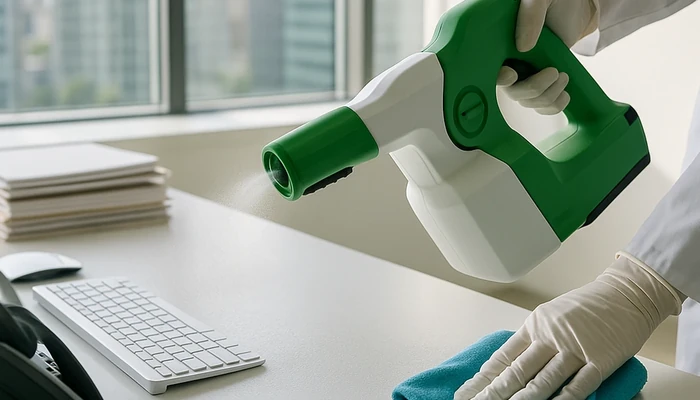
- Special tools: Electrostatic sprayers, UV-C devices, steam cleaners for certain facilities.
- Trained teams: Consistent protocols and safety measures, as implemented at Chicagoland Cleaning Services.
Selecting Disinfection Products: What to Look for and Avoid
Choosing disinfectants goes far beyond reading labels. Follow this checklist when evaluating products:
- Is it approved on the EPA List N (for viral deactivation)?
- Suitable for your surface type (porous, non-porous, electronics)?
- Safe for users—check ventilation requirements and personal protective equipment (PPE) compatibility.
- Required dwell/contact time—how long must the surface remain wet to be effective?
- Any residue or odor concerns?
- Is it child- or pet-safe if relevant?
Avoid mixing chemicals—such as bleach and ammonia—which can produce hazardous gases. When in doubt, consult a certified cleaning company for compatibility and safety.
Step-by-Step Advanced Disinfection Process for Hard Surfaces
Successful disinfection follows a sequential process, designed to eliminate both visible and invisible contaminants:
- Remove debris and organic matter individually (pre-cleaning).
- Apply detergent or all-purpose cleaner to reduce grime.
- Rinse and dry as appropriate (especially before disinfectant application).
- Apply chosen disinfectant evenly, ensuring all areas remain wet for the recommended dwell time.
- Allow natural air drying or buff with a fresh, laundered cloth where necessary.
For detailed, step-by-step instructions tailored to high-occupancy areas, you may also reference best practices similar to those described in our high-traffic area cleaning protocols.
Disinfecting Soft and Porous Surfaces: Techniques and Cautions
Soft surfaces—including upholstery, drapes, and carpets—require different strategies than hard surfaces:
- Vacuum using HEPA filtration first; this reduces contaminant load.
- Spot clean spills and soiling immediately.
- Use fabric-appropriate disinfectant sprays: always test in a small, hidden spot before full application.
- Avoid oversaturation, which can promote mold or mildew.
- Allow for thorough drying before the area is used again.
When extra precision is required, such as in facilities for children or medical offices, professional-grade steam cleaning and advanced chemical protocols should be considered. For more on infection prevention in environments serving children, see our guide on reducing infections and ensuring children’s health.
High-Touch Point Checklist: Ensuring No Critical Spots Are Missed
Missed touchpoints are a leading cause of ineffective disinfection. Incorporate this checklist into your daily or weekly routines:
- Door knobs, push plates, handrails
- Light switches
- Sink handles and faucets
- Soap/paper towel dispensers
- Toilet flush levers and seats
- Remote controls and touchpads
- Shared telephones and elevator buttons
- Break room appliance handles (refrigerator, microwave)
- Desk surfaces and chair arms
- Credit card readers and pens at point-of-sale
Structured Comparison: Manual vs. Electrostatic and UV Disinfection
| Technique | Strengths | Limitations | Best Use Cases |
|---|---|---|---|
| Manual Wipe/Application | Targeted; thorough on small areas; accessible | Labour-intensive; variable coverage; risk of missing spots | Offices, homes, touchpoints |
| Electrostatic Spraying | Even, comprehensive coverage; fast for large spaces | Requires equipment; not suitable for all items | Commercial, large facilities, schools |
| UV-C Disinfection | No residue; effective on exposed surfaces | Ineffective on shaded/obstructed areas; safety protocols required | Hospitals, labs, supplementary method |
The Role of Dwell Time, Dilution, and Application Method
Advanced results depend on three critical variables:
- Dwell time: Each disinfectant has a minimum contact time to be effective. Shortcuts reduce efficacy.
- Dilution: Always mix concentrates per manufacturer’s instructions. Over-dilution weakens, under-dilution wastes product and may harm surfaces.
- Application: Use microfiber or disposable cloths; apply enough solution for visible wetness. For electronics, spray onto a cloth—never directly on the device.
Safe Practices: Protecting Users and Occupants During Disinfection
Proper disinfection prioritizes human health at every step. Safety essentials include:
- Ventilating areas during and after disinfection.
- Using gloves, protective eyewear, and washable aprons as needed.
- Posting signage when floors or rooms are temporarily unavailable.
- Avoiding food areas during active disinfection.
- Securing chemicals out of reach of children and pets.
Staff at Chicagoland Cleaning Services undergo regular training to remain current with industry guidelines.
Special Cases: Disinfection in Sensitive Environments
Some places need protocol adjustments due to their use and occupants:
- Educational facilities: Adhere to child-safe product protocols. See more on reducing school infections.
- Medical/dental offices: Apply high-level disinfection, following guidance akin to that found in our dental clinic cleanliness and medical office protocols.
- Food service areas: Only use food-safe chemicals and avoid cross-contamination with restroom routines. Restaurant standards provide guidance.
- Pet or animal care facilities: Vet formulations; some common disinfectants can be toxic to pets.
Routine and Frequency: When to Disinfect, and How Often?
Setting a disinfection schedule depends on surface type, usage frequency, and identified risks. Use this frequency guide:
- High-touch points (doors, faucets): 1–3 times per day, or after known contamination
- Bathrooms and kitchens: After heavy use and at the end of each day
- Rest of shared spaces: Daily or every other day; increase after illnesses or high-volume days
- Soft surfaces: Weekly (routine); immediately after spills or exposure
- Electronics: At start and end of day, and after each user when possible
Adjust cadence during outbreaks, flu season, or when vulnerable individuals are present. Professional cleaning plans provide reliable, scheduled routines for peace of mind.
Documentation and Quality Control in Professional Disinfection
High-quality companies keep meticulous records to ensure thoroughness. This can include:
- Checklists for each area and surface
- Logs of products and lot numbers used
- Staff training documentation
- Customer feedback tracking to identify recurring issues
If you’re hiring cleaners, ask to review documentation protocols. Consistency is more important than frequency alone.
How to Evaluate a Cleaning Company’s Advanced Disinfection Protocols
Use these criteria to assess if a provider follows advanced protocols:
- Can they show product safety and approvals (e.g., EPA registration)?
- Do staff follow written checklists for each room type?
- Are their tools regularly sanitized and color-coded for area segregation?
- Is scheduling flexible for emergency or same-day situations?
- Do they communicate what’s included and excluded up front?
For property managers and business owners especially, evaluating advanced disinfection is a best practice to reduce liability.
Pitfalls to Avoid in Surface Disinfection
Common errors undercut the power of advanced products:
- Skipping pre-cleaning and applying disinfectant to dirty surfaces
- Using expired or incorrectly stored solutions
- Insufficient dwell/contact time
- Reusing contaminated cloths on multiple surfaces
- Neglecting to ventilate or check PPE compatibility
Special Considerations for Chicago, Illinois Homes and Businesses
As a hub for commerce, tourism, and diverse living spaces, Chicago environments present unique cleaning demands. Changing seasons mean increased mud, snow, and allergen exposure; dense residential and commercial building layouts amplify the risk of cross-contamination. It’s essential to adapt disinfection frequency and methods to match local variables, including:
- More frequent protocols during flu season or high-travel periods
- Adjustments for HVAC cycles or open windows in spring/fall
- Pet- and child-safe products for multi-generational or pet-friendly homes
Chicagoland Cleaning Services designs protocols reflecting these regional particulars to ensure clients’ peace of mind.
Frequently Asked Questions About Advanced Disinfection Techniques
- What’s the difference between cleaning, sanitizing, and disinfecting?
Cleaning removes visible soil, sanitizing lowers germ counts to safe levels, and disinfecting kills pathogens as specified on product labels. - How often should high-touch surfaces be disinfected in busy offices?
Ideally, 2–3 times daily, and always after a suspected contamination event. - Are natural disinfectants (like vinegar) effective for COVID-19?
No; only EPA-registered products on List N are proven to destroy SARS-CoV-2 and similar viruses. - How can I ensure my cleaners are using the right products and methods?
Request documentation, product datasheets, and observe if they use checklists and PPE per best practices. - Is electrostatic spraying safe for homes?
Yes, if conducted by trained professionals using appropriate chemicals; avoid DIY methods without education. - What are the health risks of improper disinfection?
Beyond persistent pathogens, misuse of chemicals can cause respiratory, skin, and eye irritation. - How much does professional advanced disinfection cost compared to standard cleaning?
Costs vary with square footage and protocols; advanced disinfection usually carries a higher rate due to specialized products and labor.
Summary and Key Takeaways
Advanced disinfection techniques are essential for healthy, shared environments—from homes to busy offices and specialized facilities. Understanding the science of surface contamination, following recommended product selection and disinfection procedures, and adapting protocols for high-risk or special settings provides maximum protection. Frequent documentation—and choosing the right cleaning partner like Chicagoland Cleaning Services—delivers both peace of mind and measurable hygiene improvements.
Interested in a tailored plan for your property or workspace? Explore our options for Office cleaning service, retail cleaning service, or Schedule Restaurant cleaning with trusted teams.
About Chicagoland Cleaning Services
Chicagoland Cleaning Services helps households and businesses in Chicago, Illinois and nearby areas keep their spaces clean and healthy. Our trained teams specialize in recurring house cleaning, deep cleaning, move out cleaning, office cleaning, and specialized facility sanitation. We use proven protocols, professional-grade products, and a commitment to client safety to deliver superior results for homes, offices, Airbnb properties, and commercial environments.
commercial cleaning companies in chicago, open office cleaning chicago, chicago office cleaning, office workstations cleaning Bartlett, office cleaning Evanston, Westmont office cleaning, desk disinfection River North, breakroom cleaning Bucktown IL, conference room cleaning Cicero IL, open office cleaning Riverwoods IL
