
Mastering Best Practices for Cleaning Gym Floors: An In-Depth Guide
Hygienic, safe gym floors are essential for protecting gym users and enhancing any fitness facility’s reputation. If you manage, own, or operate a gym in Chicago—or you’re vetting cleaning partners before making a decision—understanding the best practices for cleaning gym floors is crucial. This in-depth guide walks you through proven frameworks, flooring-specific routines, professional tools, quality benchmarks, and how the right maintenance schedule supports lasting cleanliness and safety. You’ll gain insights into what distinguishes truly professional gym floor cleaning, how to adapt strategies for wood, rubber, and other flooring types, when to consider expert services, and the decision factors to look for when comparing providers. Chicagoland Cleaning Services shares the practical know-how our teams use every day to help Chicago’s gyms and facilities maintain peak standards.
Anatomy of Common Gym Floor Types and Their Unique Cleaning Needs
Not all gym floors are created equal. Materials impact everything: cleaning frequency, product compatibility, safety requirements, and the aggressiveness of stain and soil removal. Here’s what sets each major type apart:
- Wood floors: Traditional, elegant, moisture-sensitive, and easily damaged by harsh chemicals or excess water.
- Rubber flooring: Shock-absorbent, water-resistant, but prone to scuffing and buildup.
- Vinyl and padded vinyl: Durable, stain-resistant, but some finishes require gentle cleaning agents.
- Concrete and specialty composite floors: Super-tough, but exposed to harsh impacts and sweat residue.
Understanding these surface differences is step one in applying the right cleaning protocols—for both daily routine and more intensive periodic treatments.
Assessing Gym Floor Soils: What You’re Really Up Against
Effective gym floor cleaning starts with identifying “what” you’re removing. Typical gym soils include:
- Sweat and body oils: Major sources for bacteria and odors.
- Shoe treads and outdoor dirt: Grit that can embed or scratch surfaces.
- Chalk, powder, protein shakes, and personal care products: These form stubborn residue that can cause slips or damage finishes.
- Blood or bodily fluids (accidents): Require immediate, specialized disinfection (see EPA List N disinfectants for guidelines).
Each soil type changes the approach—so top-quality routines begin with a soil assessment.
Framework for Daily Gym Floor Cleaning: Building a Consistent Routine
- Pre-clean: Remove debris with dust mops or vacuums designed for your surface (HEPA filters recommended for dust control).
- Spot cleaning: Swiftly address spills with manufacturer-approved agents and microfiber cloths.
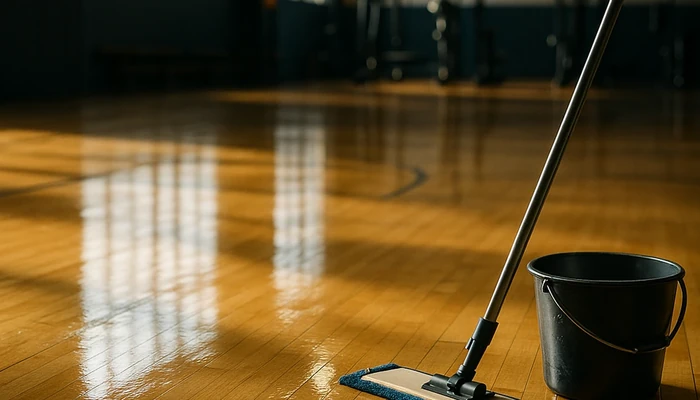
- Damp mopping: Use a two-bucket system: one with diluted cleaning solution (following dilution ratios per IICRC S100 standards), and one with clean rinse water. Never over-wet wood or padded floors.
- Dry: Use fans or good ventilation to accelerate drying, minimizing slip risks.
Routine frequency depends on usage—high-traffic gyms may require touch-up spot cleaning several times a day and mopping 1–2 times daily.
Deep Cleaning Protocols: When Routine Isn’t Enough
Monthly or quarterly, every gym flooring type benefits from deep cleaning—removing ingrained soils and resetting hygienic standards. This process usually involves:
- Power scrubbing with soft-bristled machines for rubber or vinyl floors
- Low-moisture encapsulation for wood floors
- Edges and corners detailed by hand
- Disinfectant dwell times strictly observed (see EPA guidelines for pathogen-specific requirements)
Partnering with specialists ensures that deep cleaning does not void flooring warranties or degrade finish layers.
Comparing Cleaning Products: Safety, Effectiveness, and Compliance
| Product Type | Use Case | Surface Compatibility | Pros | Cons |
|---|---|---|---|---|
| Neutral pH cleaner | Daily cleaning | Wood, vinyl, rubber | Gentle; non-damaging | Ineffective for heavy soils |
| EPA-approved disinfectant | Post-biohazard or outbreaks | Check specific label | Kills pathogens | Some may damage finishes |
| Enzymatic cleaner | Odor control | Rubber, vinyl | Breaks down organic soils | Not a disinfectant |
| Steam cleaning (equipment) | Deep cleaning | Hard-wearing surfaces | No residues; high efficacy | Can damage sensitive floors |
Always check flooring manufacturer recommendations and, where appropriate, reference EPA List N for disinfectant products effective against relevant pathogens.
Customizing Schedules: Frequency and Triggers for Gym Floor Maintenance
- Low-traffic hours: Schedule mopping when footfall is lowest to reduce disruption and maximize drying time.
- Peak use triggers: Add touch-up or spot cleaning during busy periods, especially after classes or group sessions.
- Seasonal adjustments: In winter, increase cleaning frequency to combat road salt and slush brought indoors.
- After events/special use: Always perform a thorough clean following large group activities or competitions.
Building a maintenance calendar—and sticking to it—is a foundation for safe, welcoming spaces.
Floor-Specific Cleaning Techniques for Wood, Rubber, and Vinyl
Wood Gym Floors
- Use microfiber mops; never allow standing water.
- Spot treat with neutral pH solutions.
- Avoid harsh disinfectants unless certified safe for wood.
Rubber Gym Floors
- Vacuum regularly to remove dust and grit.
- Damp mop with manufacturer-approved solutions.
- Inspect for moisture penetration at seams.
Vinyl/Padded Vinyl Floors
- Broom or vacuum before mopping.
- Diluted neutral solutions prevent residue buildup.
- Watch for finish wear in high-traffic areas.
Each floor material requires careful handling—using the wrong product can void warranties or create safety problems.
The Role of Tools and Equipment: Innovation and Standardization
- Microfiber mops: Trap and remove fine soils.
- HEPA-filter vacuums: Essential for dust control, especially in multi-use gyms.
- Auto-scrubbers with soft pads: Provide uniform coverage for large rubber or vinyl floor spaces. See more on optimal equipment choices at Innovative Gym Cleaning Tools and Equipment.
- Color-coding: Designating cleaning tools for distinct zones (locker rooms vs. gym floor) reduces cross-contamination.
Well-trained crews follow checklists for tool use, cleaning, and storage to ensure consistent quality.
Disinfection Standards and Hygiene Benchmarks
In today’s health-focused climate, gym floor disinfection can’t be an afterthought. Key standards include:
- EPA List N compliance: Choose products certified for relevant pathogens (see EPA reference here).
- Dwell times: Always allow sufficient contact time as per label directions—rushing means incomplete disinfection.
- Targeted high-risk areas: Free weights zones, entryways, and stretching areas need extra attention.
Benchmark your own protocols against facilities with the best reputations—or tap into frameworks summarized at Vital Role of Disinfection in Gyms.
Staff Training and Quality Control for Reliable Outcomes
Routine checks and ongoing training are vital in professional gym floor maintenance. Practices proven to reduce risks and elevate standards include:
- Clear, step-by-step checklists for each floor type
- Regular skill refreshers (see Effective Training Of Gym Cleaning Staff for more on this)
- Simple, actionable quality metrics (e.g., slip risk, visible residue, odor checks)
- Transparent logbooks and incident reports
Leadership involvement and continuous improvement are hallmarks of top-performing cleaning teams.
Proactive Odor and Residue Management: Going Beyond Visual Clean
- Address sweat and body odor immediately with enzymatic cleaners
- Audit drains and corners for lingering moisture
- Maintain air circulation in high-humidity areas
- Consider periodic professional odor-control treatments to reinforce cleanliness (see Sanitizing Solutions for Fitness Centers)
Effective cleaning is verified by sight, scent, and touch—addressing all senses for a welcoming gym.
Gym Floor Cleaning Checklist: Step-by-Step
- Inspect the area and note any unusual soils or hazards.
- Remove debris and dust using appropriate vacuum/mop.
- Address spills and sticky spots with spot-cleaning agents.
- Damp mop with suitable solution, switching out water as needed.
- Apply disinfectant only if label permits for your specific flooring; allow for correct dwell time.
- Dry floor thoroughly before reopening for use.
- Log actions taken; report issues needing extra follow-up or maintenance.
Turn this into a wall chart or daily staff reference for consistent results.
Considerations for Outsourcing: When to Call Professionals
- Complex flooring systems or damaged surfaces
- During outbreaks or post-incident (biohazard cleanups)
- Lack of in-house expertise or availability
- Deep cleaning/remediation is overdue or periodic refinishing needed
Professional cleaning crews bring advanced tools, commercial-grade solutions, and accountability—especially important for gyms with specialized surfaces or high public visibility. For tailored gym floor and facility cleaning, see Gym cleaning specialists.
Evaluating Cleaning Service Partners: Quality, Transparency, and Reliability
- Ask about documented checklists and routine logs.
- Request information on training standards, background checks, and insurance.
- Evaluate communication (scheduling flexibility, transparency on product use, and clear pricing).
- Seek references or case studies from similar facilities.
- Prioritize providers with a long-term, relationship-driven approach—like that of Chicagoland Cleaning Services.
For more on what a top-tier cleaning company delivers, check out Spotless Fitness Center Cleaning Services.
Adapting Cleaning for Special Facility Scenarios
- Multi-use and shared spaces require adaptable schedules and precise signage.
- Facilities with pools, spas, or childcare must minimize chemical cross-contamination.
- Event-hosting gyms should coordinate with cleaning crews to ensure post-event restoration meets their everyday safety standards.
Gym managers juggling diverse facility needs benefit from dynamic scheduling—see Optimizing Cleaning Schedules in Fitness Centers for frameworks.
Checklist: Red Flags & Warning Signs of Insufficient Floor Cleaning
- Persistent odors after cleaning
- Visible residue, streaking, or stickiness
- Slip/fall incidents remain high
- Stakeholder complaints (staff, members, inspectors)
- Lack of documented schedules and logs
- Frequent repairs to flooring due to buildup or improper cleaning agents
If any of the above are ongoing, review protocols or consult with a professional cleaning partner.
Frequently Asked Questions About Best Practices for Cleaning Gym Floors
How often should gym floors be cleaned?
High-traffic gyms require spot cleaning and debris removal multiple times per day, with full damp mopping daily. Deep cleaning and disinfection should occur at least monthly, or more frequently during peak usage or outbreaks.
Can any disinfectant be used on gym floors?
No—only products compatible with your floor material and approved for use in fitness environments should be used. Reference EPA List N for safe, effective disinfectants and follow all manufacturer guidance.
What is the safest way to clean wood gym floors?
Use a dry dust mop or microfiber, damp mop sparingly with neutral pH cleaner, and avoid standing water or harsh chemicals to prevent warping or finish damage.
Do rubber floors need special care?
Yes—vacuum often to prevent grit buildup, mop with mild solutions, and avoid harsh solvents that can degrade the material or cause odors.
What are the most common mistakes in gym floor cleaning?
Using excessive water on sensitive surfaces, skipping dwell times for disinfectants, using the wrong product for floor type, or inconsistency in schedule and processes.
Are there eco-friendly options for cleaning gym floors?
Absolutely—use biodegradable cleaners and select tools that require less water. Professional services can help implement green routines aligned with your gym’s sustainability goals.
How do you prevent slip hazards during cleaning?
Clean floors during low-traffic hours, clearly mark wet areas, and ensure floors are completely dry before reopening for use.
Should gym staff or a professional team handle floor cleaning?
Daily spot cleaning can be handled in-house with proper training, but deep cleaning, disinfection, and specialized floor care are ideally managed by experienced professionals for quality and safety assurance.
How do I know if a cleaning company follows these best practices?
Ask for documentation of procedures, staff training credentials, and reference checks from other gym clients. A reputable company should be fully transparent.
Where can I get professional support for gym facility cleaning?
Chicagoland Cleaning Services offers comprehensive cleaning for gyms and specialized facilities in Chicago. For help with customized solutions, explore Gym cleaning specialists.
Conclusion: Next Steps to a Cleaner, Safer Gym Floor
Proper gym floor cleaning is a cornerstone of safe, attractive, and reputable facilities. By mastering these best practices, leaders build trust with staff and gym users alike. Establish clear routines, use compatible solutions and equipment, verify results with checklists, and reach out for professional help when advanced tools or expertise are needed. For trusted, transparent facility cleaning, you’re always welcome to connect with Chicagoland Cleaning Services.
About Chicagoland Cleaning Services
Chicagoland Cleaning Services helps households, landlords, businesses, and facility managers throughout Chicago and neighboring areas keep their spaces spotless and safe. Our team excels in recurring house cleaning, deep cleaning, move-out cleans, office environments, and specialty facility hygiene. With thoroughly trained staff, flexible scheduling, and a commitment to high standards, we support clients in maintaining clean, healthy environments that stand up to the toughest scrutiny.
cleaning commercial services in chicago illinois, gym sanitation chicago, gym disinfection chicago, gym restroom cleaning Burr Ridge IL, workout gym cleaning Cicero, gym disinfection Hyde Park, fitness center cleaning Palatine, gym locker room cleaning Matteson IL, gym restroom cleaning Rogers Park, gym equipment cleaning Libertyville IL