 Skip to content
Expert Guide to Cleaning and Disinfecting Toys and Children’s Areas in Restaurants
In today’s family-friendly restaurants, the children’s play area is a standout attraction for parents and young diners alike. However, with fun comes a crucial responsibility: ensuring that toys, surfaces, and play zones are regularly cleaned and properly disinfected. In this guide, you’ll learn proven strategies for cleaning and disinfecting toys and children’s areas in restaurants, discover risks to avoid, build topic-based routines, and set a safer standard for your establishment. CHICAGOLAND Cleaning Services draws on professional expertise to help Chicago restaurants keep their youngest guests safe—and their parents reassured.
Understanding Hidden Germ Risks in Restaurant Play Areas
Children’s play spaces present a unique hygiene challenge in the restaurant industry. Toys, soft furnishings, and interactive surfaces are touched by dozens—sometimes hundreds—of kids weekly. Without proper cleaning and disinfection, these areas can harbor harmful bacteria, viruses, and allergens.
- High-touch hazards: Shared toys, climbing structures, and sensory tables often become hotspots for pathogenic microorganisms.
- Vulnerable population: Young children are more susceptible to infections due to developing immune systems and frequent hand-to-mouth behaviors.
- Outbreak amplification: One sick child can spread germs rapidly, especially if cleaning routines are lax or inconsistent.
Recognizing these risks is the first step to building a realistic and science-based cleaning program.
Identifying Toys and Surfaces That Require Special Attention
- Plastic building blocks and activity tables
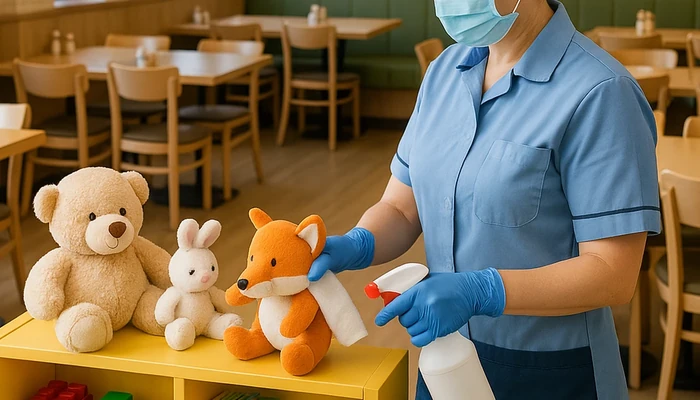
- Soft toys, plushies, and cushions
- Interactive touchscreens and game consoles
- Slides and climbing equipment
- Books, cards, and paper-based games
Each item presents different cleaning challenges. For example, soft toys may harbor fungi if not completely dried, while touchscreens often require non-abrasive disinfectants approved for electronics.
Health and Safety Standards: What Restaurants Must Comply With
Maintaining clean children’s areas isn’t just good practice—it’s a regulatory requirement. The Environmental Protection Agency (EPA) publishes a list of approved disinfectants for public and childcare settings. Restaurants in Chicago must also comply with local health codes regarding:
- Cleaning frequencies for high-touch child-accessible surfaces
- Proper storage and application of cleaning solutions
- Safe handling procedures to protect both staff and guests
Regular reviews of EPA guidelines and local regulations ensure your protocols remain compliant. Staff training is key, and learning resources from accredited organizations like APIC can help keep your team up-to-date.
The Difference Between Cleaning, Sanitizing, and Disinfecting
- Cleaning: Removes dirt and organic matter. Typically achieved with soap and water.
- Sanitizing: Reduces germs to safe levels recognized by public health standards. Suitable for nonporous toys and food-contact surfaces.
- Disinfecting: Destroys most or all disease-causing germs on hard, nonporous surfaces using EPA-registered products.
A successful play area cleaning program moves beyond surface cleaning. Instead, it integrates both sanitizing and disinfecting based on the level of use and material type. For example, plush toys require laundering, while blocks and tables call for surface disinfectants.
Professional Cleaning vs. In-House Efforts: What Works Best?
| Aspect | In-House Cleaning | Professional Services |
|---|---|---|
| Staff Training | Basic; risk of errors | Industry-certified/best practices |
| Equipment/Products | Standard, often store-bought | EPA-registered, commercial-grade |
| Scope & Frequency | Ad hoc or scheduled | Comprehensive, customizable |
| Detailed Attention | Varies, may overlook details | Meticulous, checklist-driven |
| Documentation/Records | Informal or absent | Consistent, for audits and compliance |
While staff can handle daily tidying, professional cleaning brings standardized methods, detailed logging, and specialized solutions—especially valuable in busy or high-traffic restaurants. Scheduling preventive cleanings as part of your ongoing facility maintenance supports health and customer confidence.
Step-by-Step Protocols for Cleaning and Disinfecting Kids’ Areas
1. Remove and Segregate Contaminated Items
- Remove any soiled toys or items that have been mouthed, sneezed on, or dropped on unsanitary surfaces.
- Place them in clearly labeled bins for cleaning (“To Wash” for soft toys; “To Disinfect” for hard items).
2. Clean Before You Disinfect
- Use soap and water for initial dirt removal.
- Rinse thoroughly—residues can reduce disinfectant effectiveness.
3. Apply EPA-Registered Disinfectants Correctly
- Check label for correct dwell time (surface must remain wet for the required period).
- Wear gloves or follow safety directions as listed.
4. Focus on High-Risk Items
- Toys intended for infants and toddlers, as well as any frequently touched surfaces (door handles, kiosks, rails).
5. Dry and Store Cleaned Items Safely
- Air-dry soft toys or launder on a hot cycle; ensure all items are completely dry to prevent mold.
- Store sanitized items in clearly marked clean bins or return them only to sanitized play zones.
Frequency Recommendations: How Often Should You Clean?
- Hard toys: Disinfect multiple times daily, especially after heavy use.
- Soft toys: Launder daily or after visible contamination.
- Play equipment and touch screens: Disinfect at least every four hours during operation and at the end of each business day.
- Floors and seating: Clean at shift changes and whenever soiling occurs.
Adjust your schedule during peak times, after illness outbreaks, or during seasonal surges (e.g., flu season).
Choosing Safe and Effective Cleaning Products for Children’s Spaces
Not all cleaning agents are suitable for children’s spaces. To reduce health risks, only use EPA-registered disinfectants approved for use where children play. Avoid products with harsh chemical odors or residues. Key criteria include:
- No known carcinogens, hormone disruptors, or allergenic fragrances
- Clear instructions for dilution and application
- Fast-acting but child-safe once dry
Soft surfaces need different protocols, such as commercial laundering, rather than chemical sprays. Consider green cleaning approaches for eco-sensitive venues.
Building a Routine: Weekly and Monthly Maintenance Checklists
- Daily: Clean and disinfect toys and surfaces, dispose of broken items, empty trash bins in the play area.
- Weekly: Rotate out entire bins of toys for deep cleaning, inspect for damage, check and restock hand sanitizer stations.
- Monthly: Deep clean carpets, steam upholstery, review and update all cleaning logs and checklists.
Assign specific tasks to individual staff with sign-off sheets for accountability.
Staff Training and Supervision for Safe Play Area Cleaning
Proper cleaning isn’t just about what you do, but how consistently you do it. Build staff routines using:
- Topic-specific training, focused on children’s spaces and appropriate chemical use
- Clear checklists posted in break rooms and supply closets
- Regular supervision and surprise audits to maintain standards
Ongoing education through organizations such as APIC online courses improves awareness and compliance.
Responding to Incidents: Handling Bodily Fluids and Illness in Play Zones
Immediate Response Plan
- Immediately remove affected toys and cordon off the contaminated area.
- Disinfect all surfaces within a 6-foot radius, following EPA disinfection protocols.
- Document the incident in your cleaning log and notify parents as needed.
Rapid, responsive action not only limits outbreak risk, but also reassures patrons of your commitment to safety.
Communicating Hygiene Efforts to Reassure Parents
- Post visible cleaning schedules in children’s areas.
- Share product safety data on request.
- Offer “cleaned hourly” assurances on high-touch toy bins.
- Invite feedback from families on visible and behind-the-scenes efforts.
Proactive communication builds trust, supports repeat business, and protects your restaurant’s reputation. For more on maximizing customer confidence, see restaurant condition tips.
Integrating Play Area Cleaning Into Restaurant Workflow
Efficient cleaning should never disrupt diners or staff. Integrate these strategies:
- Schedule disinfecting tasks between meal rushes
- Assign dedicated “play area captains” per shift
- Utilize quick-dry disinfectants to minimize downtime
Coordinating with kitchen and dining room teams ensures consistency. For workflow scheduling, refer to guidance on optimized cleaning schedules.
Adapting to Special Situations: Allergy Management, Sensory Play, and Shared Facilities
- Allergen management: Clean surfaces and toys between children with known allergies. Post allergen warnings for materials like latex or certain fabrics.
- Sensory play: Use separate bins for wet materials (water beads, sand) and replace contents regularly.
- Shared facilities: In complexes with multiple restaurants or party rooms, coordinate joint cleaning schedules and protocols.
Special situations call for customized checklists and additional safety precautions. If your venue has a unique theme, see our resource on adapted cleaning for unique environments.
Pitfalls to Avoid When Cleaning Children’s Play Spaces in Restaurants
- Using household or non-approved disinfectants in children’s areas
- Skipping cleaning during slow service hours
- Overlooking “hidden” areas (behind furniture, under mats)
- Neglecting the need for thorough drying of all items
- Not updating logs or checklists after each session
Continuous improvement comes from monitoring, feedback, and adjusting protocols as needed. Preventive cleaning programs offer measurable benefits—see more at preventive cleaning benefits.
Frequently Asked Questions: Cleaning & Disinfecting Kids’ Areas in Restaurants
- What’s the difference between cleaning and disinfecting toys?
Cleaning removes physical dirt while disinfecting kills germs on cleaned surfaces. Both are necessary for safety. - How often should soft toys be cleaned?
Ideally daily, or immediately after any visible soiling or mouthing by children. - Which disinfectants are safe for toys?
Only use EPA-registered disinfectants labeled for childcare and play area use. Rinse with water if required by product instructions. - How do you handle toys contaminated with bodily fluids?
Remove immediately; clean (or dispose of, if porous), disinfect all nearby surfaces, and log the incident for records. - Can I use antibacterial wipes on all surfaces?
Some wipes are suitable for hard, nonporous surfaces; always check manufacturer instructions for use on toys or electronics. - How can parents know a restaurant’s play space is safe?
Look for visible cleaning schedules, labeled bins, and staff who can answer questions about cleaning protocols. - Should food and play areas be cleaned separately?
Yes—dedicated cloths, bins, and products reduce cross-contamination risks. - How do I ensure cleaning staff follow proper procedures?
Train regularly, use checklists with sign-offs, and supervise with periodic audits. - Are green or eco-friendly cleaners effective for kids’ spaces?
Yes, if they’re EPA-registered and proven to remove pathogens and allergens. See more eco-friendly solutions. - Is there a resource for building a play area cleaning plan?
Professional cleaning companies, like CHICAGOLAND Cleaning Services, can create customized protocols and offer checklists for restaurant settings.
Wrap-Up: Raising the Bar on Kids’ Area Cleanliness in Chicago Restaurants
Clean, well-maintained children’s areas enhance family reputation, support public health, and drive repeat business. By following evidence-based cleaning and disinfecting routines for toys and play spaces, your restaurant can deliver an environment where parents feel confident and children can safely enjoy their time. For tailored support—including advanced scheduling and auditing tools—consider working with a company like CHICAGOLAND Cleaning Services.
About CHICAGOLAND Cleaning Services
CHICAGOLAND Cleaning Services helps households and businesses in Chicago, Illinois and nearby areas keep their spaces clean and healthy. Our experienced team offers recurring house cleaning, deep cleaning, move out cleaning, office maintenance, and specialized facility solutions—including restaurants, childcare, medical, and educational environments. We follow comprehensive checklists, use commercial-grade and eco-friendly products, and provide transparent, long-term service relationships. Learn more about our commitment to protecting families, guests, and staff through industry-leading hygiene and safety standards.
commercial chicago cleaning company, restaurant cleaning chicago illinois, restaurant cleaning chicago, restaurant restroom cleaning Lake Forest IL, restaurant cleaning Wicker Park IL, bar cleaning Westmont IL, restaurant kitchen cleaning Franklin Park, restaurant cleaning Lincoln Park, bar cleaning Forest Park, restaurant restroom cleaning Joliet
