Choosing the Right Cleaning Services for Your Dental Office: A Comprehensive Guide
The cleanliness and safety of your dental practice are more than first impressions—they are critical to patient trust and health. But how to choose the best cleaning services for your dental office is not always straightforward. Dental facilities demand a higher standard of hygiene, strict compliance with infection control, and careful handling of specialized areas. This guide provides dental professionals and office managers with a clear decision framework, practical checklists, and insights to confidently select a cleaning provider who upholds your standards of care. Read on to uncover what matters most and how to make an informed choice for your practice.
Understanding Dental-Specific Cleaning Needs
The Unique Challenges of Dental Office Hygiene
- Presence of bodily fluids and biohazard risk
- Strict cross-contamination prevention requirements
- High patient contact with surfaces
- Compliance with regulatory guidelines (e.g., OSHA, CDC)
Key Zones to Prioritize in Dental Offices
- Treatment rooms and operatories
- Front desk and waiting areas
- Sterilization areas and instrument storage
- Bathrooms and staff break rooms
- High-touch surfaces (door handles, chairs, switches)
Evaluating Cleaning Providers: What Dental Offices Should Check
Minimum Standards and Credentials
- Company is insured and bonded
- Experience cleaning healthcare/dental facilities
- Ongoing staff training in infection control
- Clear cleaning protocols and surface compatibility
Interview Questions for Your Shortlist
- Can you share your dental/medical facility portfolio?
- What training do your staff undergo for infection control?
- Do you follow CDC and OSHA PPE guidelines?
- How do you prevent cross-contamination between rooms?
- Will you provide a written cleaning checklist for my office?
Key Differences Between Dental Office, General Office, and Medical Cleaning
- General offices: Basic cleaning; fewer infection control requirements
- Medical offices: More complex protocols; some equipment sterilization
- Dental offices: Highest risk of biohazard; strictest standards for surfaces and instruments
For an in-depth comparison, see the table below.
| Area | General Office | Medical Office | Dental Office |
|---|---|---|---|
| High-touch surface disinfection | Periodic | Frequent | After every patient/session |
| Instrument sterilization | No | Some equipment | All instruments between uses |
| Biohazard protocols | No | Required | Essential |
| Specialized training | Minimal | Moderate | Mandatory (CDC, OSHA) |
| Documentation of cleaning | Sporadic | Common | Required logs and checklists |
Safety Protocols and Regulatory Compliance in Dental Cleaning
The Importance of PPE and Infection Control
Dental cleaning staff must utilize proper personal protective equipment and proven protocols to minimize infection risks. Following OSHA PPE standards and current best practices is critical for staff and patient safety.
Adhering to Official Guidelines
- AORN Environmental Cleaning Guidelines for healthcare environments
- CDC recommendations on dental health care settings
Detailed Cleaning Checklist for Dental Offices
Before the Cleaning Visit
- Discuss special area access (sterilization, records, etc.)
- Point out rooms or furniture needing extra attention
- Agree on disposal procedure for sharps, waste, and supplies
Essential Checklist to Request from Providers
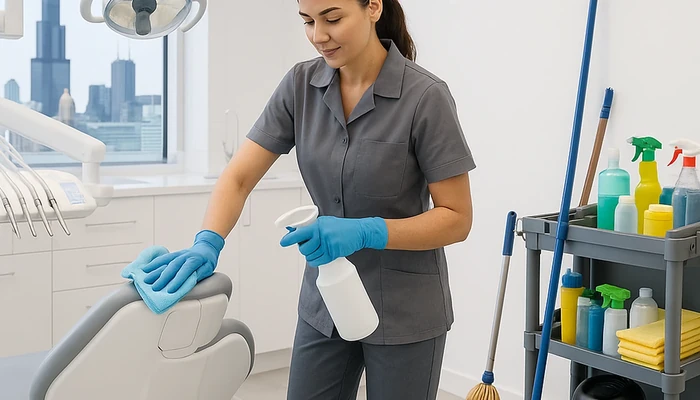
- Disinfect all treatment chairs, counters, sinks, trays
- Wipe down high-contact areas: phones, keypads, doors
- Proper mop/sweep routines with safe cleaning agents
- Clean and restock all bathrooms
- Safe handling/removal of healthcare waste
After Each Cleaning Session
- Walkthrough with the supervisor
- Initial the log/checklist for regulatory compliance
- Report any maintenance issues discovered during cleaning
Checklist: Questions to Compare Dental Cleaning Service Proposals
- Does the company have specific protocols for dental zones?
- Are their checklists tailored to dental instrument sanitation?
- What is their plan for staff background checks and training?
- Can they adapt to after-hours or emergency cleaning needs?
- Do they maintain communication logs and regular reviews?
Reviewing Cleaning Product Safety and Compatibility
Types of Cleaning Products Used in Dental Settings
- Hospital-grade disinfectants (for high-risk areas)
- Non-corrosive, dental-safe surface sprays
- EPA-registered cleaners that will not damage dental chairs/equipment
Verifying Safety with Your Provider
Ask the company to provide Safety Data Sheets for all chemicals used, and ensure products are safe for dental surfaces and compliant with regulatory standards.
How to Inspect and Monitor Dental Office Cleaning Effectiveness
Daily and Weekly Inspection Steps
- Spot-check high-touch surfaces before opening
- Inspect logs/checklists are filled daily
- Monitor staff and patient feedback for cleanliness
- Schedule quarterly audits with provider supervisor
Comparing In-House vs. Outsourced Dental Cleaning Services
Pros and Cons of In-House Cleaning Staff
- Direct oversight, but can lack dental-specific expertise
- Potential cost savings, but higher HR and training burden
- Limited access to advanced equipment and regulated products
Advantages of Specialized Outsourced Providers
- Trained in current dental regulations and disinfection
- Liability, insurance, and documentation handled externally
- Flexibility to scale services to patient volume or inspection cycles
Red Flags: When to Reconsider Your Dental Office Cleaning Provider
- Inconsistent service or missed areas despite agreed checklists
- Poor communication or lack of transparency in scheduling difficulties
- Use of products not suited for dental equipment
- Lack of up-to-date OSHA/CDC knowledge or certification
- Frequent staff turnover without retraining documentation
Decision-Making Framework: How to Select the Ideal Cleaning Partner
- Gather a minimum of three providers specialized in dental or medical environments
- Request and compare written checklists and protocols
- Evaluate insurance, staff training, and documented compliance
- Interview providers using the targeted questions above
- Run a trial period to test thoroughness and communication
Understanding the Impact of Dental Cleaning Frequencies
The ideal cleaning schedule depends on patient volume, procedure types, and your risk assessment. High-traffic dental offices require daily to multiple-times-daily surface disinfection; lower volume settings may opt for full cleans after each patient with deeper weekly services. Regardless, always follow regulatory guidance for minimum frequencies.
- Operatories: Clean after each patient
- Common areas: At least daily
- Bathrooms: Several times daily depending on occupancy
- Sterilization room: After each use, with weekly deep cleans
Communication and Long-Term Relationships with Your Cleaning Provider
Establishing Clear Points of Contact
- Set up communication logs for scheduling updates
- Designate a main contact at your office and at the provider
Review/Maintenance Meetings
- Schedule monthly or quarterly review calls
- Update on recent changes in practice layout or operations
- Address any feedback or improvement requests
Integrating Best Practices from Dental Industry Guidelines
Staying Up-to-Date with Regulations
- Reference AORN, OSHA, and CDC cleaning standards regularly
- Request provider training evidence on updated protocols
For an expanded look at technical requirements, read Best Disinfection Techniques for Dental Offices and The Importance of Instrument Sterilization in Dental Offices.
Case Scenario: Transitioning to a Specialized Dental Cleaning Company
A Chicago Practice’s Experience
One Chicagoland dental office struggled with spotty cleaning and cross-contamination risks when using a generic janitorial service. After switching to a provider specializing in dental cleaning, they documented improvements in weekly audits, patient feedback, and regulatory compliance. This underscores the value in provider expertise and industry compliance.
Frequently Asked Questions: Choosing Dental Office Cleaning Services
What certifications should my cleaning provider have for dental offices?
Look for companies with staff trained on CDC and OSHA standards and clear documentation of healthcare facility experience.
Can a general office cleaning company handle my dental office needs?
Most lack the specific infection control and instrument handling required for dental practices. Specialized providers are highly recommended.
Should cleaning always happen after hours?
Not always. While after-hours work is ideal for deep cleaning, daily wipe-downs/disinfection between patients may need daytime presence.
How do I verify cleaning staff are following the right protocols?
Request logs/checklists to be filled after each visit, schedule regular walk-throughs, and ensure open communication on compliance.
What should be included in the cleaning contract?
Protocols for all zones, frequency expectations, staff training, PPE usage, and who supplies chemicals/equipment.
How often should common areas be cleaned in dental offices?
At minimum daily; high-touch points cleaned several times a day in busy offices.
Are there eco-friendly options for dental office cleaning?
Yes, but ensure green cleaners are EPA-approved for healthcare and compatible with dental surfaces. Discuss with your provider.
What is the best way to handle patient privacy during cleaning?
Train all cleaning staff on HIPAA basics, restrict access to patient records, and ensure cleaning tasks are supervised where privacy is sensitive.
Can I request proof of staff background checks?
Yes, reputable companies will readily supply this as part of their onboarding and compliance package.
Where can I learn about the latest dental facility cleaning standards?
Consult official resources like AORN’s cleaning guidelines and government health agencies.
Wrap-Up: Next Steps for Dental Office Cleaning Excellence
Choosing the best cleaning services for your dental office is both an investment in your patients’ health and your reputation as a provider. By focusing on dental-specific protocols, regulatory compliance, and clear communication with vetted providers, you ensure a hygienic environment and peace of mind. For help with ongoing or specialized dental facility cleaning, explore Dental office cleaning service or Office cleaning service options with Chicagoland Cleaning Services.
About Chicagoland Cleaning Services
Chicagoland Cleaning Services is a trusted partner for dental offices, medical facilities, offices, homes, and specialized properties across Chicago, Illinois. Our trained staff follow precise checklists and infection control protocols for recurring cleaning, deep cleaning, move-out projects, and facility-specific maintenance using the proper products for each surface and situation. Committed to long-term relationships, transparent pricing, and open communication, we help households and businesses maintain healthy, welcoming spaces every day.
commercial cleaning chicago il, dental office sanitation chicago, dental chair area cleaning chicago, waiting dental room cleaning West Dundee IL, dental chair area cleaning Bradley IL, dental chair area cleaning Wicker Park, dental office surface cleaning River North IL, dental clinic cleaning Glendale Heights IL, dental clinic cleaning Joliet, dental operatory cleaning Lake Forest