Minimizing the Spread of Germs in High Circulation Areas: Strategies, Tools, and Decision Frameworks
High circulation areas—spaces bustling with constant movement, touch, and activity—pose a unique challenge for anyone tasked with maintaining cleanliness and hygiene. Whether you’re managing an office, educational facility, rental property, or a busy household, understanding how to effectively minimize the spread of germs in shared spaces is crucial to health and safety. In this expert guide, you’ll discover practical steps, complete checklists, comparison frameworks, and actionable strategies for minimizing the spread of germs in high circulation areas. We’ll cover how professional cleaning protocols go beyond surface cleaning, what to expect from reputable providers, and how to adapt your hygiene plans to real-world usage. You’ll leave equipped to take confident, informed action, whether hiring professionals like CHICAGOLAND Cleaning Services or refining your in-house routine.
Identifying High Circulation Areas: Where Germs Thrive
Every building has hotspots—rooms, corridors, or surfaces that see more hands, feet, and traffic than others. Recognizing these locations is the first step to designing an effective prevention strategy.
- Lobbies, entryways, and reception areas: Frequent ingress and egress mean constant contamination risks.
- Restrooms and locker rooms: High-contact surfaces like faucet handles, stall doors, and dispensers.
- Breakrooms and kitchens: Communal appliances and tables are magnets for microbes.
- Elevators and stairwells: Buttons, railings, and doors are repeatedly touched throughout the day.
- Meeting rooms, classrooms, and waiting areas: Shared furniture and electronics support lingering pathogens.
- Fitness spaces, daycares, and retail checkout areas: Special consideration for item sharing and child vulnerability.
Mapping high circulation zones in your facility or home allows for more precise cleaning protocols and resource allocation. For specialized environments, such as dental clinics or educational facilities, explore Maintaining Dental Clinic Cleanliness and Cleaning to Reduce Infections and Ensure Children’s Health.
Germ Transmission Pathways in Shared Spaces
Understanding how germs move through high circulation areas illuminates cleaning priorities and informs which protocols are most effective.
- Direct contact: Transfer from hands to surfaces to new hands—door handles, light switches, shared keyboards.
- Droplet spread: Sneezing, coughing, or talking in crowded spaces contaminates air and nearby surfaces.
- Airborne transmission: Smaller particles may travel further, especially in poorly ventilated rooms.
- Surface persistence: Pathogens like viruses and bacteria can linger for hours or even days, depending on the material.
Combining cleaning and disinfection approaches is essential. Review CDC recommendations on prevention in shared environments for authoritative guidance tailored to public health.
Core Principles for Minimizing Germ Spread
Effective germ control in busy environments centers around a few core principles:
- Frequency: The higher the traffic, the more often surfaces must be cleaned and disinfected.
- Product efficacy: Use cleaning agents with proven ability to kill a broad spectrum of pathogens.
- Coverage: Pay special attention to high-touch points, but don’t neglect less obvious surfaces.
- Consistency: Adhere to established checklists and protocols every time.
Successful outcomes result from balancing these elements based on your unique facility footprint and population risk.
Professional Cleaning vs. In-House Routines: A Decision Framework
Deciding whether to manage cleaning routines yourself or bring in professionals is a major consideration, especially when prioritizing germ minimization in high circulation areas.
| Criteria | Professional Services | In-House Staff |
|---|---|---|
| Training & Consistency | Specialized protocols; regular training; strict checklists | Varies—training may be inconsistent or ad hoc |
| Disinfection Expertise | Knowledge of EPA/CDC-recommended products | Dependent on staff awareness & resources |
| Equipment | Commercial-grade, task-specific tools | Often consumer-level supplies |
| Flexibility & Scheduling | Adaptable: deep, recurring, same-day options | Constrained by internal staffing levels |
| Accountability | Documented procedures; quality checks | Spotty records depending on culture |
| Cost | Predictable, transparent service packages | Lower up front, but may miss value in infection prevention |
When hygiene is mission-critical, consider the value of experience and quality assurance that companies like CHICAGOLAND Cleaning Services provide.
Critical Checklists for High Circulation Area Hygiene
For robust results, cleaning tasks must be structured and repeatable. A daily or weekly checklist supports consistency, reduces oversight, and keeps all stakeholders aligned. Here’s a model, adaptable to homes or facilities:
- Disinfect door handles, push plates, and light switches (multiple times daily).
- Sanitize faucet handles, appliance controls, and shared electronics.
- Spot-clean tables, counters, and seating after each use.
- Mop hard floors with antimicrobial solutions; vacuum soft surfaces thoroughly.
- Replenish hand soap, sanitizer, and paper towels as needed.
- Ventilate rooms adequately before, during, and after cleaning.
- Deep clean restrooms and kitchens at the end of each day.
- Empty and disinfect garbage containers daily.
Document completion with physical logs or digital checklists. For more on compliance and regulatory requirements, see Essential Steps To Comply With Health Standards.
Choosing the Right Products and Tools for Germ Control
Selecting the best supplies impacts the effectiveness of your cleaning routine. Look for:
- Disinfectants with EPA registration: Confirm they are effective against common bacteria and viruses of concern.
- Microfiber cloths and mops: Capture more dirt and microbes than standard alternatives.
- Color-coding systems: Prevents cross-contamination between bathrooms and food prep areas.
- Touchless tools and dispensers: Reduce direct contact where possible.
Refer to Clorox Healthcare’s cleaning resources for a full breakdown of accepted disinfectant products and evidence-based cleaning strategies.
High Touchpoint Protocols: What Needs the Most Attention?
While deep cleaning the entire space is important, certain items require more frequent attention due to the number of hands and surfaces they contact:
- Doorknobs, elevator buttons, and keypads.
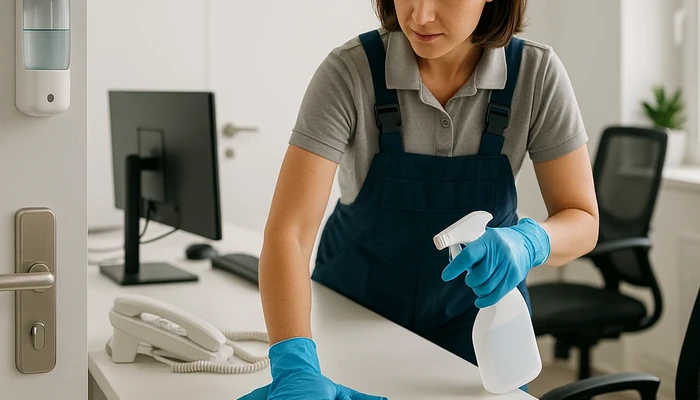
- Desks, counters, and meeting tables.
- Shared phones, printers, and office equipment.
- Breakroom appliance handles and tabletops.
- Restroom dispensers, sink fixtures, and stall locks.
- Light switches and handrails.
Conduct periodic audits to update your list as patterns of usage shift over time.
Scheduling and Frequency: How Often Should Each Area Be Cleaned?
There is no universal frequency; cleaning schedules must reflect actual usage and risk:
- Shared restrooms: At least twice daily; more in peak periods.
- Entryways and lobbies: High touchpoints multiple times daily; floors once daily minimum.
- Conference spaces and classrooms: Before and after each use.
- Kitchens and breakrooms: Daily, with spot cleaning after meals.
- Elevators and stairs: Railings and buttons cleaned every few hours.
For heavily trafficked locations—gyms, restaurants, child-centric environments—specialized routines may be required. Consider looking into Office cleaning service or Schedule Restaurant cleaning for intensified protocols.
Hygiene and Safety Measures During and After Cleaning
Protecting staff, visitors, and cleaning teams requires more than just using effective products. Follow these precautions:
- Wear gloves, masks, and eye protection when handling chemicals.
- Label any recently cleaned areas—especially bathrooms or kitchens—as “wet” or “sanitized.”
- Store cleaning supplies away from children and food prep zones.
- Dispose of wipes, gloves, and disposable items in lined containers, then disinfect containers themselves.
- Ensure adequate PPE use and availability for in-house or contracted cleaners.
For facilities serving children or those at higher risk, maintaining compliance with safety standards is a must—see Cleaning for Children’s Health for guidance tailored to those spaces.
Special Considerations: Unique Challenges in Schools, Offices, and Retail
While every shared environment must address similar high circulation risks, there are differences between types of spaces:
Offices
- Desk-sharing and open-plan layouts make cross-contamination easy.
- Shared meeting and break areas require special protocols after group gatherings.
- Personal desk hygiene—supplement company cleaning with employee reminders.
Schools and Daycares
- Smaller children may not follow hygiene guidelines reliably; surfaces require more frequent cleaning.
- Bathrooms, play equipment, and lunch tables are the highest priorities.
- Education on handwashing and cough etiquette supports cleaning efforts.
Retail, Fitness, and Food Service
- Customer movement through aisles or equipment means broad coverage is required.
- Point-of-sale touchpads, carts, and merchandise displays are risk areas.
- Review Essential Steps to Comply with Health Standards for food safety requirements.
Adapting Strategies: Responding to Illness or Outbreaks
If someone in your environment is diagnosed with a contagious illness, elevated cleaning routines can greatly reduce subsequent spread.
- Isolate and ventilate the affected area, if possible.
- Use EPA-approved disinfectants at increased frequency on all high-touch points within the area.
- Wear enhanced PPE (including N95 masks or respirators for certain pathogens).
- Dispose of cleaning materials securely and promptly.
- Communicate transparently with staff or residents regarding risk and response measures.
Rely on guidance from credible sources, such as the CDC infection prevention page, for the latest outbreak protocols.
Communicating Cleaning Routines: Building Trust With Occupants
Visible, transparent communication reassures everyone who uses your facility:
- Post schedules showing when and how areas are cleaned.
- Provide feedback channels for reporting concerns or supplies running low.
- Highlight training or certifications from cleaning personnel, if applicable.
- Share updates about how protocols adjust in response to seasons, outbreaks, or changing needs.
Consistent messaging not only informs but also encourages personal responsibility, supporting a culture of shared hygiene.
Professional Standards: What to Expect from Cleaning Providers
Not all cleaning companies approach high circulation germ control equally. Reputable providers should:
- Follow written protocols for daily, weekly, and emergency response cleaning.
- Use evidence-based products, supplies, and PPE appropriate to each space.
- Train all staff regularly on hygiene, cross-contamination prevention, and chemical safety.
- Offer proof of insurance, background checks, and transparency in pricing.
- Customize routines based on your building’s unique layout and risk profile.
If you’re considering a professional for your home or business, request copies of checklists, product lists, and quality review procedures. Explore our core offerings at CHICAGOLAND Cleaning Services.
Upgrading Air Quality and Ventilation for Germ Reduction
While surface cleaning is paramount, airborne germ reduction is also achievable through strategic ventilation and filtration:
- Increase fresh air intake by opening windows or optimizing HVAC systems.
- Install HEPA-grade filters in recirculated systems for improved particle capture.
- Deploy portable air purifiers in high-density or poorly ventilated rooms.
- Encourage short breaks between meetings to allow air exchanges.
Air quality measures supplement, but do not replace, diligent surface disinfection.
Monitoring Success: Evaluating Hygiene Outcomes Over Time
Regular evaluation ensures continued effectiveness and adaptation:
- Track sick days, staff or resident complaints, and infection reports.
- Log cleaning sessions, materials used, and incidents or missed tasks.
- Conduct periodic on-site inspections with checklists and swab testing if feasible.
- Update protocols annually or after any major facility usage change.
This data-driven approach helps catch emerging issues and demonstrates your commitment to safety.
Frequently Asked Questions: Minimizing Germ Spread in High Circulation Areas
How often should high-traffic touchpoints be disinfected?
Ideally, several times daily—especially during periods of peak use. Desks, doorknobs, and light switches should be sanitized after significant activity or group gatherings.
Do I need special products for shared spaces?
Yes. Use EPA-approved disinfectants proven against viruses and bacteria most likely to be present in your environment, referencing trusted product resources.
Is ventilation really as important as cleaning?
Absolutely. Good air exchange helps control many airborne pathogens and should always complement surface cleaning efforts.
How can I be sure my cleaning is effective?
Keep detailed records, involve feedback from users, and look for reductions in illness rates as a key metric of successful hygiene.
What’s the difference between cleaning and disinfecting?
Cleaning removes debris and dirt; disinfecting actually kills or inactivates pathogens on surfaces. Both steps are essential, often performed sequentially.
How do I train my team to prevent cross-contamination?
Implement color-coding tools, written checklists, and regular staff training. Professional providers often offer standardized training programs.
Should we adjust cleaning during flu season or outbreaks?
Yes. Increase frequency, focus on high-touch surfaces, encourage illness reporting, and provide extra hand hygiene supplies.
Can professional cleaning save money long term?
When executed properly, professional cleaning reduces absenteeism, improves facility reputation, and can ultimately lower healthcare costs linked to outbreaks.
Do disinfectants damage surfaces?
Most modern products are designed for safety but always follow manufacturer guidelines and test on inconspicuous areas first.
What steps can occupants take to support the effort?
Wash hands frequently, avoid touching face, and use available hygiene stations; report spills or supply shortages promptly.
Conclusion: Building a Culture of Clean for Everyone
Minimizing the spread of germs in high circulation areas requires both rigorous cleaning and the active participation of everyone sharing the space. By focusing on high touchpoints, using the right products, ensuring consistency with detailed checklists, and adjusting routines to match real-world risks, you can create safer environments at home, in the office, or in public buildings.
When professional expertise or advanced equipment is needed, consider enlisting help from specialists. For recurring cleaning or tailored solutions, review our Office cleaning service or Schedule Restaurant cleaning today.
About CHICAGOLAND Cleaning Services
CHICAGOLAND Cleaning Services is dedicated to helping households and businesses in Chicago, Illinois and nearby areas keep their spaces clean and healthy. Our experienced teams specialize in recurring house cleaning, deep cleaning, move out cleaning, office cleaning, and special facility cleaning. With transparent pricing, flexible scheduling, and strict quality standards, we ensure every project meets the highest hygiene and safety requirements—giving you peace of mind in every space you manage.
commercial cleaning company chicago, office cleaning chicago, office workstations cleaning chicago, desk office disinfection Forest Park IL, Loop office cleaning, office breakroom cleaning Burbank, desk office disinfection Evergreen Park IL, office breakroom cleaning Elmhurst, office cleaning in South Loop IL, office cleaning in Lockport IL