
The Vital Role of Disinfection in Gyms: A Complete Framework for Fitness Facility Hygiene
Today’s gyms cater to hundreds, sometimes thousands, of visitors every week—each bringing in microorganisms, sweat, and surfaces touched in repetition. Understanding the vital role of disinfection in gyms is essential whether you’re a facility manager, property owner, or simply comparing cleaning providers in pursuit of the healthiest possible space. In this comprehensive educational guide, you’ll learn why disinfection is central to gym safety, how contamination happens, which protocols work, and the decision points that truly matter. We’ll also outline professional cleaning standards, the latest hygiene science, and provide checklists tailored to high-traffic fitness facilities—with specific tips relevant for Chicago’s active fitness community.
Recognizing Contamination Hotspots Unique to Gyms
Gyms are high-risk environments for pathogen transmission, but not all areas are equally vulnerable. Effective disinfection strategies start with identifying ‘hotspots,’ such as:
- Cardio equipment touch points: treadmill handles, elliptical controls, stationary bike seats
- Free weights and resistance machines: bars, benches, adjustment knobs
- Locker rooms: door handles, benches, showers, lockers
- Fitness mats and group studio floors
- Common area surfaces: drinking fountains, restroom fixtures, front desk desks
These high-touch zones serve as hubs for rapid microbe transmission if not routinely disinfected. Sweat, skin oils, and respiratory droplets accelerate microbial load, making routine protocols non-negotiable.
Understanding Pathogen Risks: What Gyms Must Address
Effective disinfection is more than preventing visible dirt; it’s about halting transmission of pathogens such as MRSA, influenza, norovirus, fungi, and certain skin-parasitic bacteria. According to the CDC’s infectious disease prevention guides, gyms require targeted efforts to reduce:
- Bacterial risks: Staphylococcus aureus (including MRSA), E. coli, Streptococcus
- Viral risks: Influenza, rhinoviruses, norovirus outbreaks
- Fungal risks: Ringworm, athlete’s foot (tinea)
- Parasitic transmission: Skin and hair parasites in shared areas
The resilience of these pathogens—and their ability to survive on hard surfaces for hours or even days—makes disciplined disinfection protocols critical in all fitness environments.
Analyzing How Contamination Spreads in Fitness Facilities
Unlike most indoor environments, gyms typically feature:
- Large groups circulating through shared equipment in short timeframes
- Moisture from sweat promoting microbial growth
- Minimal downtime between users
- Multiple surfaces touched bare-handed
Effective disinfection workflows must address this high exposure with proven, sequential steps:
- Removal of visible soil (cleaning)
- Application of approved disinfectant
- Allowance for proper dwell time (critical for biocidal efficacy)
- Safe drying or rinsing if required for sensitive surfaces
Skipping any step reduces total pathogen reduction and ultimately decreases facility safety.
Types of Disinfectants: Choosing What’s Safe and Effective
Selecting disinfection agents for a gym environment involves balancing microbial efficacy, surface compatibility, and member safety. The best practices prioritize:
- EPA List N products for broad-spectrum viral/bacterial action
- Non-corrosive, non-irritating solutions for high-frequency use
- Alcohol- and quaternary ammonium-based disinfectants for speed and reliability
- Proper dilution and ventilation for sensitive or enclosed spaces
Using industrial-grade options is standard for professional cleaning companies. However, in high-traffic community gyms, choosing hospital-grade disinfectants may be warranted—especially in cold and flu seasons or during local outbreaks.
Key tip: Always follow manufacturer instructions for contact (dwell) time and surface compatibility. Cross-check with any specialty flooring, upholstery, or digital controls to avoid damage.
Creating and Customizing a Gym Disinfection Schedule
Not every area of a gym needs the same cleaning frequency. Initially, map out all key spaces, equipment, and traffic patterns unique to your facility. Compare with guidance from specialized sources such as healthcare and infection prevention organizations.
| Area/Item | Recommended Disinfection Frequency |
|---|---|
| Cardio & Strength Machines | Multiple times daily, after each use |
| Fitness Mats & Accessories | After each class/session |
| Locker Rooms & Showers | At least twice daily; spot clean between rushes |
| Reception Desks & Common Areas | Every 2–4 hours during open periods |
| Bathrooms | 3–4 times per day; full sanitization after closing |
| Group Studios | Before and after each class |
This structured approach not only protects members and staff but is also highly regarded in fitness business reviews and compliance audits.
Building an Effective Daily Disinfection Workflow
A consistent workflow is non-negotiable for minimizing infection risks. Here’s a model daily routine refined by professional gym cleaning providers:
- Spot clean visible debris throughout the day
- After peak periods, wipe and disinfect all equipment and high-touch surfaces
- Empty waste bins and replace liners
- Double-disinfect locker room and bathroom fixtures
- Perform closing shift full-wipe on all equipment, floors, and member areas
- Document all cleaning tasks and times for accountability
Integrating Member and Staff Roles into the Disinfection Process
While professional cleaning is foundational, full safety requires a culture of hygiene. Successful gyms frequently combine:
- Visible signage and QR-code how-to videos for members
- Access to hand sanitizers and wipes at entrance and throughout floor
- Mandatory wipe-down of personal workout stations by each member
- Staff training sessions on signature protocols and emergency response
Research indicates that when members see staff actively disinfecting, perceived safety and satisfaction rise sharply.
Quality Control and Accountability Mechanisms
Disinfection is only as reliable as the protocols and accountability behind it. To maintain standards:
- Perform routine checks with ATP meters or UV light inspection
- Maintain written checklists and digital logs of completed tasks
- Schedule frequent management walk-throughs during busy hours
- Solicit anonymous member feedback
Documented cleaning routines provide evidence for insurance, health inspectors, and regulatory compliance—especially in Chicago, where fitness businesses face periodic public health audits.
Special Disinfection Protocols: Air Quality, Shared Towels, and Hydrotherapy
While surface disinfection gets the most attention, other zones demand unique solutions:
- HVAC and air filtration: Use HEPA-grade filters and schedule monthly cleanings to limit airborne infectious particles.
- Shared towels/linens: Partner with commercial laundry services for daily high-heat washing and closed-loop transport.
- Saunas, pools, and whirlpools: Follow CDC water sanitization guidelines, including daily spot checks and quarterly deep cleans.
Neglecting these protocols can quickly undermine otherwise rigorous cleaning regimes.
Ecologically Sound Disinfection: Balancing Safety with Sustainability
Modern fitness centers are increasingly expected to minimize environmental impact. That means integrating:
- Eco-certified disinfectants with proven efficacy
- Microfiber cloths that reduce waste and outperform paper towels
- Low-VOC cleaning agents to reduce air quality issues
- Training staff on green protocols and optimized dilution rates
To explore this further, see our guide to the Ecological Cleaning System In Your Gym.
Training and Certification Requirements for Professional Gym Cleaners
High standards depend on skilled staff. Reputable cleaning companies implement:
- Initial and ongoing safety/hygiene training
- Detailed module on gym-specific disinfection and equipment use
- OSHA and local safety certifications
- A check-in/check-out routine with clear supervisor sign-off
To learn about the importance of staff competency, see our post on Effective Training Of Gym Cleaning Staff.
Comparing DIY Disinfection and Professional Cleaning Solutions
Fitness business owners often choose between in-house routines and specialized cleaning vendors. Consider these key decision points:
- Expertise and reliability: Commercial firms provide uniform standards, while DIY teams may vary by shift/employee.
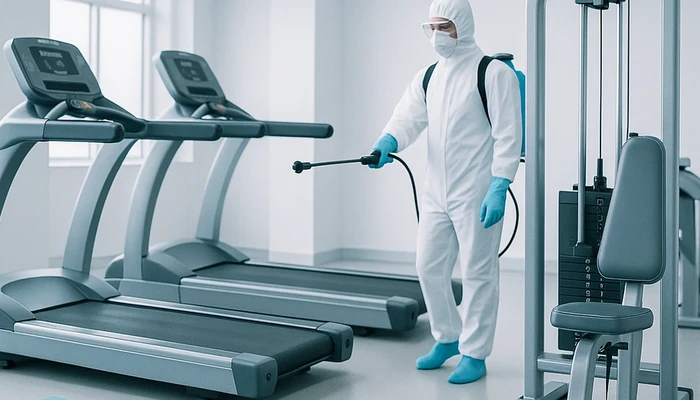
- Tools and products: Professionals use industry-calibrated foggers, sprayers, and disinfectants otherwise unavailable to general staff.
- Documentation: Professional services supply logs and compliance reports for insurance and inspections.
- Cost vs value: Upfront, professional cleaning may seem higher—but reduces liability, absenteeism, and complaints, offsetting cost over time.
For a deeper breakdown of “spotless” cleaning expectations, see our comprehensive Spotless Fitness Center Cleaning Services comparison.
Troubleshooting Common Disinfection Shortcomings and Challenges
Even vigorous routines can fail without careful management. Common gaps include:
- Skipping dwell time: Not every product works instantly—let disinfectants remain before wiping.
- Unlabeled secondary containers: Risk of improper mixing, which can cause dangerous reactions.
- Surface incompatibility: Using alcohol or bleach on plastics or screens, causing cracks or fogging.
- Neglected nooks: Focused on the obvious, but high-contamination crevices (under seats, behind machines) get missed.
Routine manager reviews and sharing updated safety bulletins help keep teams on track.
Emergency Response: Handling Outbreaks and Confirmed Exposures
Any gym can face an outbreak scenario—whether norovirus, athlete’s foot, or other contagious events. A solid emergency plan includes:
- Immediate isolation of implicated zones
- Escalated full-space disinfection—surfaces, air, and textiles
- Communication with staff and relevant health authorities
- Temporary facility closure if advised
For up-to-date guidelines on addressing infectious outbreaks, refer to the CDC’s norovirus reference.
Choosing the Right Cleaning Partner for Your Gym
Finding a cleaning provider experienced in gym hygiene requires thoughtful vetting. Smart questions to ask include:
- What experience do you have with health clubs or fitness centers?
- What specific protocols do you use for high-traffic equipment?
- Can we see your training/certification documentation?
- How do you verify cleaning completeness daily?
- Are staff background checked and insured?
Look for teams offering flexible scheduling, customized checklists, and open lines of communication—like the approach at CHICAGOLAND Cleaning Services.
Disinfection Protocols for Chicago Gyms: Special Considerations
Gyms in the Chicago area have unique factors to consider:
- Seasonal challenges: Winter slush and salt tracked indoors require more frequent cleaning of entryways and mats.
- Population density: Higher facility occupancy raises both traffic and risk—demanding more aggressive checklists and logs.
- Regulations: City ordinances around business operations, as well as more regular inspector visits.
Chicago gym owners should periodically review disinfection routines and adapt with neighborhood and season-specific needs in mind. For optimizing schedules, see our article on Scheduling and Optimizing the Cleaning Schedule in Fitness Centers.
Integrated Cleaning: From Floors to Reception—Ensuring Complete Protection
While equipment is a top priority, best-in-class gym hygiene includes:
- Reception desks and payment stations cleaned every hour
- Ventilation grilles dusted monthly for airflow and air quality
- Group studio mirrors and floors sanitized between classes
- Member lounge and water dispensers on continuous wipe cycle
- Detailed cleaning of fitness center floors
For more information on cleaning gym floors and front-of-house spaces, explore our resources on Best Practices for Cleaning Gym Floors and Cleaning Protocols for Reception and Common Areas.
Checklist: Essential Steps for Reliable Gym Disinfection
- Identify and map all high-touch areas
- Choose EPA-verified disinfectants adapted for your surfaces
- Set a cleaning schedule based on area risk and traffic
- Train all staff in core protocols and product safety
- Document cleaning times, checklists, and staff initials
- Encourage visible hygiene routines by staff and members
- Monitor air quality and laundry processes
- Review and update procedures quarterly—or after any outbreak
Frequently Asked Questions About Disinfection in Gyms
How often should gym equipment be disinfected?
High-touch machines and weights should be disinfected after every use, with full wipe-downs at least twice daily in busy gyms.
What’s the difference between cleaning and disinfection in gyms?
Cleaning removes visible dirt and debris; disinfection uses chemical agents to kill or deactivate harmful microorganisms.
Are all disinfectants safe for fitness equipment?
No. Some products degrade plastics or electronics. Select solutions approved for fitness gear, and always read manufacturer guidelines.
Who is responsible for wiping down equipment—staff or members?
Ideally, both. Members should wipe equipment after each use; staff must conduct routine, verified disinfection rounds daily.
How can gyms ensure disinfection records are kept?
Maintaining digital logs, checklists, and visible cleaning schedules ensures accountability and audit-readiness.
What should gyms do after a norovirus or flu outbreak?
Escalate cleaning to include all surfaces, close or cordon off exposure zones, and follow CDC recommendations for enhanced disinfection.
How do eco-friendly cleaning products perform compared to standard disinfectants?
Eco-friendly options are effective when certified and used as directed; always check both efficacy and approval status for pathogens of concern.
What is the most overlooked part of gym cleaning?
Nooks behind machines, air vents, and shared linens often go overlooked; a thorough schedule addresses these hidden risks.
Final Thoughts: Moving Beyond Basics for Safer Gyms
Disinfection protocols in gyms require more than superficial cleaning—they demand careful mapping of contamination risks, a science-backed approach to product selection, strict schedules, and a culture of hygiene among members and staff. By aligning with the guidance and expertise outlined above—and choosing the right partner when needed—you’re investing in both member safety and the lasting reputation of your fitness facility. For customized solutions, consider scheduling an assessment with a professional gym cleaning team.
About CHICAGOLAND Cleaning Services
CHICAGOLAND Cleaning Services helps households and businesses in Chicago, Illinois and nearby areas keep their spaces clean and healthy. Our trained professionals specialize in recurring house cleaning, deep cleaning, move out cleaning, office cleaning, and special facility cleaning services—including expertise in fitness environments. We adhere to rigorous checklists, prioritize consistent quality, and focus on long-term safety and satisfaction for our clients.
commercial cleaning in the city of chicago, gym floor cleaning chicago, gym sanitation chicago, gym restroom cleaning Monee IL, gym locker room cleaning Montgomery IL, gym cleaning River Grove, gym equipment cleaning Oak Park IL, workout gym cleaning Glenview, gym disinfection Markham IL, gym locker room cleaning Loop IL