
Mastering Grease Removal: How to Clean Grease from Restaurant Floors
If you run a restaurant in Chicago or manage foodservice operations, you know that grease buildup is an ongoing battle—one that affects safety, health, and your business’s reputation. In this guide, we break down exactly how to clean grease from restaurant floors using methods trusted by professional cleaners like CHICAGOLAND Cleaning Services. You’ll discover practical equipment checklists, day-to-day routines, chemical options, eco-conscious choices, and tailored tips to restore your floors to slip-resistant, hygienic condition—while protecting staff and patrons. Ready to conquer the greasiest floor challenges? Let’s jump in.
Understanding Grease Accumulation in Restaurant Floor Environments
Before tackling greasy restaurant floors, it’s crucial to understand why these surfaces are so vulnerable. Kitchens generate airborne oils, fryer splatters, and tracked-in residues from shoes and carts. Over time, layers of grease combine with dust and food particles, forming a film that’s difficult to remove with general floor cleaning. Not only is this visually unappealing, but it increases the risk of slips, falls, and non-compliance with food safety regulations (see EPA guidance on commercial facility hygiene).
Common Sources of Floor Grease in Restaurants
- Frying stations and open grills
- High-traffic kitchen walkways
- Dish pit splash zones
- Entry points between back-of-house and front-of-house
- Storage areas with leaking containers or food drips
Health and Safety Implications
Neglecting grease removal can cause:
- Slip and fall accidents
- Mold or bacterial growth
- Unpleasant odors
- Potential citations from inspectors
Quick action and preventive routines are non-negotiable.
Key Principles Behind Effective Grease Removal
Properly cleaning grease from commercial restaurant floors relies on understanding three core principles:
- Degreasing Action: Using products formulated to break down oils, not just move them around.
- Mechanical Agitation: Physically scrubbing or agitating the surface, often with the help of floor machines or aggressive pads.
- Thorough Rinsing: Completely removing loosened grease to prevent redeposition or a slippery finish.
The Role of Water Temperature
Warm or hot water enhances the effectiveness of most degreasing agents and helps grease molecules dissolve quicker, especially on textured kitchen tiles.
Choosing the Right Cleaning Solutions: Commercial vs. Eco-Friendly Degreasers
Not all grease removers are made alike. Some target heavy-duty, baked-on grease, while others emphasize environmental safety and surface compatibility (learn more from Diversey’s solutions).
| Type of Degreaser | Main Use | Residue Risk | Eco Considerations |
|---|---|---|---|
| Commercial/Alkaline | Heavy kitchen floors & grates | Moderate—must rinse well | Low—some are harsh |
| Bio-Enzyme Formulas | Light-to-medium soils, frequent use | Low | High—safer for drains/sewers |
| DIY Vinegar/Baking Soda | Spot touch-ups, quick response | None | High—natural, but less powerful |
Always select a degreaser that matches your floor type (tile, quarry, rubber, epoxy) and follow manufacturer dilution ratios. Excess chemical can leave floors sticky or dull.
Top Tools and Equipment for Grease Cleaning in Restaurants
- Stiff-bristle deck brushes (manual or machine)
- Commercial-grade mops and double-bucket systems
- Wet/dry vacuums for liquid extraction
- Auto-scrubbers for large open floors
- Personal protective equipment: gloves, eye protection, non-slip footwear
Specialized Tools for High-Build Grease
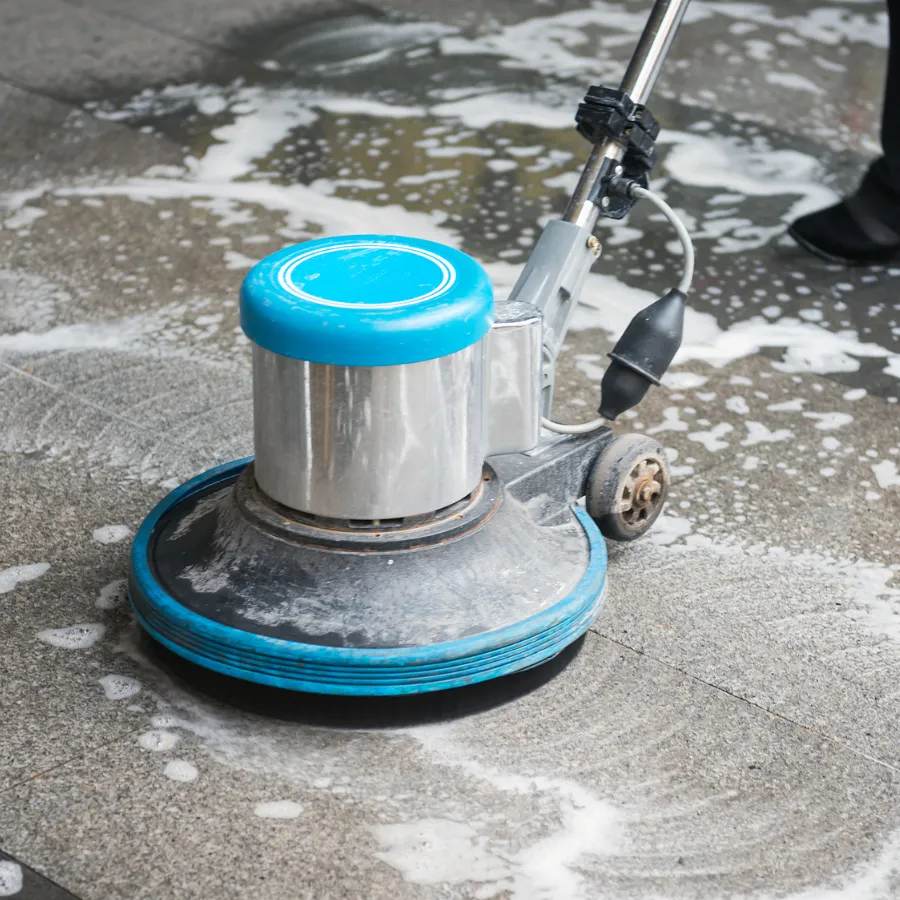
- Rotary floor scrubbers with degreaser pads
- Steam cleaners (for sanitized finish, especially in food-prep zones)
- Squeegees for controlled rinse water removal
Step-by-Step Process: How Pros Clean Grease from Restaurant Floors
This protocol from commercial cleaning experts ensures both effectiveness and safety for your staff:
- Prepare the Area: Put up wet floor signage. Remove loose debris, mats, and movable equipment.
- Dry Sweep: Use a dust mop or broom to clear away crumbs and particulate soil that can interfere with degreasing.
- Apply Degreaser: Spray or mop on your selected solution. Allow the product to dwell on the surface for the manufacturer’s recommended time.
- Agitate: Scrub vigorously, focusing on grout lines, corners, and under appliances. Use brushes or mechanical scrubbers as required.
- Rinse Thoroughly: Rinse with clean, hot water, using a mop or wet vac to avoid puddles or slip hazards.
- Dry Completely: Use fans, squeegees, or allow ample air flow. Confirm floors are fully dry before reopening to traffic.
High-Touch and Overlooked Areas Needing Extra Care
- Underneath fryers and stoves
- Floor drains and trench grates
- Walk-in cooler thresholds
- Dishwashing areas and pre-rinse stations
- Entry mats and transition strips
Comparing Daily, Weekly, and Deep Cleaning Routines
Sustainable grease management calls for layered schedules. Use this checklist to divide daily, weekly, and deep cleaning responsibilities:
- Daily: Spot clean visible grease, sweep and mop with light degreaser after every shift.
- Weekly: Thorough scrub-down of kitchen floor zones and heavy-traffic FOH transition points. Move portable equipment for access.
- Monthly/Deep: Schedule professional floor care for build-up removal, grout cleaning, or auto-scrubbing.
Safety Protocols: Protecting Staff and Guests During Degreasing
Always prioritize safety when handling chemical degreasers or hot water:
- Label and store all cleaning agents properly
- Ventilate the area whenever cleaning is underway
- Issue gloves, goggles, and proper footwear to cleaning staff
- Display wet floor signs around work zones
- Assign only trained staff
Detailed safety protocols help avoid workplace injury and ensure a quick return to service.
Eco-Friendly and Green Methods for Grease Removal
For restaurants prioritizing sustainability, eco-friendly degreasers can often replace harsh chemicals. Enzyme-based solutions digest organic material safely, while steam cleaning minimizes water and chemical use. Green-certified products may reduce environmental footprint and help restaurants appeal to conscious consumers. Explore additional tips for sustainable operations in eco-friendly restaurant cleaning solutions.
Preventing Grease Buildup: Proactive Maintenance Strategies
Prevention is a powerful defense in busy restaurants. Combine the following best practices:
- Install and regularly clean floor mats at cook lines and entries
- Inspect and maintain hoods, vents, and grease traps to limit splatter
- Establish and document a recurring floor cleaning schedule
- Train kitchen staff to spot and report spills quickly
Learn how scheduled maintenance enhances safety in This preventive program guide.
When to Call Professionals for Restaurant Floor Degreasing
While staff should address light grease daily, heavy build-up, embedded grout, or stubborn odors demand expert intervention. Professional cleaners use hot water extraction, auto-scrubbers, and commercial degreasers to restore floors safely. Need specialized support? Consider Restaurant cleaning service from the specialists at CHICAGOLAND Cleaning Services.
Staff Training: Building Grease-Removal Skills for Kitchen Teams
Empower your team with clear cleaning protocols and regular refresher training. Visual checklists, demonstrations, and regular supervision can raise standards and maintain compliance. Learn to document routines and outcomes in this scheduling optimization resource.
Grease-Fighting Products and Equipment Comparison for Restaurants
- Best for small areas: Ready-to-use spray degreasers and handheld brushes
- Best for large kitchens: Auto-scrubbers, mop buckets with built-in wringers, concentrated commercial degreaser
- Eco alternative: Enzyme-based degreasers, steam machines
Match tools with your floor type and operational needs for best results.
Checklist: Daily and Deep-Floor Grease Removal in Restaurants
- Remove debris/station mats
- Apply selected degreaser as directed
- Agitate with a deck brush or auto-scrubber
- Rinse thoroughly and extract standing water
- Check for safety and dryness before opening sections
- Log completion and report issues
Integrating Floor Grease Cleaning into Broader Facility Programs
Successful restaurants coordinate floor care with regular audits, deep cleans, and maintenance. For tailored plans, see restaurant upkeep strategies and consider how kitchen cleaning complements dining room and play area protocols (see children’s area cleaning).
FAQ: All About Cleaning Grease from Restaurant Floors
How often should restaurant floors be degreased?
High-traffic kitchen floors may require daily degreasing, with deeper scrubs scheduled weekly or monthly, depending on volume and type of cuisine.
Which degreasers are food-safe and effective?
Bio-enzyme and green-certified degreasers are effective and generally food-safe; always confirm product labels and intended use.
Can household products remove commercial kitchen grease?
DIY solutions (vinegar, baking soda) may work for small spills but aren’t suited for high-volume restaurant build-up. Choose commercial formulas for best results.
What PPE is required when cleaning grease?
Always use non-slip shoes, gloves, and safety goggles—especially with chemical solutions and wet floors.
Are there eco-friendly options for degreasing?
Yes. Enzyme-based cleaners, steam methods, and certified green products effectively remove grease while minimizing environmental impact.
What is the most widely missed spot for grease?
Under equipment and around drains are commonly missed. Schedule regular equipment moves for thorough cleaning.
How can I prevent grease from returning so quickly?
Install high-quality mats, maintain a cleaning schedule, and train staff to respond to spills immediately.
When should I call a professional cleaning team?
If kitchens have chronic grease, heavy build-up, or have not had a deep cleaning in several months, contact a professional cleaning service for restoration.
Wrap-Up: Sustaining Clean, Safe Restaurant Floors
Effective grease removal is a linchpin of restaurant safety and foodservice excellence. By using the methods, routines, and products detailed in this guide, owners and managers can maintain slip-resistant, hygienic floors that withstand the realities of commercial kitchens. For challenging jobs or to restore heavily soiled areas, trained professionals can deliver results that sustain both health compliance and a welcoming business environment. For more details on customized restaurant plans, trust the reliable team at CHICAGOLAND Cleaning Services.
About CHICAGOLAND Cleaning Services
CHICAGOLAND Cleaning Services specializes in residential and commercial cleaning across Chicago, Illinois and surrounding areas. Our experienced staff follows rigorous checklists, uses advanced equipment, and applies proven safety protocols for restaurant, office, and special facility cleaning. We’re committed to quality, transparent service, and long-term partnerships—helping local businesses maintain spotless, healthy spaces with attention to detail in every job.
kitchen hygiene, commercial chicago cleaning contractors, restaurant cleaning chicago il, kitchen deep cleaning chicago, grease restaurant cleanup Libertyville IL, restaurant kitchen cleaning Elgin, restaurant restroom cleaning Elmhurst, bar cleaning Lombard IL, kitchen deep cleaning Rosemont IL, grease restaurant cleanup West Dundee, bar cleaning Des Plaines IL