Strategies for Reducing the Risk of Cross Contamination in Workplaces
Workplace safety and hygiene are crucial in protecting both staff and clients from illness and infection. Strategies for reducing the risk of cross contamination in workplaces are essential, whether you manage an office, rental property, medical facility, or educational space. This comprehensive guide from CHICAGOLAND Cleaning Services breaks down the science of cross contamination, risk factors, preventive strategies, and actionable cleaning protocols that can make a real difference in workplace safety. By the end, you’ll understand the core principles for keeping your environment healthy and how to work with professionals to implement and maintain best practices.
Understanding Cross Contamination in Workplaces
Cross contamination happens when bacteria, viruses, allergens, or other harmful substances spread from one surface or individual to another. In workplaces, this risk is ever-present due to shared spaces and high traffic areas. Common vectors include hands, shared equipment, doorknobs, keyboards, and food prep areas.
- Direct contact: Touching contaminated surfaces and then personal items or face
- Droplet transmission: Sneezing or coughing that spreads pathogens across desks or meeting rooms
- Equipment transfer: Tools, phones, and computers used by multiple people without cleaning
Minimizing cross contamination is critical for workplace health and applies to both residential and commercial sites.
Major Sources and Risk Factors of Cross Contamination
- High-touch surfaces: Door handles, elevator buttons, phones, mice, light switches
- Shared break rooms or kitchens: Sinks, microwaves, coffee machines
- Restrooms: Faucets, flush handles, paper dispensers
- Meeting rooms: Table surfaces, shared remote controls, chairs
- Personal behaviors: Infrequent handwashing, improper glove use, eating at workstations
Facilities that see frequent visitors or serve vulnerable populations such as healthcare clinics and childcare centers face even greater risks, calling for more rigorous protocols.
The Science Behind Cross Contamination and Infection Spread
Understanding how germs travel is essential for designing effective cleaning plans. According to the CDC’s research on workplace hygiene, microorganisms survive for hours or even days on common office materials and can easily transfer by touch or droplets. This persistence means that regular, thorough cleaning combined with smart protocols is required—not just occasional tidy-ups.
Developing an Effective Cross Contamination Prevention Framework
Every prevention program should start with an assessment of your workspace’s unique risks. Key pillars of a successful strategy include:
- Zone mapping: Identify areas by level of risk (e.g., bathrooms vs. private offices)
- Surface categorization: List all high-touch and shared surfaces by room
- Frequency schedules: Assign cleaning frequencies (e.g., after every shift, daily, weekly)
- Protocols: Define exact cleaning products and steps for each zone
- Staff training: Ensure all personnel know and follow the program
This systematic approach can be adapted for any building, from a single-family home to a downtown Chicago office block.
Step-by-Step Cleaning and Disinfecting Procedures for Workplaces
Below is an effective workflow widely used by professional cleaning teams:
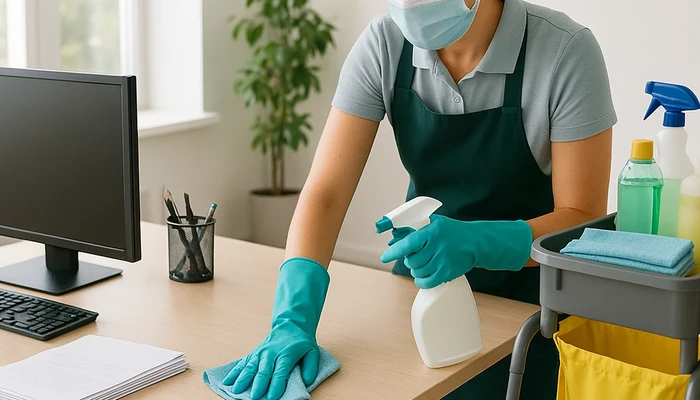
- Preparation: Gather gloves, masks, and commercial-grade cleaning agents suitable for the area.
- Declutter: Remove personal items, trash, and debris from workspaces for easier cleaning.
- Clean first, then disinfect: Dirt, dust, and organic matter can inactivate disinfectants. Always start with cleaning.
- Disinfect high-risk points: Apply EPA-approved disinfectants to high-touch areas, letting them dwell for the recommended contact time.
- Use color-coding: Assign different cleaning cloths and mops for restrooms versus common areas to prevent cross use.
- Personal protective equipment (PPE): Ensure all cleaners wear PPE and change it between rooms as needed.
Review and update procedures regularly based on new outbreaks or public health guidance. For more in-depth protocols specifically for medical or childcare facilities, explore our related guide on reducing infections and ensuring children’s health.
High-Touch Surface Management: A Breakdown by Zone
| Zone | Example Surfaces | Recommended Cleaning Frequency |
|---|---|---|
| Entryways | Door handles, handrails, elevator buttons | 2–4x daily |
| Restrooms | Sinks, faucets, stall latches, dispensers | After peak times, at least daily |
| Workstations | Keyboards, mice, phones, desktops | Daily or after each shift |
| Breakrooms | Counters, coffee machines, fridge handles | Several times per day |
Consistent focus on these areas helps minimize the risk of workplace outbreaks.
Appropriate Use of Cleaning Products and Disinfectants
Using the right chemicals in the right places matters. Always choose products registered with trusted agencies and follow manufacturer instructions for dilution and dwell times. Specialized options, such as food-safe disinfectants for break rooms, are detailed at Diversey’s food service solutions.
- Never mix chemicals—dangerous reactions can occur
- Label all spray bottles and storage containers clearly
- Train staff in safe application and emergency procedures
Implementing Color-Coding and Zoning to Reduce Surface Transfer
One of the simplest controls is assigning different colored cloths, mop heads, and gloves for different spaces (e.g., red for restrooms, blue for kitchens). This strongly reduces accidental transfer between clean and dirty zones. Post easily visible charts as reminders and make sure everyone on your team understands the system.
Training and Behavior: The Human Factor in Contamination Control
- Hand hygiene: Regular hand washing is still the single most effective habit
- Personal item management: Keep phones and drinks away from shared work areas
- Glove policies: Change gloves after cleaning or touching contaminated items
- Reporting: Encourage staff to report missed cleaning or observe unsafe practices
Staff buy-in and participation are as important as any cleaning product or checklist.
Special Considerations for Different Workplace Types
- Medical offices and clinics: Require heightened protocols for instrument and surface sterilization—maintaining dental clinic cleanliness offers examples.
- Schools and childcare centers: More frequent cleaning, especially of shared toys and learning materials.
- Gyms and fitness centers: High moisture and frequent shared use demand extra diligence; regular cleaning is outlined in local program requirements.
- Restaurants: Strict separation of food prep, dining, and restroom cleaning supplies—detailed compliance steps can be found in our guide to complying with health standards.
While core principles remain, details differ by sector. Consult specialized resources for your facility type as needed.
Managing Cross Contamination in Shared Residential and Rental Spaces
- Regularly clean door handles, switches, and thermostats in communal areas
- Ensure that cleaning routines include inside appliances in shared kitchens
- Encourage residents and guests to follow basic hygiene, especially in short-term rentals like Airbnb properties
Turnover cleaning between guests should follow a defined process, especially in high-traffic blocks in Chicago’s rental market.
Documentation, Checklists, and Tracking for Consistency
Accountability is key in larger or high-traffic environments. Use digital checklists or printed logs for staff to confirm tasks. Sample checklist:
- Clean and disinfect entry handles
- Wipe down light switches and elevator panels
- Restock restrooms and confirm trash removal
- Spot check break room surfaces
- Sign and date upon task completion
Supervisors should review logs regularly and respond to gaps or feedback promptly.
Building a Culture of Cleanliness for Long-Term Risk Reduction
Reducing cross contamination isn’t a one-time “deep clean”—it’s a mindset. Embed expectations in onboarding, post visuals of routines, and foster pride in maintaining a healthy space. Small incentives and recognition can encourage staff to take ownership, lowering the risk of outbreaks.
Evaluating Professional Cleaning Providers for Cross Contamination Control
Not all cleaning companies are equal. To choose the right team for your building:
- Request proof of training in infection control and use of proper equipment
- Ask about color-coding and zone separation policies
- Require checklists and sign-off sheets tailored to your facility type
- Look for transparent communication and history of reliable service
CHICAGOLAND Cleaning Services uses professionally trained staff, advanced cleaning tools, and strict protocols to help Chicago-area workplaces stay safe over the long term.
Integrating Cleaning Strategies with Workplace Safety Policies
Effective cross contamination prevention means working alongside health and safety policies, not separately. Include cleaning schedules and protocols in your broader risk assessments and emergency planning. Communicate protocols clearly and update stakeholders as needed, especially during flu season or outbreaks.
Responding to Outbreaks and Elevated Risks
In the event of illness reports or public health advisories, temporarily escalate frequency and switch to higher-strength disinfectants. Isolate affected areas and consult authoritative resources such as the CDC’s infection prevention guidance. Afterward, review your protocols for permanent improvements.
Frequently Asked Questions about Reducing Cross Contamination in Workplaces
What are the top five ways to prevent cross contamination at work?
Regular cleaning of high-touch points, promoting proper hand hygiene, using color-coded supplies, wearing and changing PPE, and enforcing documented cleaning schedules.
How often should high-risk areas be cleaned?
High-traffic and high-touch surfaces should be cleaned several times a day, while less used areas can follow a daily or weekly schedule based on risk assessment.
What kind of cleaning products are best for commercial spaces?
Choose EPA-registered disinfectants suitable for each surface. Food-safe products are best for kitchens, while commercial-grade disinfectants are suitable for restrooms and shared offices. Always follow label directions.
Do all workplaces need the same protocols?
No, protocols should be customized by facility type, risk level, occupancy, and local guidance. Healthcare, restaurants, and child-focused spaces have higher standards.
What training should cleaning staff have?
Staff should be trained in infection control basics, correct product use, color-coding, PPE use, and accident reporting. Regular refresher sessions are important.
Can cross contamination risks ever be eliminated?
Risks can be greatly reduced but never entirely eliminated. Ongoing vigilance, updated protocols, and expert-supported cleaning minimize the dangers.
What should I look for in a cleaning provider?
Check for demonstrated expertise in infection control, staff training, transparent protocols, and proven reliability. Ensure clear communication and flexible scheduling.
Are home offices and Airbnb rentals at risk?
Yes, shared spaces in homes and rentals are subject to touch transfer risks. Professional turnover cleaning and guest hygiene guidelines are strongly encouraged.
Summary and Next Actions
Reducing the risk of cross contamination in workplaces is a multi-step process that benefits everyone, from small businesses to multi-unit residences. Mapping risk zones, using the right products, enforcing color-coding, and educating staff are all pillars of success. To maintain a safe and welcoming workplace, consider a partnership with trusted professionals who specialize in comprehensive cleaning protocols. For expert help, see how our specialized office cleaning service can support your workplace needs.
About CHICAGOLAND Cleaning Services
CHICAGOLAND Cleaning Services helps households and businesses in Chicago, Illinois and nearby areas keep their spaces clean and healthy through professional house cleaning, office and facility cleaning, move out service, and deep cleaning. Our teams are trained in the latest best practices for recurring cleaning, one-time sanitization, and tailored routines for a wide variety of workplace environments. We prioritize transparent communication, high-quality standards, and long-term relationships to ensure your property is always in expert hands. Reach out to CHICAGOLAND Cleaning Services to discover peace of mind through reliable professional cleaning.
commercial cleaning service chicago, office restroom cleaning chicago, desk office disinfection chicago, office workstations cleaning Bannockburn, office workstations cleaning Libertyville IL, office cleaning Skokie, office trash removal Riverwoods IL, office cleaning Wood Dale, desk office disinfection Forest Park, office cleaning Lake Forest