 Skip to content
Mastering the Art of Keeping Dentist Offices Sparkling Clean: The Definitive Guide
Every dental office sets a high bar for hygiene—patients expect it, regulations demand it, and your reputation depends on it. Keeping dentist offices sparkling clean isn’t just routine: it’s a crucial system of protocols and habits that protect patient health, foster trust, and preserve your professional standard. In this comprehensive guide, you’ll discover the decisive steps, critical checklists, specialized tools, and expert frameworks that empower dental practices in Chicago and beyond to maintain pristine environments day after day. Whether you’re a dental professional, office manager, or an owner researching the right cleaning partners, this resource will clarify practical strategies, address challenges, and aid confident decisions about your next move for a sparkling office. Chicagoland Cleaning Services brings its experience and attention to detail into every section—let’s dive in!
The Non-Negotiables: Why Sparkling Clean Really Means Safe in Dental Offices
Dentist offices are unique: the convergence of healthcare, high-touch surfaces, and fast patient turnover demands more than a “clean look.” Sparkling clean equals safe—and here’s why:
- Infection Control: Any lapse in cleaning protocols can enable the spread of pathogens, including bloodborne viruses and bacteria.
- Patient Trust: Visibly spotless surfaces, fresh scents, and orderly tools reassure your patients and their families.
- Compliance: Regulations from OSHA, CDC, and local Chicago health codes require strict adherence to hygiene standards.
- Staff Wellbeing: A clean work environment reduces exposure to hazards, burnout, and absenteeism.
Frameworks and Checklists: The Backbone of Dental Office Cleanliness
Consistency is only achievable through checklists and repeatable protocols. Successful dental offices implement:
- Daily opening and closing checklists for front desk, operatories, and waiting areas.
- Procedure room turnover checklists after each patient, focusing on high-touch and cross-contamination spots.
- Weekly deep-cleaning tasks for neglected zones like vents, baseboards, and storage closets.
These lists are tailored and refined over time to match the flow and specialty of your practice.
Dissecting the Dental Office: Area-by-Area Cleaning Demands
Each zone has unique hygiene requirements. Let’s break them down for total coverage:
- Reception and Waiting Area: Door handles, sign-in kiosks, and seating surfaces cleaned after each use. Magazines, toys, and refreshment areas require extra vigilance.
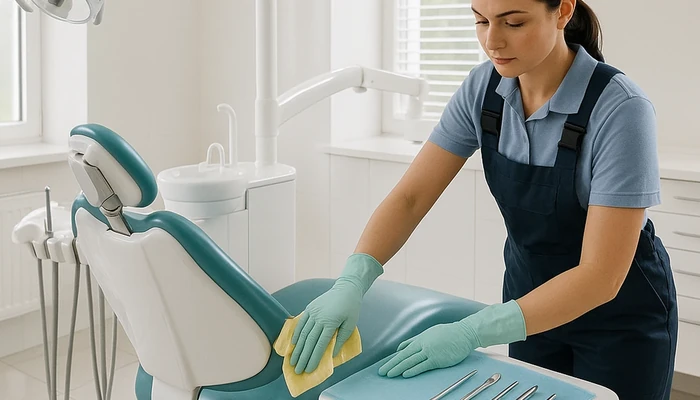
- Treatment Rooms: Dental chairs, trays, light handles, supply carts—all must be disinfected between every patient. Splash zones and floor perimeters require special attention.
- Restrooms: Stocked supplies, sanitized sinks and counters, and properly managed touchpoints (like faucet handles and towel dispensers).
- Sterilization/Instrument Processing Area: Designated clean and dirty zones, with one-way flow and constant surface disinfection.
- Staff Break Rooms and Offices: Food prep areas, fridge handles, and electronics form unexpected hotspots for germs.
Specialty Surfaces: Cleaning Protocols for Dental-Specific Materials
The challenge multiplies with diverse materials in a dental office—vinyl, stainless steel, sealed wood, upholstery, glass. Each needs the right products and techniques:
- Dental Chairs: Use non-abrasive, EPA-registered disinfectants compatible with vinyl and synthetic leather.
- Loupes, Lights, and Electronics: Use alcohol-based wipes designed for plastic, glass, and touchscreens; avoid oversaturation.
- Impression Areas and Countertops: Use low-residue, food-safe surface disinfectants to prevent cross-contamination.
Following manufacturer guidelines is crucial to avoid damage while ensuring disinfection.
Comparing In-House vs. Professional Cleaning for Dentist Offices
Should you rely on your own staff, or bring in professionals? See how each option stacks up for dental environments:
| Criteria | In-House Cleaning | Professional Dental Cleaning |
|---|---|---|
| Training Specific to Infection Control | Varies, often basic | Specialized, protocol-driven |
| Equipment & Disinfectant Quality | Standard issue | Commercial-grade, regulated products |
| Staff Turnover Impact | Can cause lapses | Consistent checklists & accountability |
| Compliance Documentation | Self-managed | Provided for auditing |
| Time Efficiency | Can disrupt workflow | Scheduled to minimize downtime |
Verdict: While in-house staff handle immediate messes, professional cleaners—like Chicagoland Cleaning Services—offer thorough, accountable, and safer results for dentist offices requiring the highest standard.
Latest Technologies and Products Elevating Dental Office Cleaning
Dental office standards are always evolving. The best practices today leverage innovations such as:
- Touchless Dispensers: For soap, sanitizer, and towels, reducing cross-contamination risk.
- Electrostatic Sprayers: Even distribution of hospital-grade disinfectants, reaching nooks and crevices.
- HEPA and UV-C Air Purifiers: Improving air quality and reducing airborne pathogens in reception and treatment rooms.
- Color-coded Microfiber Cloths: Preventing cross-use between bathrooms, operatories, and common areas.
Adopting modern equipment signals both vigilance and professionalism to staff and patients alike. For more details on the most effective disinfection practices, see Best Disinfection Techniques For Dental Offices.
Quality Assurance: Building Accountability Into Every Cleaning Shift
How do you know your cleaning routine delivers consistent results? Robust QA processes include:
- Signed Checklists: Each cleaner or staff member initials completed tasks—enabling traceability and compliance.
- Spot-Checks: Supervisors routinely inspect difficult corners or problem-prone areas.
- Feedback Loops: Anonymous feedback from staff and patients highlights missed spots early.
- Routine Deep Dives: Scheduled audits with corrective action logs to raise the baseline over time.
Chicagoland Cleaning Services incorporates these mechanisms into custom client plans for dental facilities.
Managing High-Risk Zones and Breaking Chains of Cross-Contamination
The consequences of missed-tasks are highest in cross-contamination hotspots. Real-world vigilance means:
- Hand hygiene stations: Stocked and visible at each room entrance.
- Barrier protection: Disposable covers on headrests, remotes, or button panels, changed between every patient.
- Segregated equipment storage: Dirty instruments are never mixed with sterilized or ready-to-use supplies.
- Scheduled hand-off cleaning: Operatories are “reset” between visits, limiting any surface transfer risk.
Find a thorough discussion about sterilization in The Importance of Instrument Sterilization in Dental Offices.
Frequency Demands: How Often Should Dentist Offices Be Cleaned?
- Reception & waiting rooms: Touchpoints wiped hourly; floors daily; deep clean weekly.
- Operatories: After each patient; comprehensive disinfection end of day.
- Restrooms: Toilets, sinks, touchpoints—sanitized a minimum of twice daily, more during high traffic.
- Staff areas: Shared touchpoints cleaned daily, communal appliances wiped after every use.
- Deep cleaning: All areas on a weekly to monthly cycle, as recommended by public health advisories.
Guidance aligns with leading infection prevention organizations.
Dentist Office Cleaning: Step-by-Step Daily and Weekly Protocols
Sample Daily Protocol
- Disinfect all reception desk, screens, and payment devices.
- Wipe down chairs and armrests between each patient.
- Replace all disposable covers, restock supply trays.
- Spot-mop floors, focusing on splatter-prone areas.
- Empty waste and biohazard containers, change liners.
- Sanitize staff handwashing sinks and break areas.
Sample Weekly Protocol
- Deep vacuum and mop all flooring and baseboards.
- Launder reusable drapes, curtains, and uniforms.
- Sanitize supply closets, bulb covers, and ventilation grilles.
- Clean window ledges, wall partitions, and artwork frames.
The Role of Staff Training in Achieving Sparkling Clean Outcomes
Well-trained teams don’t just work faster; they work smarter and safer:
- Initial onboarding: Covers PPE use, sequence of cleaning, and de-escalation of spills or exposures.
- Ongoing education: Staff refreshers on evolving CDC and ADA recommendations.
- Procedure drills: Realistic scenarios for pathogen containment or chemical spills.
- Audit reviews: Regular performance check-ins and retraining if needed.
Explore more on this subject with expert educational resources by APIC.
Best Practices for Disinfecting Dental Instruments and Equipment
Proper instrument sterilization and disinfection form the foundation of any cleaning program. Steps include:
- Pre-cleaning instruments immediately after use.
- Using ultrasonic baths for debris removal before sterilization.
- Following manufacturer-recommended chemical or thermal sterilization protocols.
- Maintaining records for load monitoring and traceability.
See additional protocols in How to Effectively Disinfect Dental Equipment.
What Sets Apart a Top-Tier Dental Office Cleaning Service?
When outsourcing, look for these standards in your cleaning partner:
- Clear, customized cleaning plans with responsibility matrices.
- Insurance and documented staff training in dental and healthcare environments.
- Flexible scheduling—before, during, or after typical office hours.
- Capability to provide audit support, compliance logs, and rapid response to emergencies.
A trusted partner, such as Chicagoland Cleaning Services, will help your practice exceed expectations and regulatory benchmarks.
Choosing Your Dental Office Cleaning Partner: Decision Points
Before hiring a cleaning company, dental offices should consider:
- Does the team understand OSHA, CDC, and local health requirements for dental offices?
- What communication or escalation channels are provided for feedback or emergencies?
- Can they demonstrate results from current or previous medical/dental clients?
- Are products and equipment appropriate for sensitive environments?
- What quality checks do they use to ensure standards are met each visit?
For guidance on evaluating vendors, see How to Choose the Best Cleaning Services for Your Dental Office.
Regulations and Standards: Safeguarding Compliance in Dentist Offices
Every dental office must uphold cleaning and disinfection practices in accordance with regulatory agencies. Consider:
- OSHA Bloodborne Pathogen Standard (for handling sharps and infectious waste)
- CDC Guidelines for Infection Control in Dental Health-Care Settings
- Local, state, and city health department standards in Chicago
- Label instructions on disinfectants and cleaning chemicals
Failure to comply leads to fines and—worse—putting people at risk. Regular policy reviews are essential.
Red Flags and Common Gaps in Dentist Office Cleaning
Can you spot problems before they escalate? Watch for:
- Lingering chemical odors, sticky residues, or dust near vents and corners
- Empty soap, sanitizer, or paper dispensers
- Improper labeling or mixing of cleaning products
- Unsecured biohazard bins or overflowing trash
- High-touch areas with smudges, fingerprints, or visible debris
Regular, transparent feedback helps quickly address these issues and strengthen your protocol.
Integrating Sustainability and Green Cleaning in Dental Environments
Many dental offices now opt for eco-conscious cleaning. The benefits:
- Use of Green Seal-certified or low-toxicity products where appropriate
- Microfiber over disposable wipes (when infection control guidelines permit)
- Strict waste sorting—recyclables, regular, and medical waste kept separate
- Reducing water usage with efficient mops and dispensers
Always ensure that “green alternatives” meet the infection control criteria for clinical spaces.
Educating Patients and Staff: Building a Culture of Clean
The more everyone understands cleaning’s purpose, the stronger your results. Effective office-wide communication includes:
- Clear signage reminding of proper hygiene etiquette
- Accessible information on when and how spaces are cleaned
- Encouraging patients and visitors to report hygiene concerns discreetly
- Staff meetings to review standards and invite suggestions
Frequently Asked Questions About Keeping Dentist Offices Sparkling Clean
- What products are safe and effective for disinfecting dental chairs?
- Use non-abrasive, EPA-registered disinfectants specifically labeled as safe for dental/vinyl surfaces. Follow manufacturer recommendations to avoid damage.
- How often should operatories and waiting rooms be disinfected?
- Operatories between every patient; waiting rooms at least hourly for high-touch points and daily for floors, with deep cleaning at least weekly.
- What’s the difference between cleaning and disinfection?
- Cleaning removes visible debris and dust; disinfection uses chemicals to kill pathogens and reduce infection risks. Both steps are crucial in dental environments.
- Can “green” products meet dental office hygiene requirements?
- Some eco-friendly products are approved, but always ensure disinfectants are EPA-registered for healthcare use and meet all infection control guidelines.
- Should staff or professional cleaners handle instrument sterilization?
- Instrument sterilization typically requires dedicated, trained staff following strict protocols. Professional cleaners cover environmental and surface-level tasks.
- How can dental offices verify cleaning tasks are completed correctly?
- Use signed checklists, conduct spot inspections, and invite feedback from both staff and patients.
- Are specialized protocols needed for pediatric or surgical dental offices?
- Yes. Areas with young children or surgical procedures face higher infection risks and require more thorough, sometimes more frequent, cleaning protocols.
- How do you minimize chemical odor or residue after cleaning?
- Use properly diluted solutions, ventilate the office well, and select products designed for healthcare environments with minimal scent.
- What documentation should be kept for compliance?
- Maintain cleaning logs, chemical use records, and evidence of staff training to ensure compliance with OSHA and CDC directives.
Wrap-Up: Commitment to Sparkling Dental Office Standards
Achieving and sustaining a sparkling clean dental office safeguards your patients, reassures your staff, and secures your reputation. Start with robust protocols, leverage professional resources, and keep communication open. Ready to raise your hygiene standards or update your current plan? If you’re seeking dependable hands-off solutions, schedule your Dental office cleaning with seasoned professionals.
About Chicagoland Cleaning Services
Chicagoland Cleaning Services helps households and businesses in Chicago, Illinois and nearby areas keep their spaces clean and healthy. Specializing in recurring house cleaning, deep cleaning, move out cleaning, office cleaning, and unique facility work—including expert dental office cleaning—our team is known for professionalism, flexible scheduling, quality standards, and attention to detail in sensitive and regulated environments. Our staff are trained in modern disinfection, safety practices, and transparent communication, building lasting client relationships throughout Chicago and the surrounding region. For reliability, skill, and standards you can trust, Chicagoland Cleaning Services sets the benchmark in cleaning expertise.
commercial janitorial services chicago, dental office sanitation chicago, dental operatory cleaning chicago, dental office cleaning Elmhurst, dental office surface cleaning Lincoln Park, dental office surface cleaning La Grange IL, dental chair area cleaning Bensenville, dental office cleaning Niles, dental office surface cleaning Markham, dental clinic cleaning Franklin Park
