Dental Office Cleaning: A Primer for Hygienic, Safe Care
Dental offices demand a unique blend of meticulous cleaning, health-focused disinfection, and regulatory compliance. Every patient expects—and deserves—an environment that is visibly spotless and genuinely hygienic. This comprehensive primer guides you through the critical elements of Dental Office Cleaning: A Primer, outlining proven checklists, standards, and decision paths for achieving a healthier dental practice. Whether you’re an owner, facility manager, or evaluating professional options in Chicago, you’ll gain insight into protocols, product selection, cross-contamination controls, and choosing a cleaning service partner. Let’s elevate your dental office’s cleaning practices for the benefit of patients, staff, and your reputation.
The Science of Clean: Why Dental Offices Demand Specialized Cleaning
Unlike general offices or homes, dental clinics require cleaning that targets pathogens, bloodborne contaminants, and oral bioaerosols. Dental procedures generate splatter and aerosolized particles, increasing the risk of infection if surfaces and air are not managed precisely. Effective dental office cleaning reduces the transmission of germs such as Staphylococcus aureus, hepatitis, and other bacteria or viruses.
- Bioaerosol Management: Dental cleanings and treatments can disperse particles; regular surface and air cleaning is essential.
- Bloodborne Pathogen Controls: Adherence to OSHA guidelines is non-negotiable for dental environments.
- Psycho-social Impact: Visible hygiene reassures patients and boosts retention.
Regulations, Guidelines, and Professional Standards for Dental Environments
Dental office cleaning is governed by layered federal, state, and dental association requirements. Compliance is critical for licensure, inspections, and patient safety.
The Key Authorities:
- OSHA Bloodborne Pathogen Standard
- CDC Guidelines for Infection Control in Dental Health-Care Settings
- State dental board regulations
For deeper insight, APIC’s infection prevention resources offer evidence-based approaches suited to dental settings.
Dental Office Cleaning Framework: Zones and Risk Priorities
High-traffic and high-touch areas require different approaches than back offices or staff lounges. Organize your cleaning plan by zones:
| Zone | Example Areas | Risk Level | Cleaning Frequency |
|---|---|---|---|
| Clinical/Treatment | Chairs, counters, light handles | High | After every patient + daily deep |
| Restrooms | Faucets, toilets, door handles | High | At least twice daily |
| Reception/Waiting | Desktops, arms of chairs | Medium | Daily + as needed |
| Staff Areas | Break rooms, lockers | Medium | Daily |
| Floors (all zones) | Carpet, tile, mats | Varies | Daily + spills ASAP |
This zone-based approach is foundational for both in-house teams and external specialists. Explore more advanced protocols at ASHRAE’s filtration and disinfection resources.
Step-by-Step Disinfection Protocols for Treatment Rooms
Treatment rooms represent the highest risk for contamination. Here’s a distilled protocol to guide daily routines:
- Don personal protective equipment (PPE) before starting.
- Remove visible debris from surfaces and discard disposable barriers.
- Clean all surfaces with an approved detergent solution.
- Apply a broad-spectrum disinfectant, ensuring the recommended dwell/time is respected.
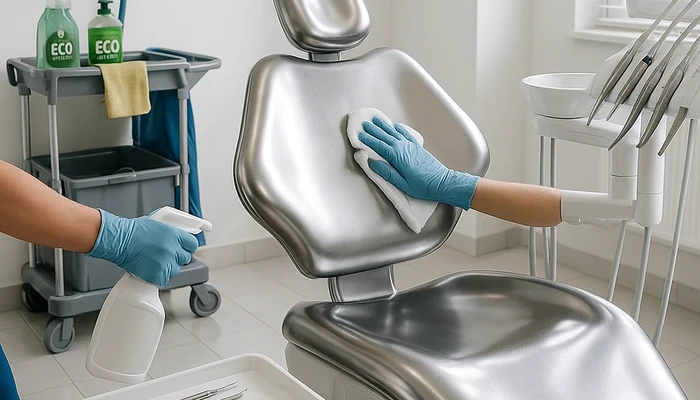
- Wipe down patient chairs, handles, lamp arms, and switches.
- Replace disposable barriers and reinstall sterilized instruments.
Consistency is key; use a checklist and document each step for compliance audits. For equipment-specific disinfection guidance, visit how to effectively disinfect dental equipment.
High-Touch Surface Management: Checklists That Prevent Cross-Contamination
Dental offices abound with high-touch surfaces that can transmit pathogens. A rigorous cleaning schedule covers these spots:
- Doorknobs and handles
- Light switches, dental lamp arms
- Countertops, sinks, faucet levers
- Reception pens, payment terminals
- Restroom fixtures and tissue dispensers
Include these items in your daily checklist to ensure ongoing safety. Discover additional daily and deep cleaning protocols in this hygiene and safety guide.
Choosing and Safely Using Dental Office Cleaning Products
Product selection matters—some disinfectants may damage dental equipment, while others might not be EPA-registered for healthcare use. Best practices include:
- Selecting EPA-registered, hospital-grade disinfectants.
- Consulting manufacturers’ recommendations for dental chairs and x-ray units.
- Labeling chemical bottles and storing safely, away from clinical supplies.
- Avoiding overuse of harsh bleach on sensitive surfaces.
Proper training is essential so staff know which products to use, where, and in what dilution.
Disinfection vs. Sterilization: What Dental Offices Must Distinguish
Understanding the difference between disinfection and sterilization ensures correct application:
- Disinfection reduces microbial contamination on environmental surfaces.
- Sterilization eliminates all forms of microbial life on instruments.
Surface disinfection is done between patients; instrument sterilization (via autoclave or chemical vapor) occurs after every use. For more, read our discussion on instrument sterilization.
Frequency and Scheduling: How Often Do Dental Offices Need Cleaning?
Frequency depends on traffic, case types, and regulatory demand. A typical professional dental office cleaning plan covers:
- Daily: Treatment rooms, restrooms, floors, high-touch points
- Weekly: Deep-clean of carpets, waiting areas, vents, windows
- Monthly: Behind/under equipment, supply rooms, infrequently used spaces
- Between patients: Immediate cleaning/disinfection of all clinical surfaces used
Staff training and posted schedules help maintain accountability.
Comparison: In-House vs. Outsourced Dental Cleaning Teams
- Tight control; staff always onsite
- Requires continuous training and supervision
- Risk of knowledge gaps
Outsourced Professional Service:
- Trained experts in dental facility cleaning
- Structured checklists and compliance documentation
- Up-to-date with regulations and best practices
A hybrid approach is also possible, where daily cleaning is handled in-house and deep or specialized cleaning is outsourced. For a practical checklist, see how professionals maintain dental offices.
Air Quality and Environmental Controls in Dental Facilities
Beyond visible surfaces, air quality is a core aspect of overall hygiene. Dental clinics benefit from:
- High-efficiency particulate air (HEPA) filtration systems
- Regular HVAC cleaning and filter changes
- Monitoring humidity to prevent microbial growth
Refer to ASHRAE’s guidance on filtration and disinfection for technical recommendations suitable for healthcare spaces.
Checklist: Preparing for Regulatory Inspection and Audit Readiness
Preparation is the best prevention against failed inspections.
- Review daily, weekly, and monthly cleaning logs for completeness.
- Ensure availability of documentation for all cleaning products and their SDS.
- Double-check surface, instrument, and air quality controls.
- Confirm that all staff understand and implement cleaning procedures.
Internal audits and mock inspections encourage consistent readiness and uncover lapses before regulators do.
Patient and Staff Communication: Making Hygiene Visible
Transparent hygiene practices build trust. Visual cues reinforce your commitment:
- Display cleaning in progress signage during cleaning hours.
- Post your daily cleaning schedules where patients can see them.
- Offer visible sanitizer stations and fresh, clean treatment areas.
Let patients know the steps being taken for their protection.
Decision Framework: Selecting the Right Dental Office Cleaning Partner
Choosing a dental cleaning partner is a decision with high stakes. Use this framework to evaluate candidates:
- Does the provider have dental-specific training and experience?
- Are staff background-checked, insured, and following checklist protocols?
- How do they document work performed and respond to emergencies?
- Do they offer flexible, after-hours scheduling?
- Is there a clear line of communication for concerns or changes?
For tailored decisions and more detailed comparison, consult this decision guide.
Innovative Technologies for Enhanced Dental Cleaning
Modern dental offices leverage new technologies for superior hygiene:
- Touchless disinfection: Electrostatic sprayers provide even coverage and reduce manual labor.
- UV-C light: Supplemental disinfection for air and hard-to-reach areas.*
- Digital checklists: App-based logging for compliance and real-time oversight.
*UV-C must be used with safety protocols to avoid exposure risk.
Special Situations: Deep Cleaning After Illness or Contamination Events
When a patient or staff member is diagnosed with a communicable disease, or there’s been an unusual exposure, implement enhanced protocols:
- Close the affected area for targeted deep cleaning.
- Use high-level disinfectants on exposed surfaces and shared equipment.
- Ventilate the area and replace HVAC filters if contamination risk is high.
- Document all steps for regulatory and insurance purposes.
Schedule professional intervention as needed to restore full hygiene standards.
FAQ: Your Dental Office Cleaning Questions Answered
- What makes dental office cleaning different from other medical cleaning?
Dental offices face unique bioaerosols, bloodborne pathogens, and frequent patient turnover. Specialized protocols address these risks beyond typical medical environments. - How often should high-touch surfaces be disinfected?
At a minimum, between every patient and at the end of each business day. - Can eco-friendly cleaning products be used in dental clinics?
Yes, if they are EPA-registered for healthcare environments and do not harm sensitive equipment or compromise infection control. - What documentation should be maintained?
Daily checklists, product Safety Data Sheets (SDS), logbooks for deep cleaning, and staff training records. - Do I need air filtration in addition to surface cleaning?
Yes, air filtration and proper HVAC maintenance are crucial, especially in treatment areas. This helps control airborne pathogens. - Should I outsource dental office cleaning?
Outsourcing to a provider with dental-specific experience ensures up-to-date compliance and minimizes staff training burden. - How can patients see our hygiene standards?
Display cleaning schedules, use visible sanitizer stations, and communicate your practices in patient literature and during visits.
Wrap-Up: Achieving Excellence in Dental Office Cleaning
Dental Office Cleaning: A Primer is your gateway to a safer, more inviting practice. By understanding the science, mastering targeted checklists, and making informed partner decisions, you create an environment that actively protects staff and patients. Adapt these protocols for your unique practice, and revisit them regularly for continuous improvement. For recurring, deep, or specialized office cleaning, Chicagoland Cleaning Services delivers accountable, expert results tailored to dental environments.
Ready to optimize your dental facility? Explore Dental cleaning service options or see how our team supports Office cleaning service.
About Chicagoland Cleaning Services
Chicagoland Cleaning Services helps households and businesses in Chicago, Illinois and nearby areas keep their spaces clean and healthy. Our experienced teams specialize in recurring house cleaning, deep cleaning, move out services, office cleaning, and the unique demands of dental and medical facility hygiene. We follow consistent checklists, uphold the highest safety standards, and ensure transparent, long-term client relationships for every project.
commercial cleaning service chicago, dental operatory cleaning chicago, dental office disinfection chicago, dental office sanitation Logan Square IL, dental chair area cleaning Evergreen Park, dental clinic cleaning Ukrainian Village IL, treatment dental room cleaning Wood Dale, waiting dental room cleaning Riverside, dental chair area cleaning Bensenville, dental chair area cleaning Joliet IL